Blog
- Home
- Blog
Port Gantry Crane : Configuration, Selection and Key Parameter Optimization
Overview
Port terminals are core nodes in the global logistics chain. Their handling equipment configuration directly determines throughput capacity and operational efficiency. Gantry crane (commonly called gantry crane) is the main equipment in port yard operations. It is widely used in container storage, general cargo handling, and bulk cargo loading and unloading. As global container throughput keeps growing and ships get larger, port requirements for gantry crane configuration have evolved. They have moved from a single lifting capacity index to multi-dimensional system decisions. These include equipment type selection, core parameter matching, quantity scale determination, and automated control system integration. Improper configuration not only restricts terminal operation efficiency. It also causes equipment investment waste and high long-term operating costs. This article starts from engineering practice. It systematically reviews core elements and selection logic of port gantry crane configuration. It provides reference for port engineering planning and equipment procurement.
Main types and technical characteristics of port gantry crane
Port terminals commonly use gantry cranes in several main types. They are classified by structure form and travel mode:
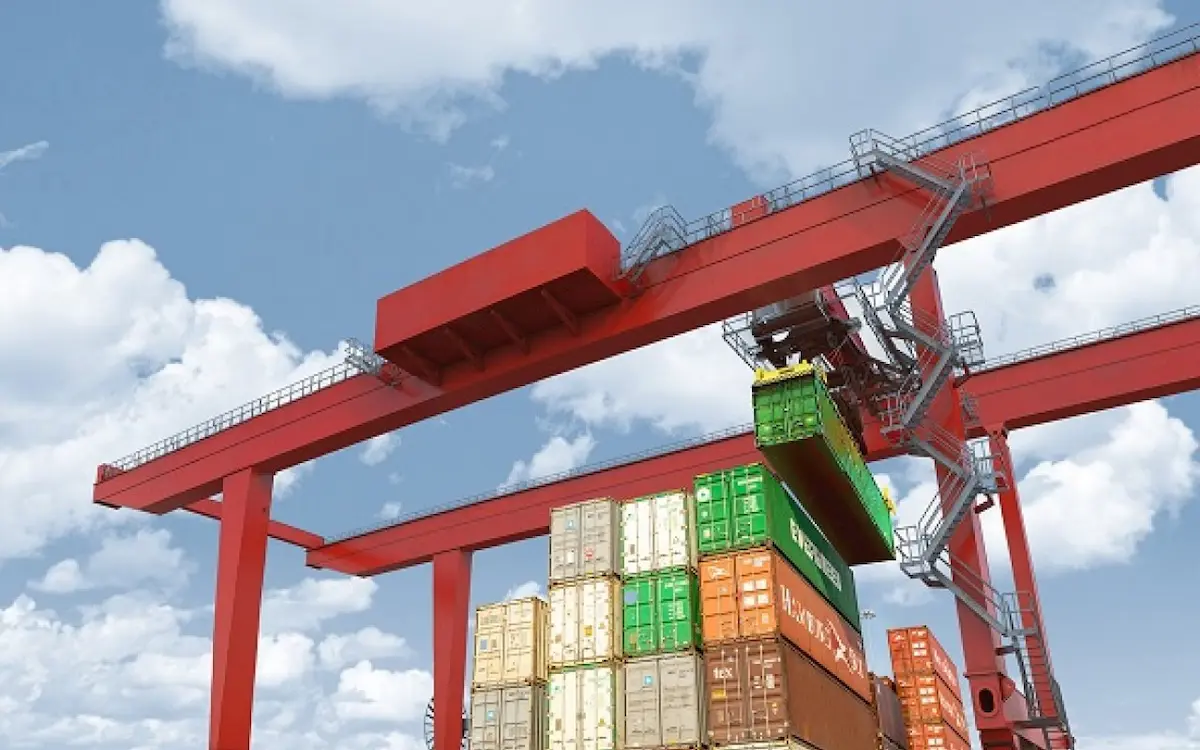
●Rail-mounted container gantry crane (RMG): It travels along fixed rails. Span is usually 30–40 m. Lifting capacity covers 35 t, 41 t, and 70 t levels. It suits container yards and railway transfer stations. It features high positioning accuracy, low operating cost, and easy automation upgrade.
●Rubber-tyred container gantry crane (RTG): It travels on rubber tyres. Span is generally 23.47–26 m. It is mobile and flexible. It can adjust operating areas in yards without fixed rail foundations. It suits multi-purpose terminals and frequent transfer scenarios.
●MG double-girder gantry crane: It uses a box-type double-girder structure. Loads spread to two main girders. It has higher rigidity. It suits mixed cargo, bulk cargo, and general cargo operations. Lifting capacity ranges from 5 t to over 500 t.
●Portal slewing crane (MQ/MZ): It has slewing and luffing functions. It can be equipped with hook, grab, or container spreader. It is core equipment for ship loading and unloading at multi-purpose terminal frontages.
In actual projects, frontage equipment and yard equipment selection must be considered together. For example, a multi-purpose berth can use rail-mounted container gantry crane as ship loading equipment. It uses its large waterside cantilever for handling. It also serves yard storage functions.

Core elements of port gantry crane configuration and selection
●Lifting capacity determination: Lifting capacity should be based on maximum single lift load, not average load. For container operations, calculate by “maximum container weight + spreader weight”. Take a 40-foot standard container as an example. Maximum container weight is about 30.5 t. Telescopic spreader is about 10 t. So rated lifting capacity is generally 40.5 t (under spreader). Reserve reasonable margin. For bulk or general cargo, include grab self-weight besides hook load.
●Span and cantilever design: Span selection must match yard layout. Container yards commonly use 35 m span. It can hold 6 container rows plus 1 traffic lane. Cantilever forms include no cantilever, single cantilever, and double cantilever. Double cantilever expands operating range and improves yard utilization. Single cantilever suits one side limited by site. No cantilever suits pure yard internal operations.
●Lifting height and stacking tiers: Lifting height is determined by target stacking tiers. Stacking five over six requires lifting height no less than 18 m. Stacking six over seven requires over 21 m. Design should fully consider future container volume growth and higher stacking tiers.
●Duty class and operating efficiency: Crane duty class is divided by GB/T 3811 “Crane Design Code”. Container terminal yards with 24-hour continuous operation should use A7 or above. This ensures reliability and service life under frequent heavy-load conditions. Intermittent inland logistics parks can use A5–A6.
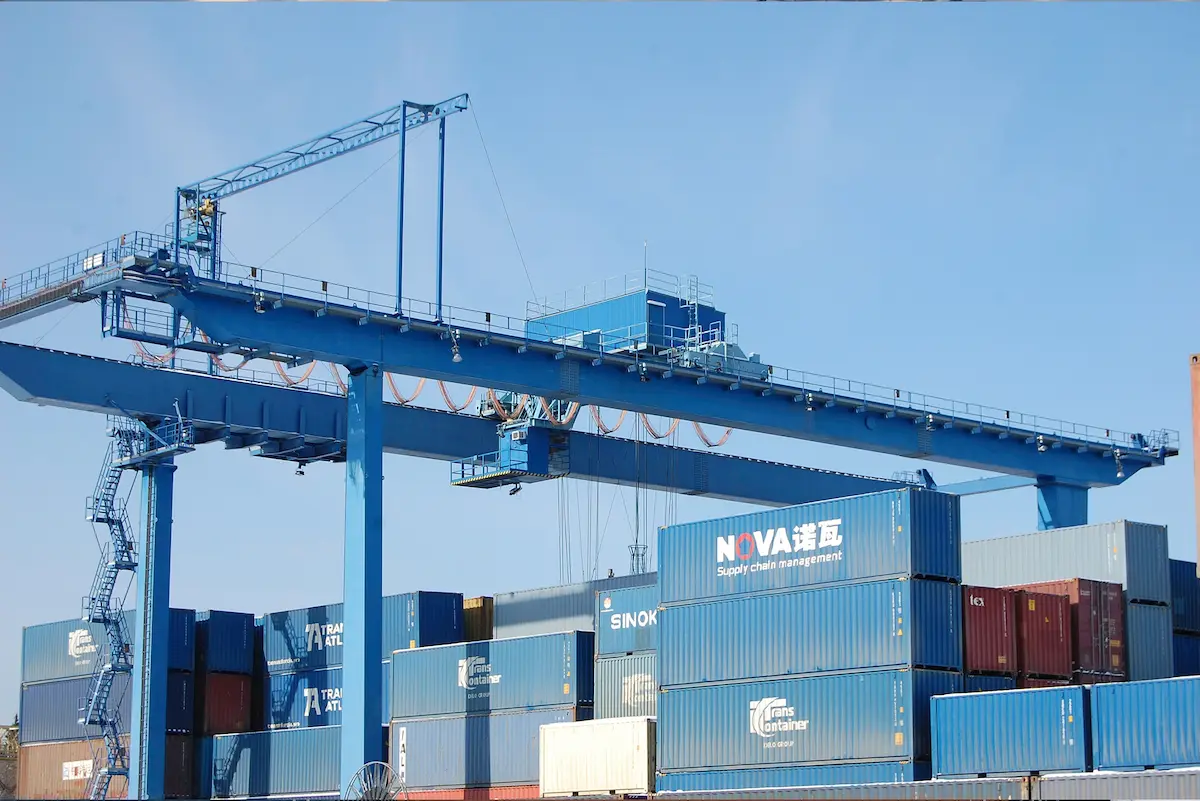
Typical port gantry crane configuration parameter comparison
|
Parameter |
RMG (rail-mounted) |
RTG (rubber-tyred) |
MG double-girder (general) |
Portal slewing crane |
| Rated lifting capacity | 35–70 t | 35–70 t | 5–500 t | 16–80 t |
| Span / gauge | 30–40 m | 23.47–26 m | 18–40 m | 10.5 m (gauge) |
| Lifting height | 15–30 m | 12–21 m | Customized | 24–30 m above rail |
| Duty class | A6–A8 | A6–A7 | A5–A7 | A6–A8 |
| Application | Dedicated container yard | Multi-purpose yard | Mixed operation yard | Terminal frontage ship handling |
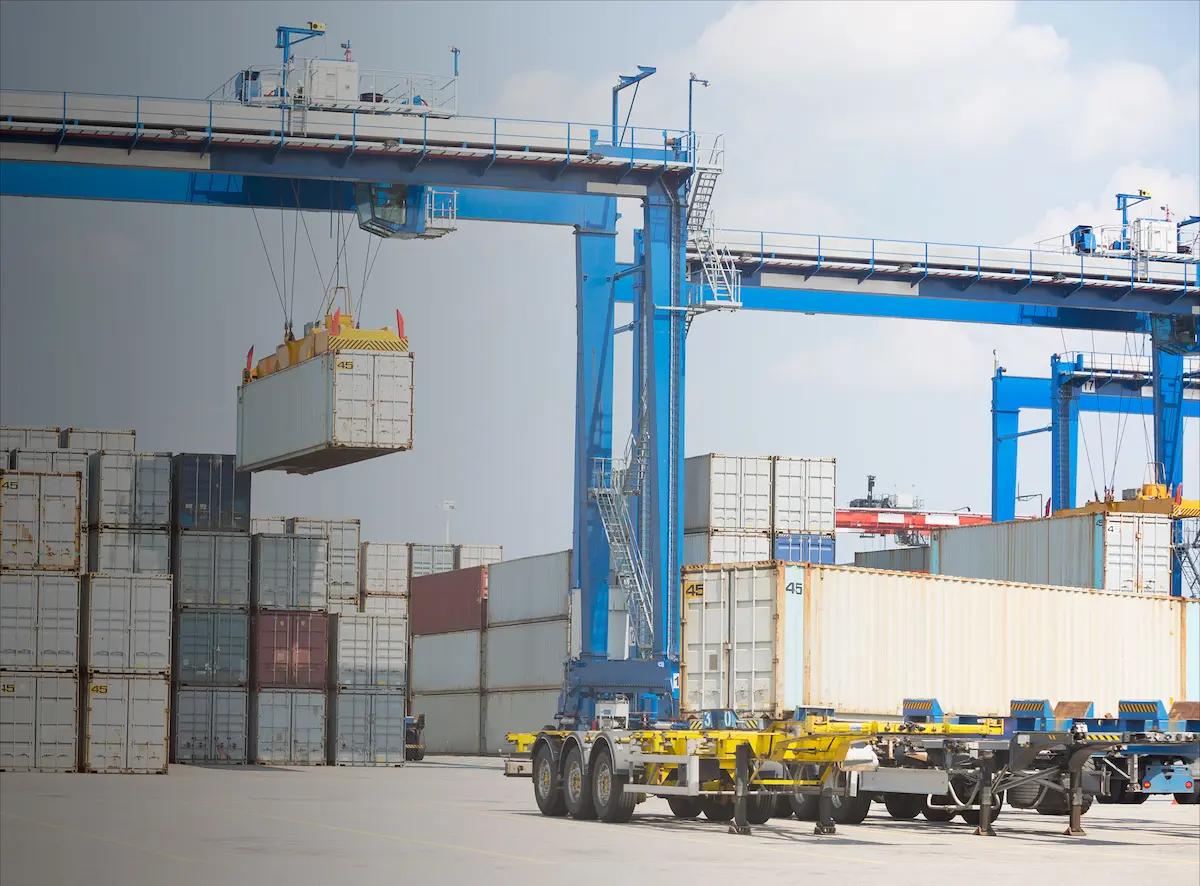
Configuration quantity estimation and terminal matching principles
Port gantry crane configuration quantity should be determined by annual throughput, single machine efficiency, and berth number. Industry standards suggest that when ground container slots per berth exceed 400, at least 2 gantry cranes should be equipped. When slots exceed 1,900, no fewer than 8 gantry cranes should be configured. In a coastal medium port container yard, annual throughput is 800,000 TEU. A double-cantilever rail-mounted gantry crane (RMG) scheme can be used. Each machine can handle 100–120 containers per day. It meets two-shift continuous operation needs.
Frontage equipment configuration must be determined by cargo mix and ship type conditions. Take a multi-purpose terminal handling containers and general cargo as an example. It can be equipped with 2 DMQ45t-37m multi-purpose portal slewing cranes. They meet container handling and general cargo needs at the same time. Another general portal slewing crane handles bulk grain and general cargo.
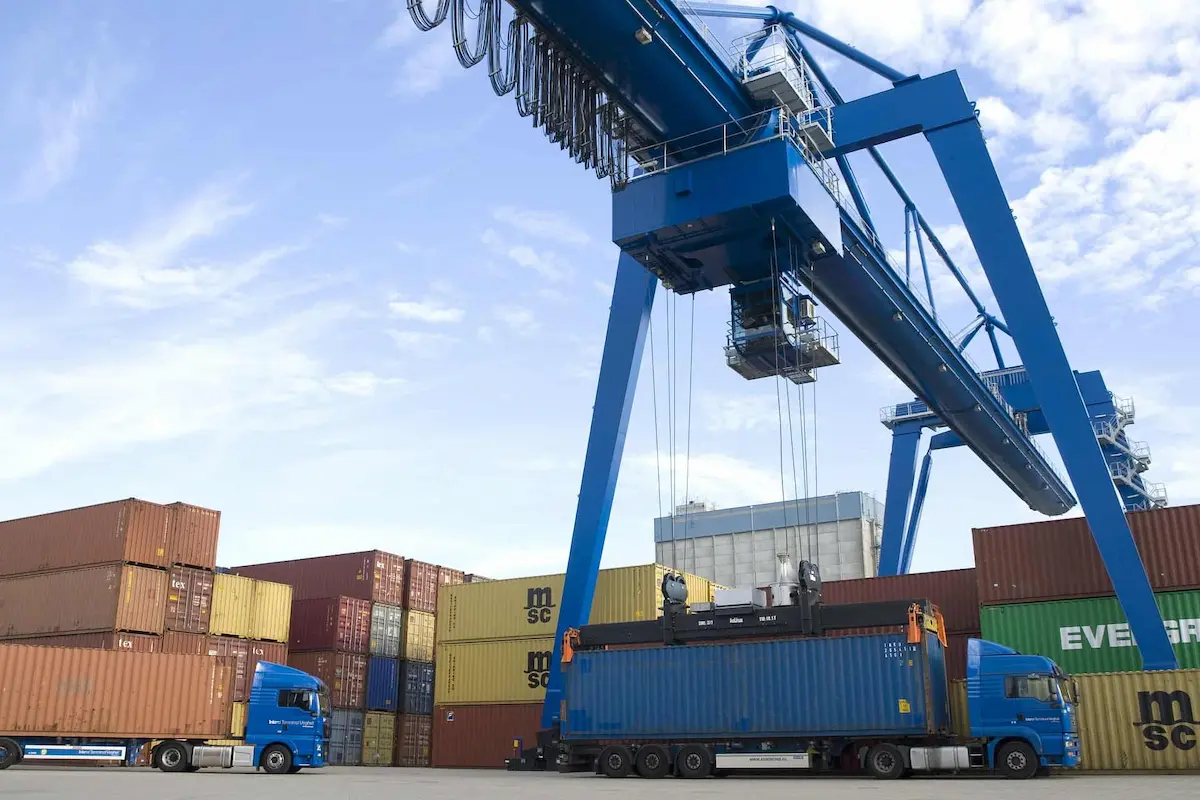
Automated configuration and intelligent upgrade trends
Current port gantry crane configuration is accelerating toward automation and intelligence. Automated rail-mounted container gantry crane (ARTG) uses remote control and automatic positioning systems. It has achieved 7×24 unmanned operation. Positioning accuracy can reach ±5 mm. It can connect with terminal operating system (TOS) for full-process data traceability.
In automated configuration, the following elements should be included in planning:
●Remote control system: Equip remote operation consoles. Drivers can remotely control multiple machines from the control center.
●Automatic positioning and anti-sway system: Use laser scanning and visual recognition technology. Achieve precise spreader positioning and load anti-sway.
●Potential energy recovery and energy-saving device: Recover potential energy during hoisting mechanism lowering. Reduce energy consumption.
●Intelligent scheduling and TOS integration: Equipment control system interacts with terminal operating system in real time. Optimize operation sequences.
●Safety protection system: Includes rail clamps, anchoring devices, wind speed alarms, and anti-collision systems. Ensure equipment safety under severe weather conditions.
The global port gantry crane market is entering a key stage. It integrates automation, electrification, and artificial intelligence applications. The intelligent crane automation market is expected to grow from USD 2.27 billion in 2025 to USD 2.57 billion in 2026. The compound annual growth rate reaches 13.4%.
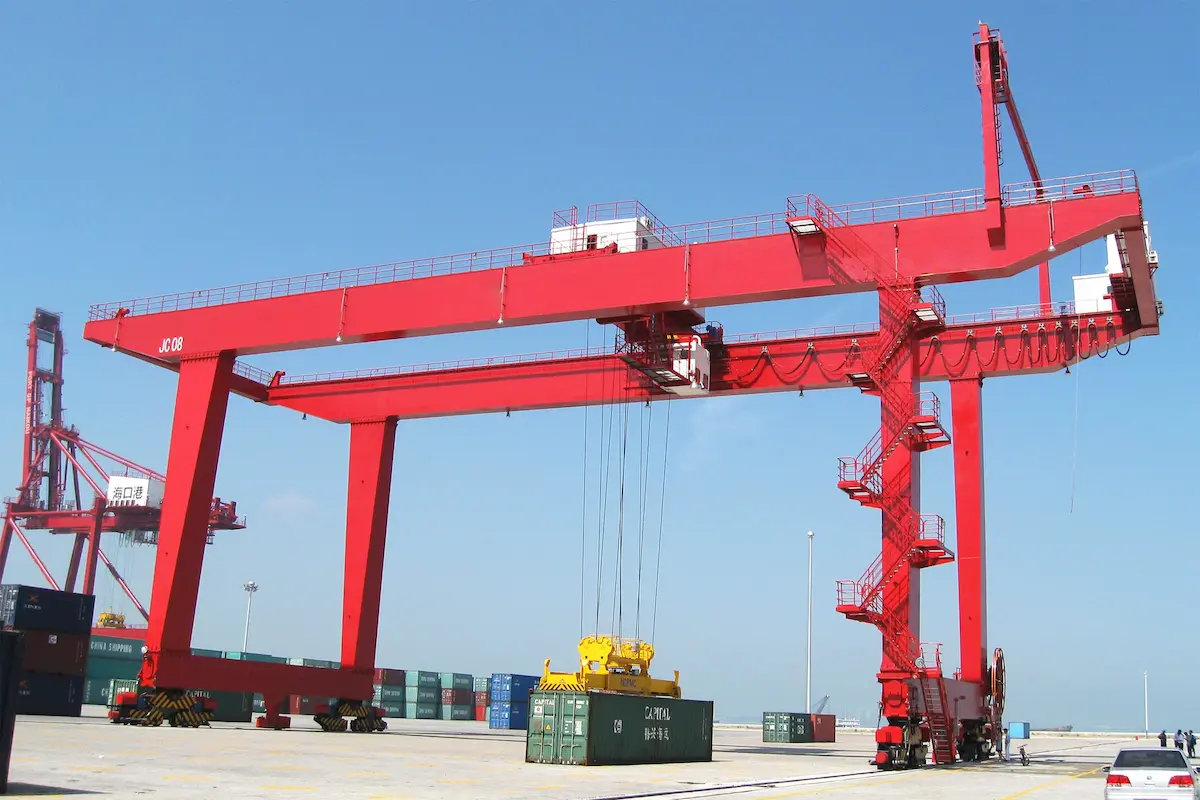
Conclusion
Port gantry crane configuration is a systematic project. It involves equipment type, technical parameters, operating efficiency, site conditions, and investment budget. A reasonable configuration scheme should start from actual terminal working conditions. It should achieve precise matching in four core parameters: lifting capacity, span, lifting height, and duty class. It should also reserve automation upgrade interfaces in advance. As port intelligentization accelerates, gantry crane configuration decisions are shifting. They are moving from “meeting current operation needs” to “supporting full life-cycle intelligent operation”. This places higher technical requirements on port engineering planners.
This document is for reference only. Specific operations must strictly comply with local laws and regulations and equipment manuals.
Recent Post