Blog
- Home
- Blog
HSCRANE 5 Ton Single Girder Overhead Crane Project in Cambodia
Project Background
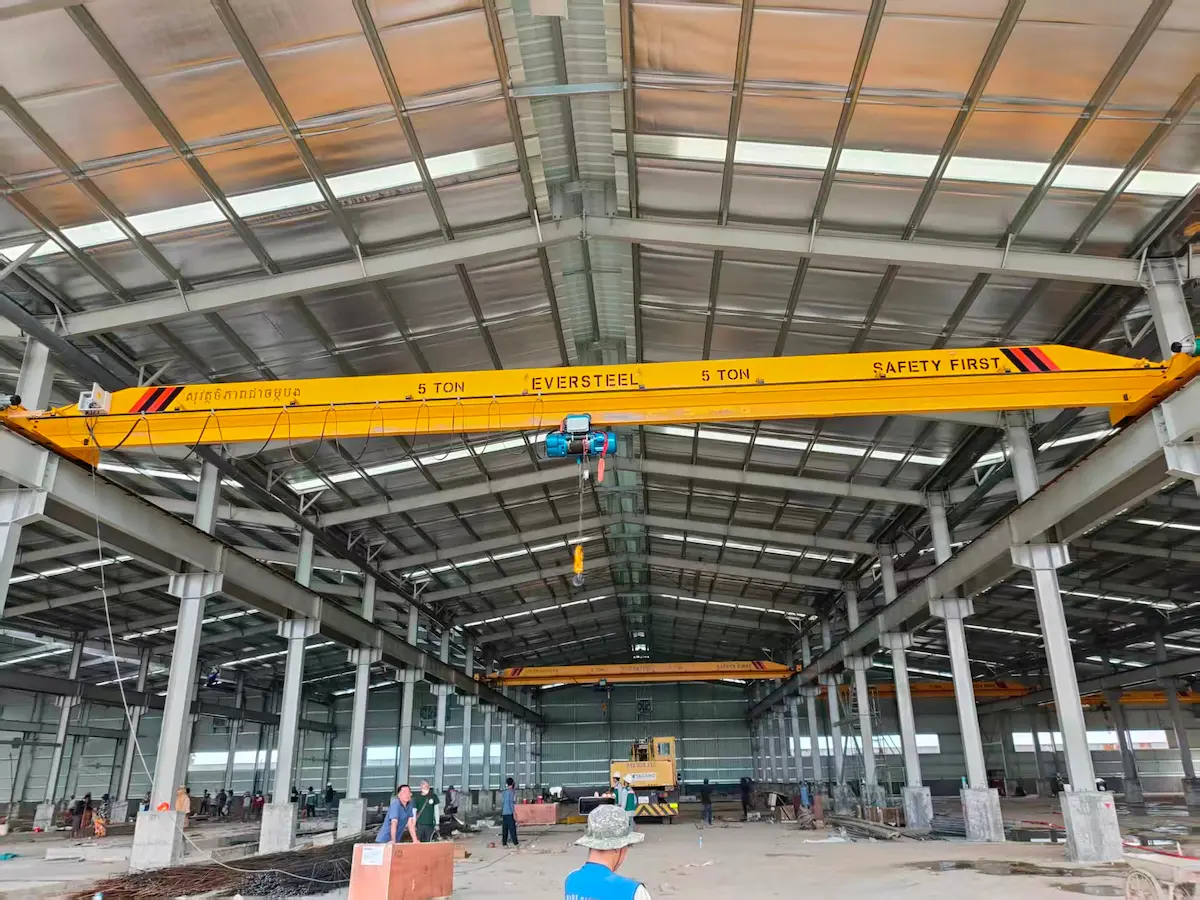
This project involves a production line expansion in Phnom Penh, Cambodia. The factory fabricates steel structures and processes large machine parts. Production requires high-frequency material handling and precise positioning. HSCRANE supplied and installed a 5-ton single-girder overhead crane. The goal is to optimize workshop logistics and shorten lifting cycles.
Overhead Crane Technical Specifications
Considering Cambodia’s tropical climate and building structure, our engineers surveyed the site. They determined the following technical parameters:
|
Parameter |
Technical Specification |
| Model | LD Single Girder Overhead Crane |
| Rated Capacity | 5 Ton |
| Span | 18.5 m |
| Lifting Height | 9 m |
| Duty Class | FEM 2M (ISO M5) |
| Hoisting Speed | 8 m/min (Dual-speed) |
| Travel Speed | 20 m/min (VFD control) |
| Control Method | Wireless Remote + Wired Pendant Control |
| Ambient Temp | 0°C – 45°C |
| Protection Class | IP55 (Motor and Control Box) |
Installation Challenges and Solutions
◉Humidity and Heat Protection: Cambodia has high heat and humidity. Electrical components easily sustain moisture damage. We upgraded the protection class to IP55. We added rain covers. We vacuum-dipped motor windings for insulation. This ensures long-term reliability.
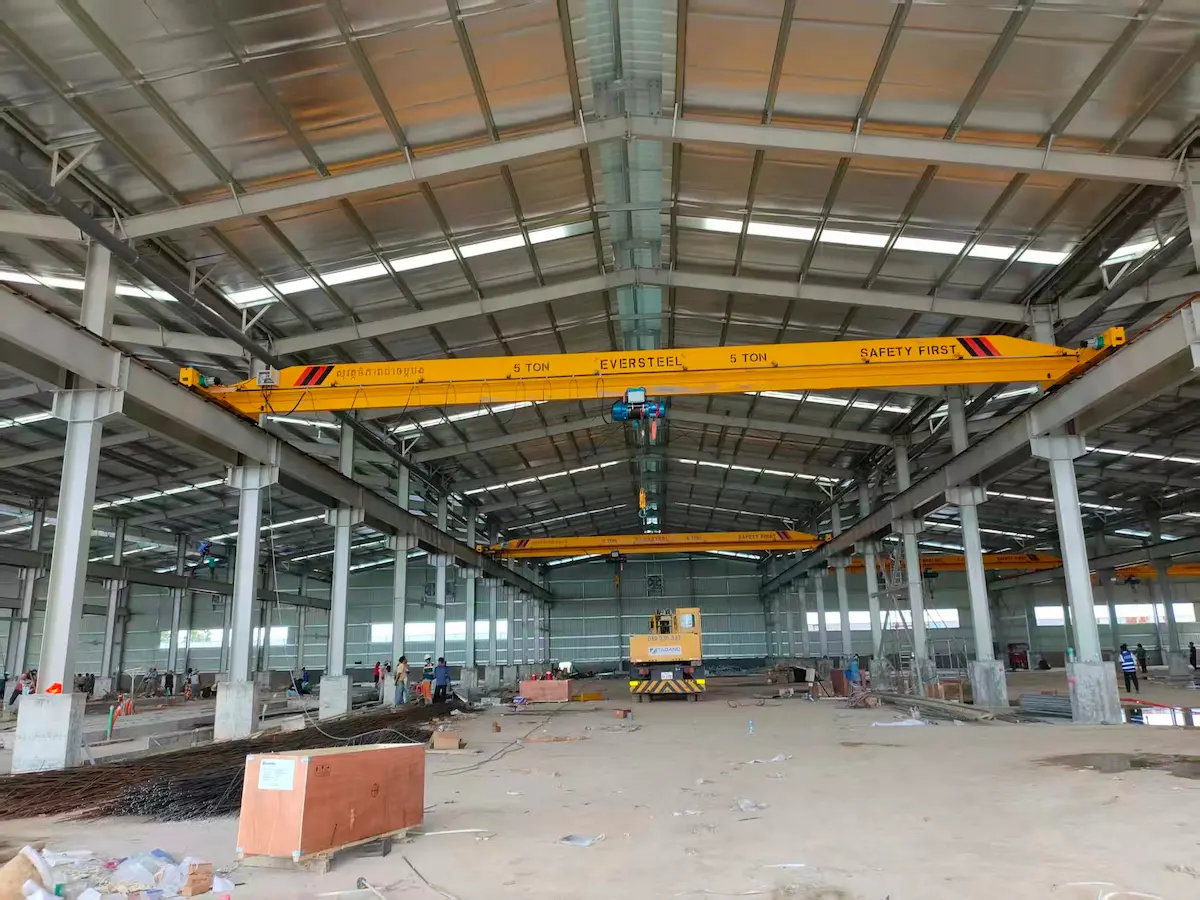
◉Workshop Adaptability: Column spacing is wide, and column support is limited. We used a low-headroom hoist design. This maximizes vertical workspace. The box girder uses FEA optimization. It meets ISO stiffness standards and prevents deflection.
◉Power Stability: Local industrial power frequency fluctuates significantly. We configured Variable Frequency Drives (VFD). This flattens start currents. It achieves soft starts and stops. It reduces vibration and improves positioning precision.
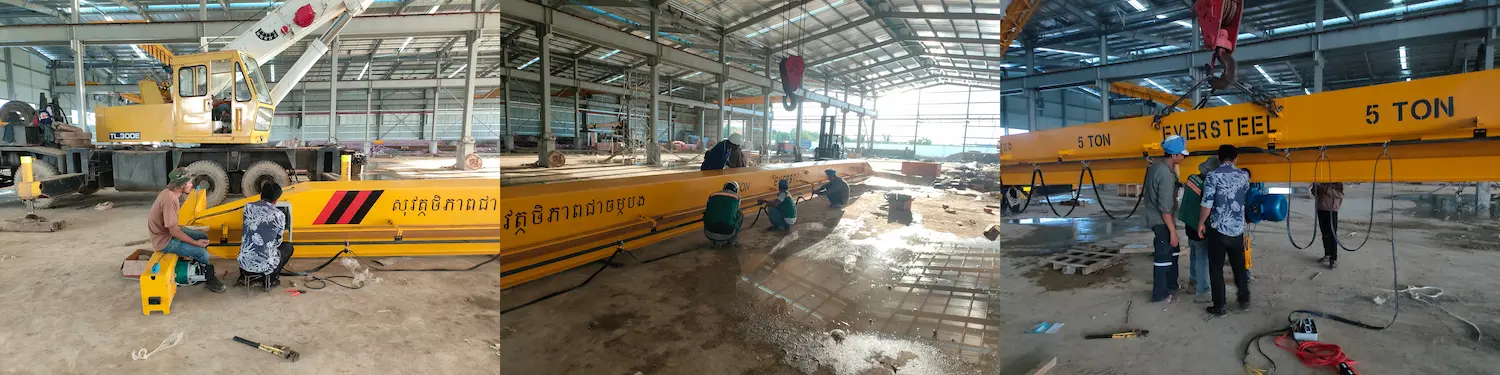
Installation and Commissioning
Installation strictly followed hoisting safety standards.
◉Track Inspection: We measured runway elevation and span using theodolites. We corrected a 15mm local deviation. We ensured the track center matched the girder span. This prevents rail gnawing.
◉Girder Installation: A 25-ton mobile crane lifted the girder. We used custom rigging to ensure stability. We controlled rotation with guide ropes for precise placement.
◉Electrical Commissioning: We performed load tests after system connection.
◉Static Load Test: We held 1.25x rated load for 15 minutes. We checked for girder deflection.
◉Dynamic Load Test: We operated mechanisms at 1.1x rated load. We tested VFD acceleration and limit switches.
◉Safety Check: We triggered overload limits, height limits, and emergency stops. This confirmed protection and feedback mechanisms worked instantly.
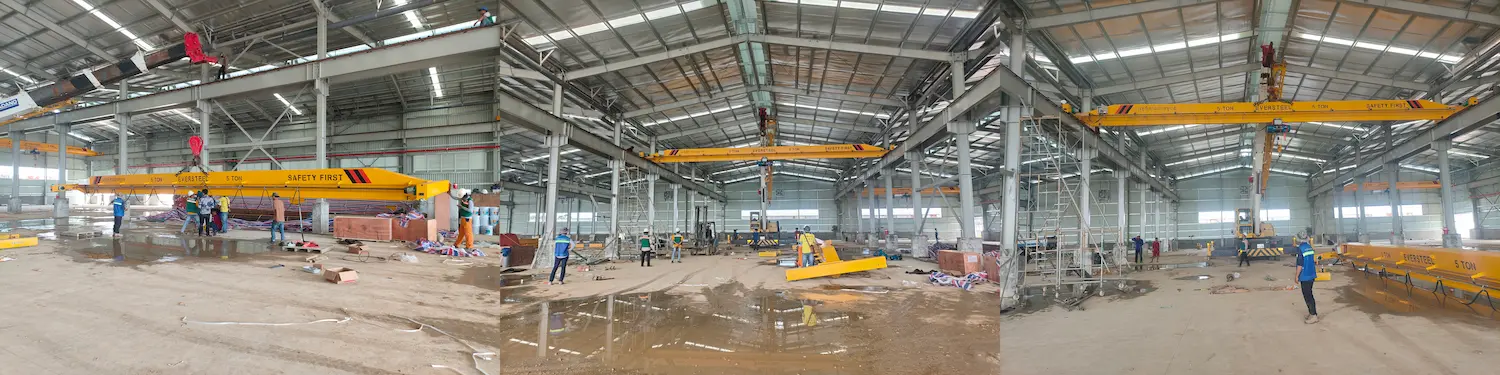
Operational Performance
The system has operated for 6 months without failure. The VFD system enables smooth acceleration and deceleration. Load swaying is significantly reduced during precision transport. The owner reports resolved material congestion. Daily processing efficiency increased by 30%.
Recent Post