Blog
- Home
- Blog
Is an H-Beam Steel Structure Suitable for a Double Girder Overhead Crane?
Overview
During new construction or capacity upgrades, factory owners often ask a key question. Can our existing standard H-beam steel structure support a large double-girder overhead crane? The span and height seem sufficient, but they worry about capacity.
This is a very common and crucial question. Briefly, H-beam factories can absolutely install double-girder overhead cranes. However, rigorous stress calculations and proper structural matching are required. Double-girder cranes handle large tonnages (10t, 20t, or 50t+) and high frequencies. Their deadweight and maximum wheel pressure are much higher than single-girder cranes. Blind installation causes runway beam deformation and crane rail gnawing. It can even endanger the entire factory structure.
Today, we analyze the matching logic of H-beam factories and double-girder overhead cranes. We also provide practical, feasible solutions.
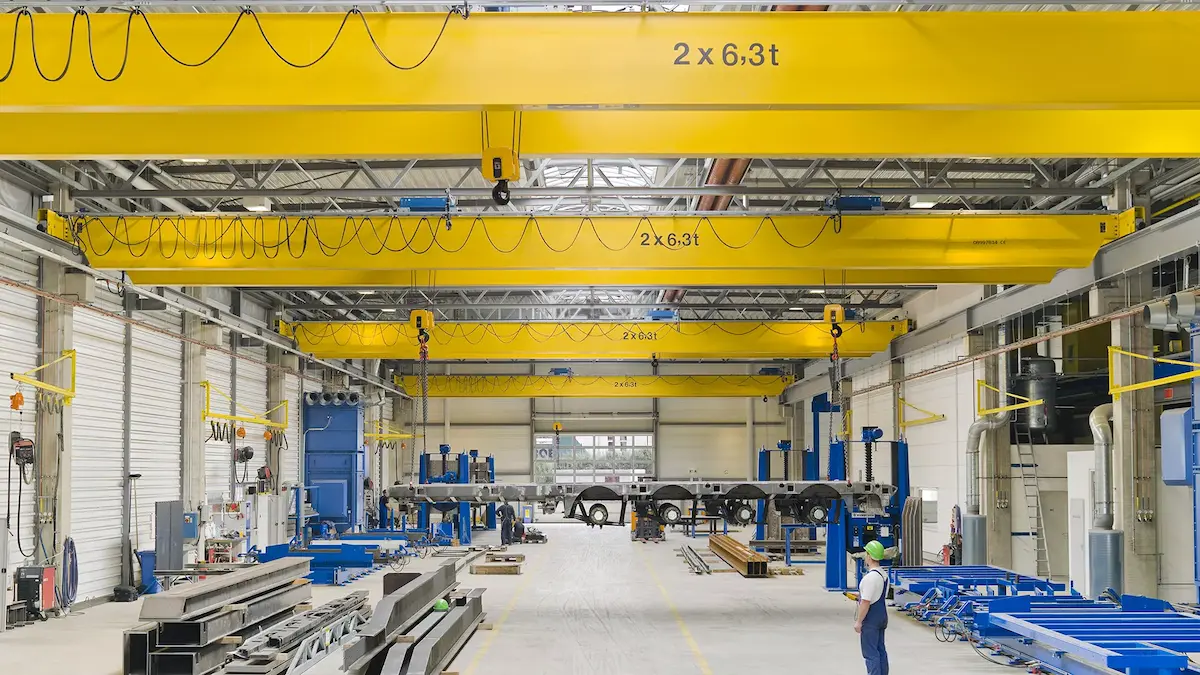
Four Core Indicators to Determine if H-Beam Factories Can Install Double-Girder Cranes
We cannot judge factory suitability by eye alone. We must check the structural design drawings. Engineers focus on four core parameters during evaluation. We compiled a self-test comparison table for clarity:
|
Evaluation Indicator |
Single-Girder Crane (General Requirements) |
Double-Girder Crane (Strict Requirements) |
Core Risk Points Checked |
| Corbel Load Capacity | Low. Standard welded corbels are sufficient. | Very high. Must bear huge vertical and lateral loads. | Corbel cracking or sinking leads to track deformation and derailment. |
| Runway Beam Section | Standard I-beams or small H-beams. | Wide-flange large H-beams or box girders. | Excessive mid-span deflection causes crane vibration and rail gnawing. |
| Column Stability | Constant section H-beam columns are common. | Stepped columns or enlarged H-beam columns. | Factory swaying. Insufficient lateral stiffness causes structural fatigue. |
| Roof Clearance Height | Low requirements. Hoists run below the bridge girder. | High requirements. Trolleys run on top of bridge girders. | Limited hook lifting height. Crane top may strike the roof structure. |
Note: This is only a qualitative comparison. Actual installation requires quantitative calculation of maximum wheel pressure and lateral horizontal force.
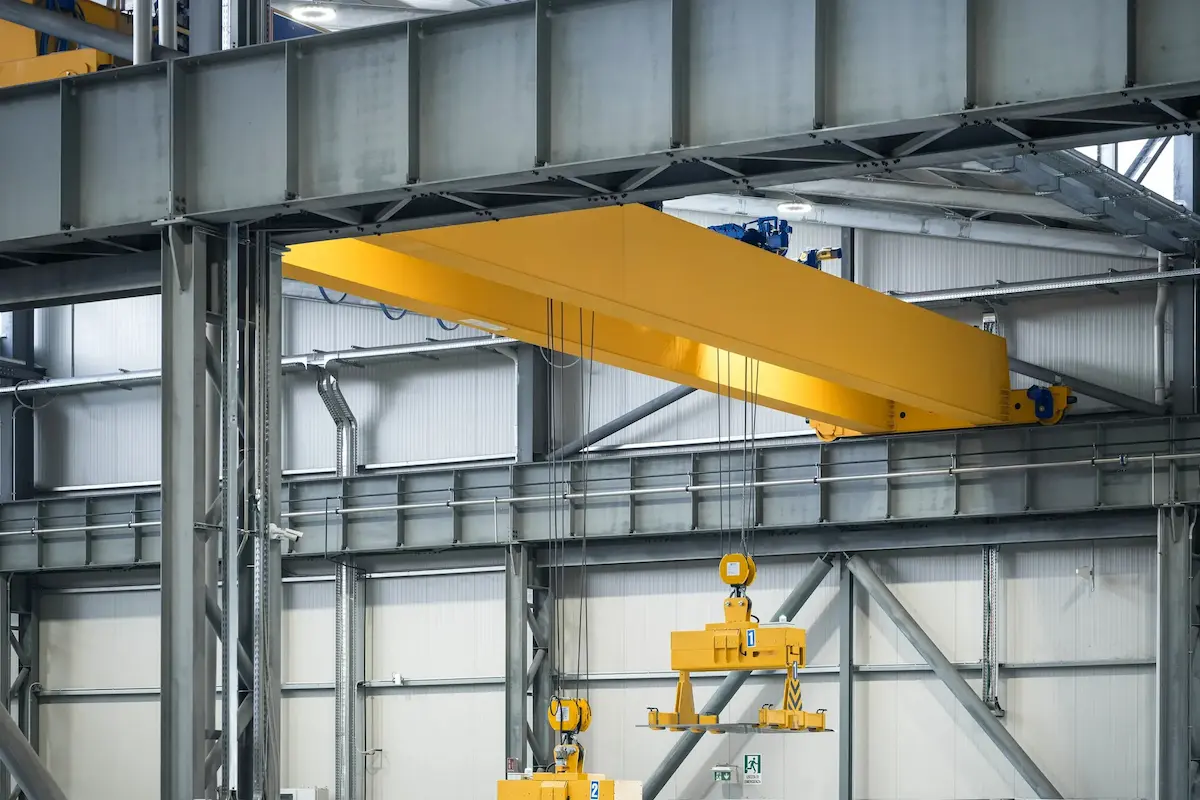
Common Pain Points of Installing Double-Girder Overhead Crane in Existing H-Beam Factories
Upgrading to a double-girder overhead crane in a light H-beam factory brings several tough challenges:
Pain Point 1: Inherited Design Deficiencies
Many owners build factories with low steel costs in mind. They design H-beam columns and foundations for no cranes. Or they design them for 5-ton single-girder cranes only. Large double-girder overhead cranes introduce heavy braking inertia and lateral sway forces. These forces can easily exceed the columns’ yield limits.
Pain Point 2: Heavily Compressed Clearance Height
Traditional double-girder cranes (like LD or QD types) are bulky. Their trolley mechanisms sit on top of the main bridge girders. H-beam factory roofs are usually sloped. If clearance is insufficient, the crane’s highest point hits roof beams or lighting fixtures. This reduces effective lifting height and affects large cargo flipping.
Pain Point 3: Rail Gnawing Caused by Steel Structure Deflection
Double-girder cranes require high rail parallelism and levelness. If runway beams lack stiffness, they deflect when heavy trolleys reach mid-span. The runway beams rebound once the trolley moves away. This frequent elastic deformation causes micro-changes in rail gauge. Over time, wheel flanges rub intensely against rail sides. This produces loud squeals and shortens wheel lifespan.
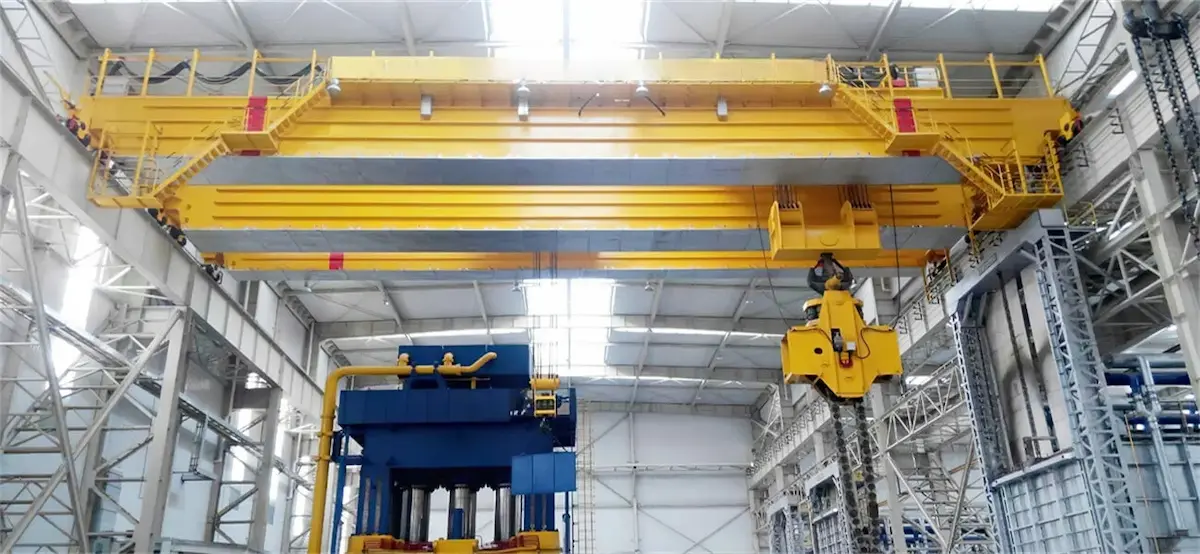
What If Factory Load Capacity is Insufficient? Three Practical Renovation Solutions
If calculations show your H-beam factory cannot bear traditional double-girder overhead crane, do not despair. You do not need to tear it down and rebuild. The industry usually offers the following breakthrough ideas.
1.Solution A: Original Structure Reinforcement (Medium cost, long construction). Weld reinforcing plates to existing H-beam columns. Or add auxiliary supports under runway beams to increase overall stiffness. This suits situations where the load-bearing gap is small. However, extensive on-site hot work will disrupt normal factory production.
2.Solution B: Add Independent Load-Bearing Steel Frames (Higher cost, safest). Completely abandon using original factory wall columns for load bearing. Build new foundations inside the factory against the walls. Erect new H-beam columns and runway beams for the double-girder crane. The new columns bear all the crane’s weight. The original factory only provides shelter from wind and rain.
3.Solution C: Adopt European Lightweight Double-Girder Cranes (Optimal cost, recommended). This is currently the most cost-effective and smartest approach. Since factory load-bearing is limited, we reduce the crane’s weight. New European double-girder cranes reduce deadweight by 15% to 30%. They also reduce maximum wheel pressure by 10% to 25%. Switching to European cranes often perfectly matches previously substandard factories.
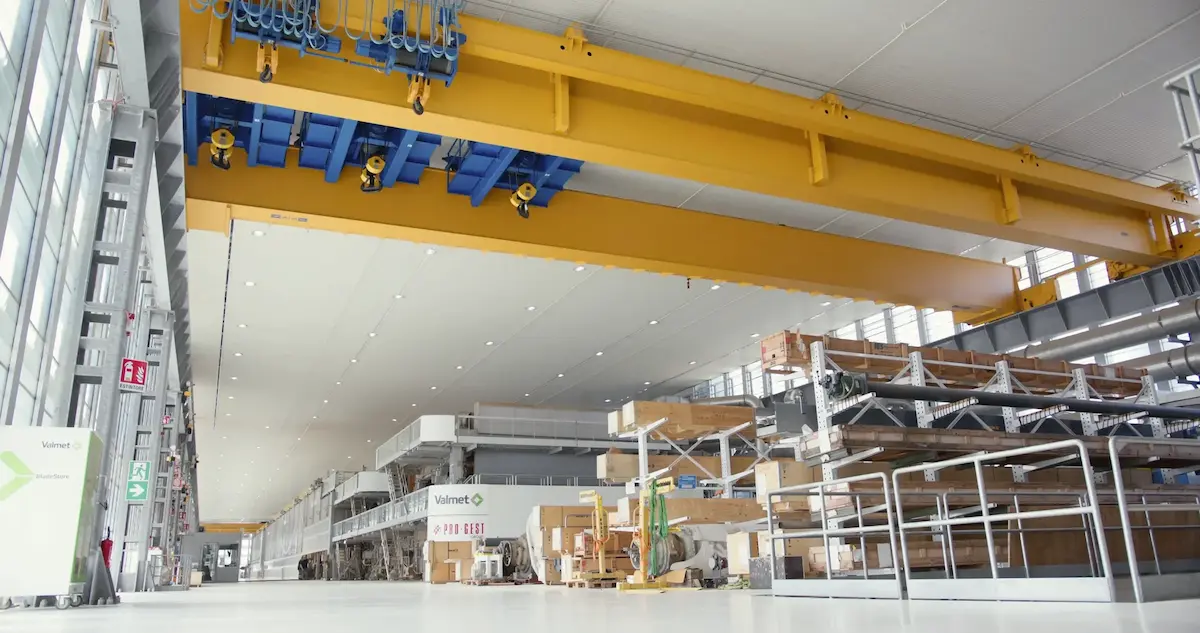
Why is HSCRANE Your Top Choice for H-Beam Factory Challenges?
HSCRANE deeply understands the delicate balance between infrastructure costs and equipment investments. We have highly competitive advantages for double-girder overhead crane in H-beam factories:
●Extreme Lightweight Product DNA: HSCRANE double-girder overhead cranes use advanced FEA design. This eliminates redundant weight from traditional bridge girders. Equipped with compact European hoists, they have ultra-light deadweights. Their maximum wheel pressure is also extremely small. This means you save significant steel costs for factory reinforcement. Corbels previously holding 10-ton traditional cranes now easily carry 16-ton ones.
●Ultra-Low Clearance Design: H-beam factories often face height anxieties. Our hoisting trolleys use a unique low-clearance sunken design. This greatly compresses the blind zone from hook to roof. At the same factory height, HSCRANE provides more lifting height. You get an extra 0.5 to 1.5 meters of effective height. This maximizes your space utilization perfectly.
●VFD Anti-Sway Technology: Heavy cargo swaying during starts and stops is dangerous. Its impact on H-beam columns is fatal. HSCRANE includes full VFD speed control as standard. Electronic anti-sway functions are also optionally available. The crane runs smoothly with precise micro-speed positioning. This protects operator safety and minimizes lateral impact forces.
●One-Stop Empowerment: We act as your dedicated structural consultants. Before signing, our technical team requests your factory drawings. We cross-calculate crane wheel pressure and H-beam capacity for free. We only provide customized plans under absolute safety guarantees. This completely eliminates hidden dangers in the future.
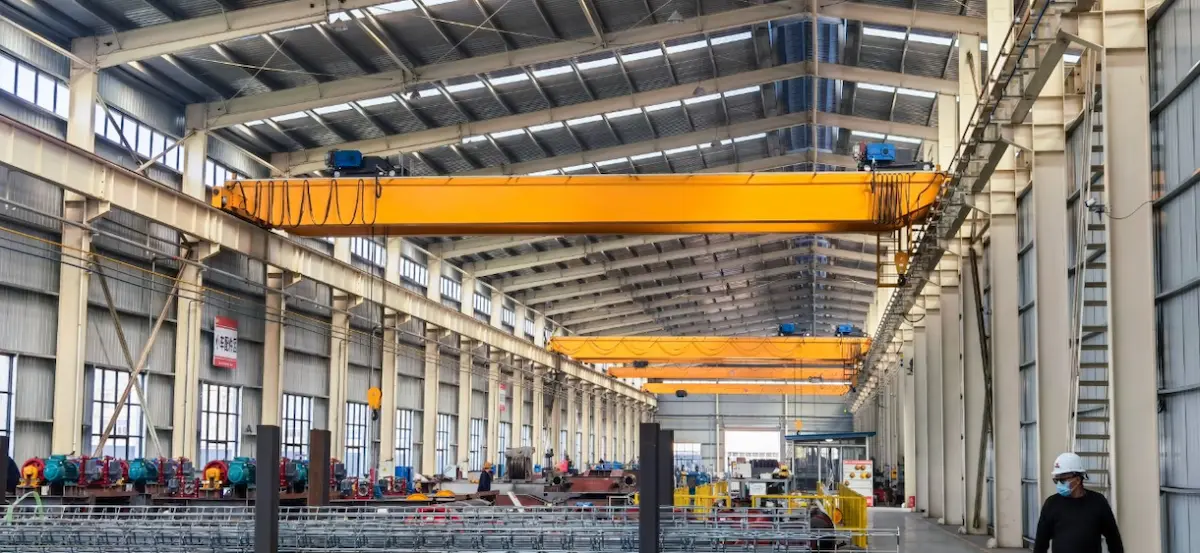
Conclusion
In summary, H-beam factories perfectly suit double-girder overhead crane installations. This is a golden combination for expanding modern manufacturing capacity. However, the core lies in precise matching calculations. Blind purchasing or forced installation is extremely irresponsible for corporate safety.
You must deeply integrate factory structural data with crane parameters. These parameters include wheel pressure, wheelbase, deadweight, and working class. Only then can you build a safe and reliable system. This ultimately creates a highly efficient and energy-saving material handling system.
Is Your H-Beam Factory Ready for a Double-Girder Crane? Do Not Guess!
Instead of worrying about structural compliance, send us your factory drawings now. The HSCRANE senior engineering team will assist you immediately. We provide free factory load checks and custom crane configuration plans.
[Click here to contact us now, or call our 24-hour hotline for your report!]
This document is for reference only. Specific operations must strictly comply with local laws and regulations and equipment manuals.
Recent Post