Blog
- Home
- Blog
How to Choose the Right Overhead Crane for Low Headroom Industrial Buildings
In machinery manufacturing, steel structure fabrication, power equipment, and automotive parts industries, many old workshops or customized plants face limited building height and insufficient headroom. If overhead crane selection is improper, lifting height is reduced. Equipment utilization may be low. Operation can be restricted. Safety risks may arise. Therefore, selecting an overhead crane for low headroom environments is critical.
This article analyzes how to select suitable overhead cranes for low headroom workshops. It focuses on building conditions, crane structures, and key technical parameters.
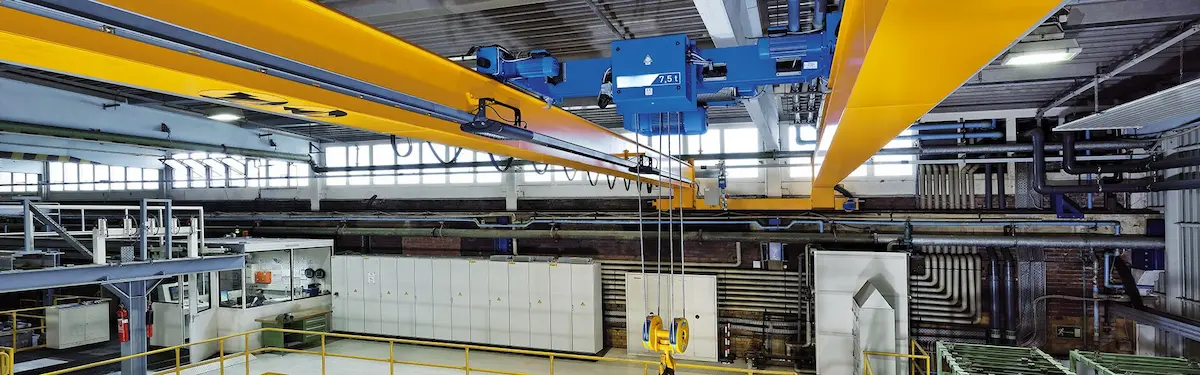
What Is a Low Headroom Workshop Environment?
A low headroom workshop refers to limited effective height between rail level and roof structure. It cannot meet standard overhead crane installation and operation needs. Typical characteristics include:
●Fixed building height without possibility of reconstruction
●High lifting height demand with insufficient top space
●Roof beams, ventilation, or fire protection restrictions
In such environments, standard overhead cranes often fail to perform effectively.
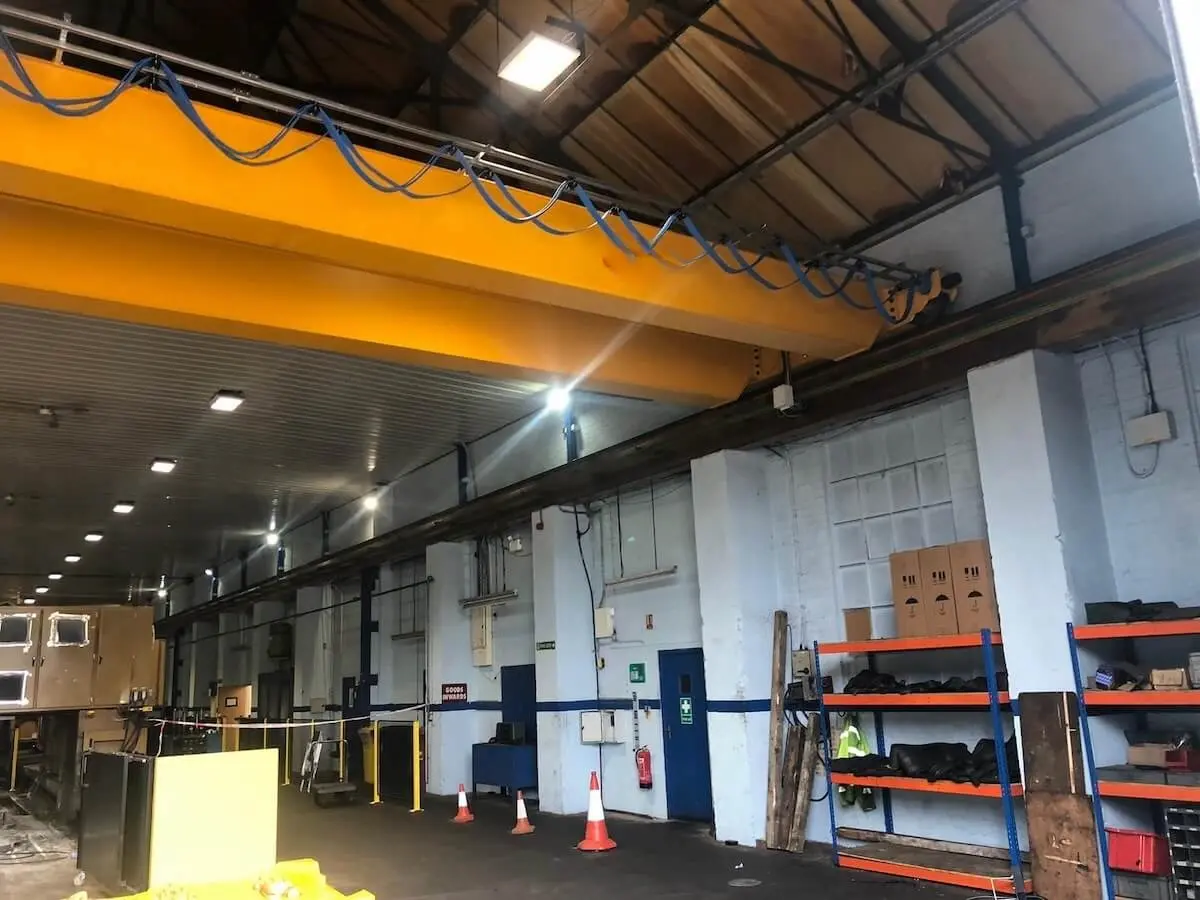
Core Factors for Overhead Crane Selection in Low Headroom Environments
|
Selection Factor |
Key Focus |
Impact on Crane Selection |
| Actual lifting height requirement | Load weight, lifting device height, stacking height, safety margin | Determines whether low headroom or European overhead crane is required |
| Building height | Effective clearance from rail level to roof | Directly limits trolley structure and hoisting arrangement |
| Building structure | Span, column spacing, roof beams, obstacle layout | Affects girder design, end carriage type, and installation plan |
| Crane capacity | Maximum actual lifting load | Determines single girder or double girder overhead crane selection |
| Duty class and working conditions | Lifting frequency, operating time, load ratio | Ensures stability and service life in low headroom environments |
| Operating mode and control | Pendant, remote, or automated control | Compact spaces favor precise control for safety and efficiency |
| Maintenance space | Access for motors, gearboxes, wire ropes | Low headroom design must consider maintenance convenience |
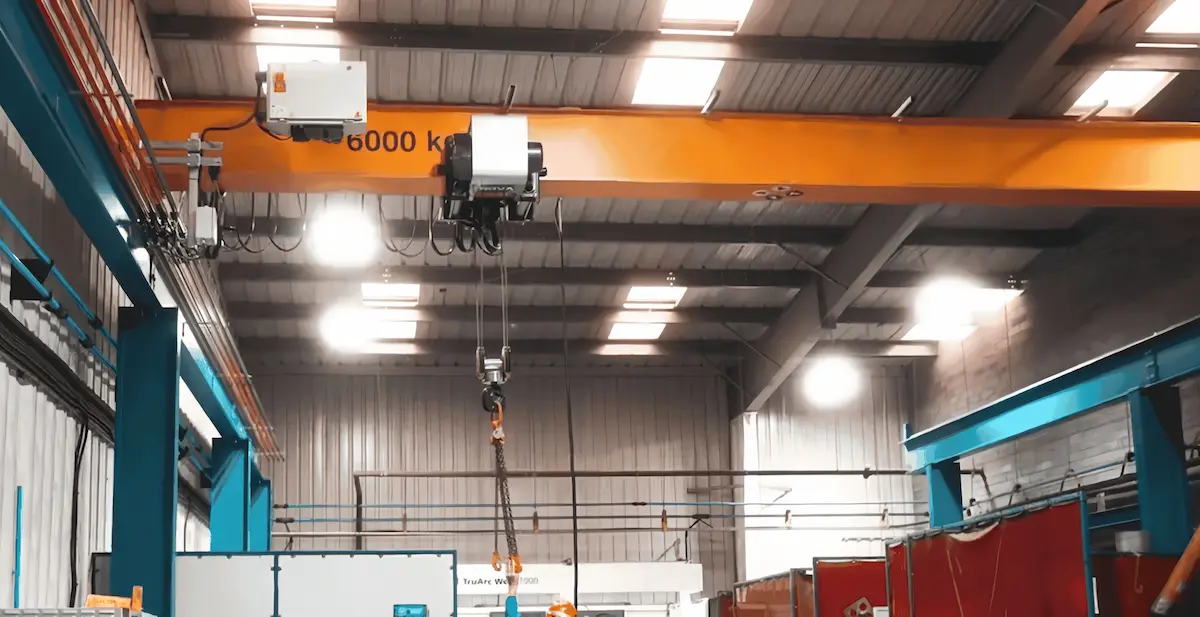
Overhead Crane Types Suitable for Low Headroom Workshops
Low Headroom Overhead Crane
Low headroom overhead cranes are the preferred solution. Main features include:
●Transversely mounted drum or compact hoist layout
●Significantly reduced trolley height
●Improved effective lifting height
Compared with standard cranes, hook height can increase by 200–500 mm.
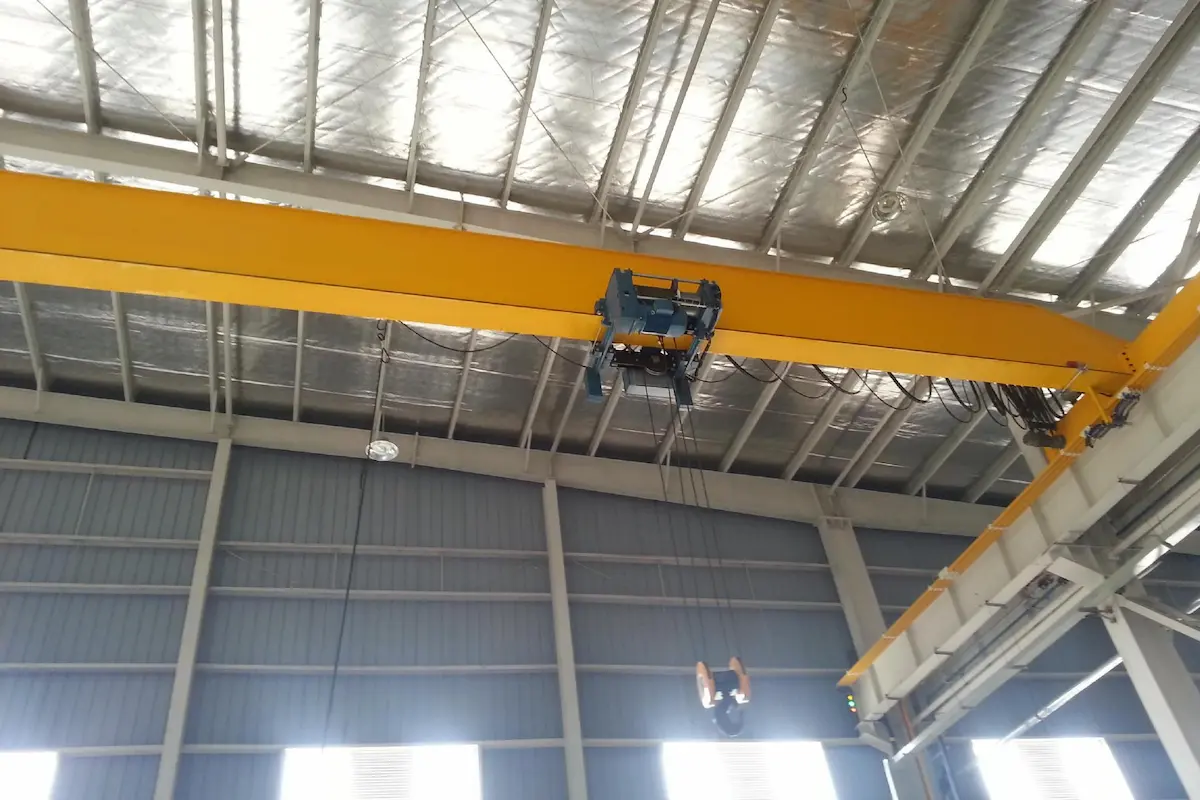
FEM Standard Overhead Crane
FEM standard overhead cranes use modular and compact designs. Key advantages include:
●Lightweight structure
●High lifting height utilization
●Smooth operation and precise positioning
They are ideal for workshops requiring efficient space use and automation.
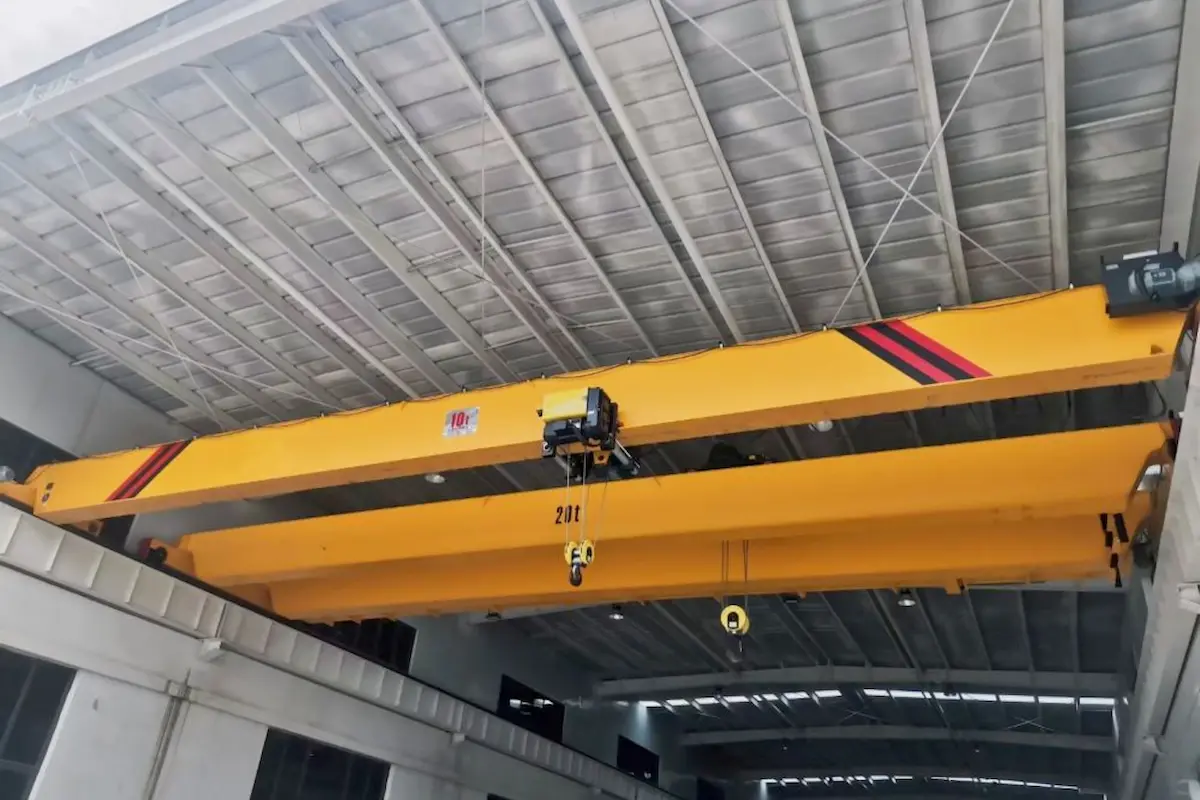
Reasonable Selection of Single or Double Girder
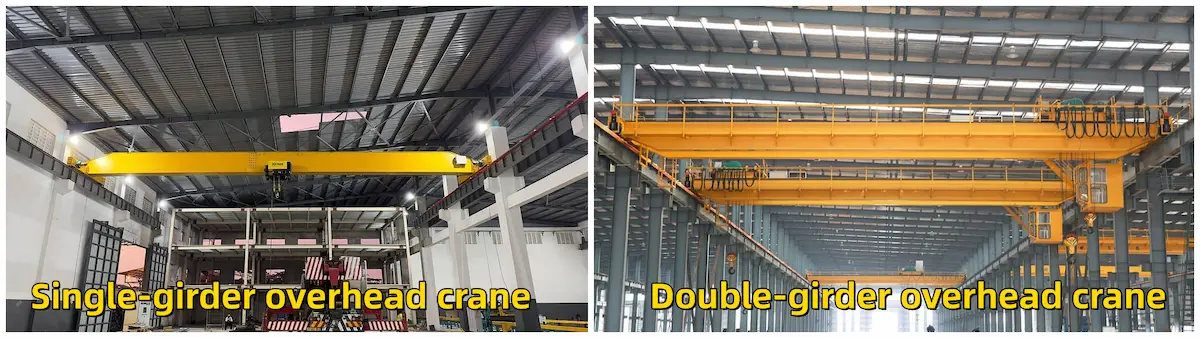
●Single girder overhead crane: suitable for medium loads and extreme low headroom conditions
●Double girder overhead crane: suitable for heavy loads and high duty cycles with refined design
Key Technical Optimization Solutions
In low headroom workshops, selecting the crane type alone is insufficient. Targeted technical optimization is required to achieve safe and efficient lifting within limited space. Professional manufacturers optimize multiple aspects.
●Low headroom hoisting optimization: Use low headroom hoists or compact winches. Optimize drum layout and reeving. Maximize lifting height while maintaining safety margins.
●Compact trolley and girder design: Optimize trolley height and component arrangement. Refine girder sections. Reduce overall height without sacrificing capacity.
●Customized hooks and non-standard lifting devices: Use short hooks or low headroom lifting devices. Minimize height loss. Meet strict height requirements.
●Rail level and installation elevation optimization: Optimize rail elevation within structural safety limits. Gain more lifting space. Suitable for old workshop retrofits.
●Control system and safety optimization: Use VFD control, anti-sway systems, and multiple limit protections. Improve stability and safety in confined spaces.
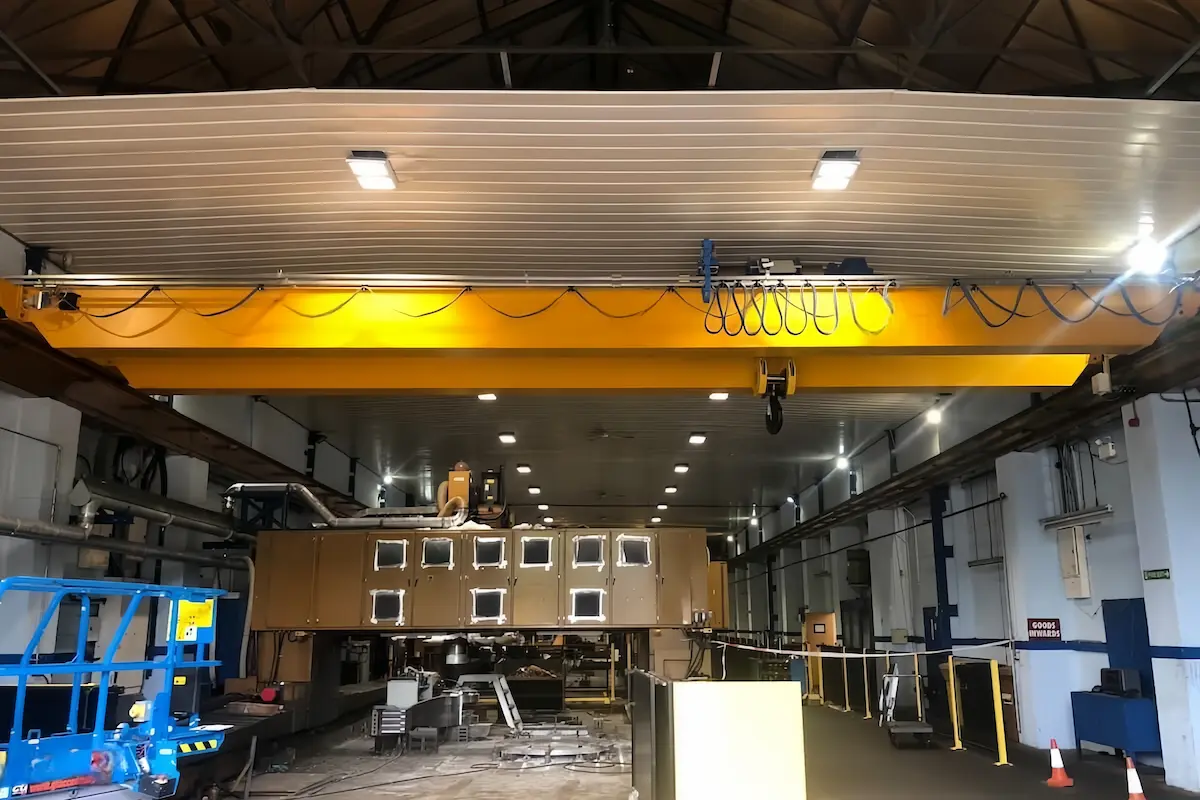
In low headroom workshops, overhead crane selection is not simple standard matching. It requires comprehensive evaluation of building conditions, lifting needs, structure, and safety. Proper low headroom or European overhead crane selection with optimization maximizes space use. Production efficiency and safety are significantly improved.
Contact HSCRANE for professional selection advice and customized solutions. Unlock higher lifting efficiency in limited spaces.
This document is for reference only. Specific operations must strictly comply with local laws and regulations and equipment manuals.
Recent Post