Blog
- Home
- Blog
Jib Crane Applications: Boost Workshop Efficiency
Those who often work in workshops know that what factories lack most is not large overhead cranes, but flexible lifting equipment for the “last meter.” Large overhead cranes have large spans and high tonnage. Using them for short-distance, high-frequency work is overkill. Workers often have to queue for them, wasting precious labor hours.
At this point, a flexible, on-call jib crane becomes the key to breaking the deadlock. Today, we will count down the real pain points that jib cranes can solve in modern industry.
Four hardcore application scenarios for jib cranes
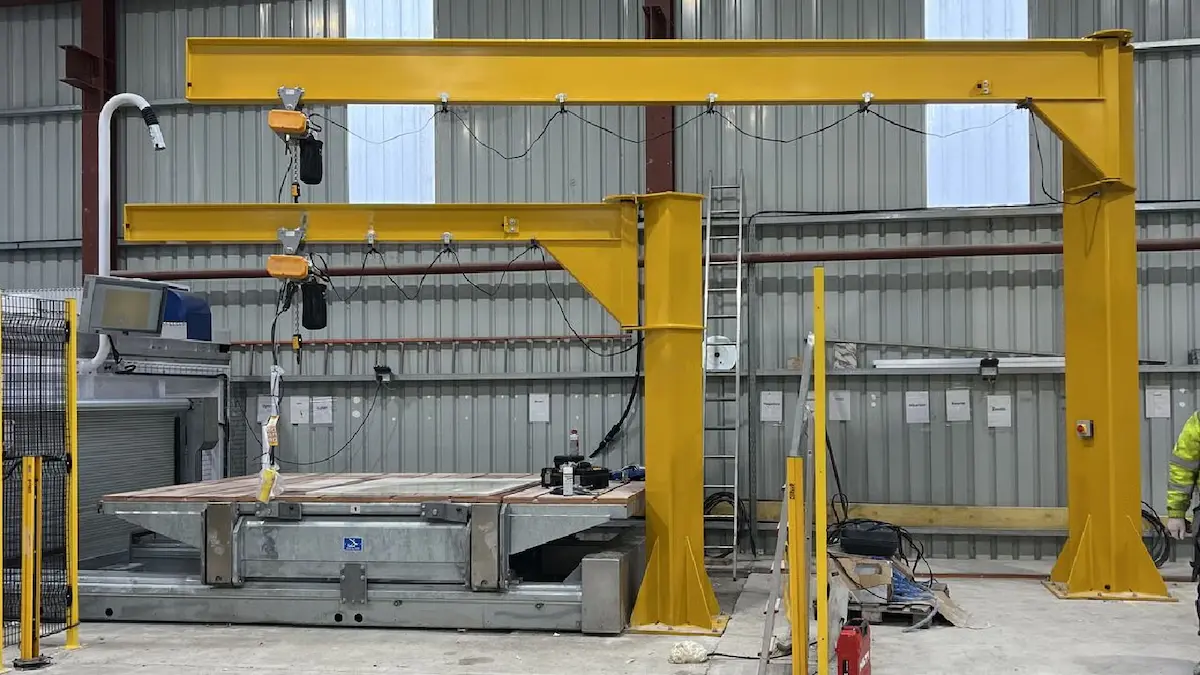
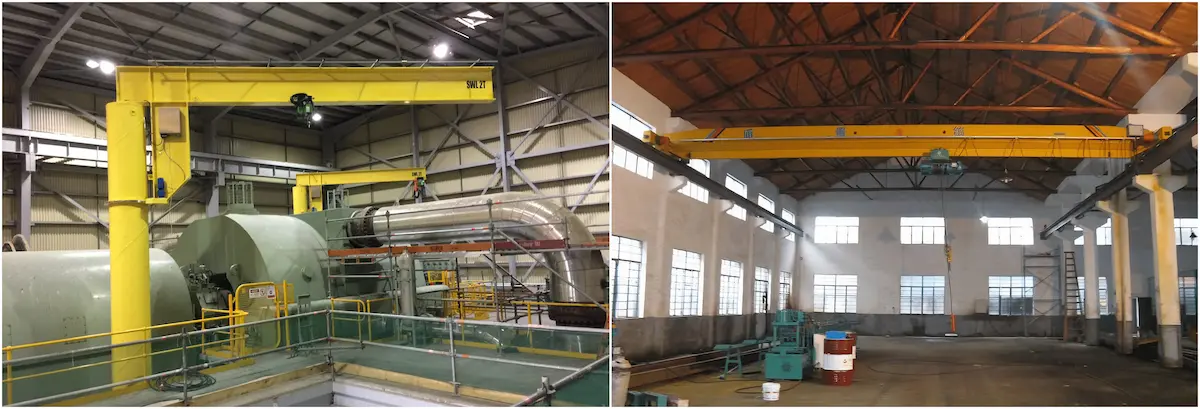
The core advantage of a jib crane lies in “absolute dominance in local areas.” Whether it is a 360-degree rotating pillar-mounted type or a wall-mounted type, they can maximize efficiency at specific stations.
Scenario 1: Machine loading and unloading in machining workshops
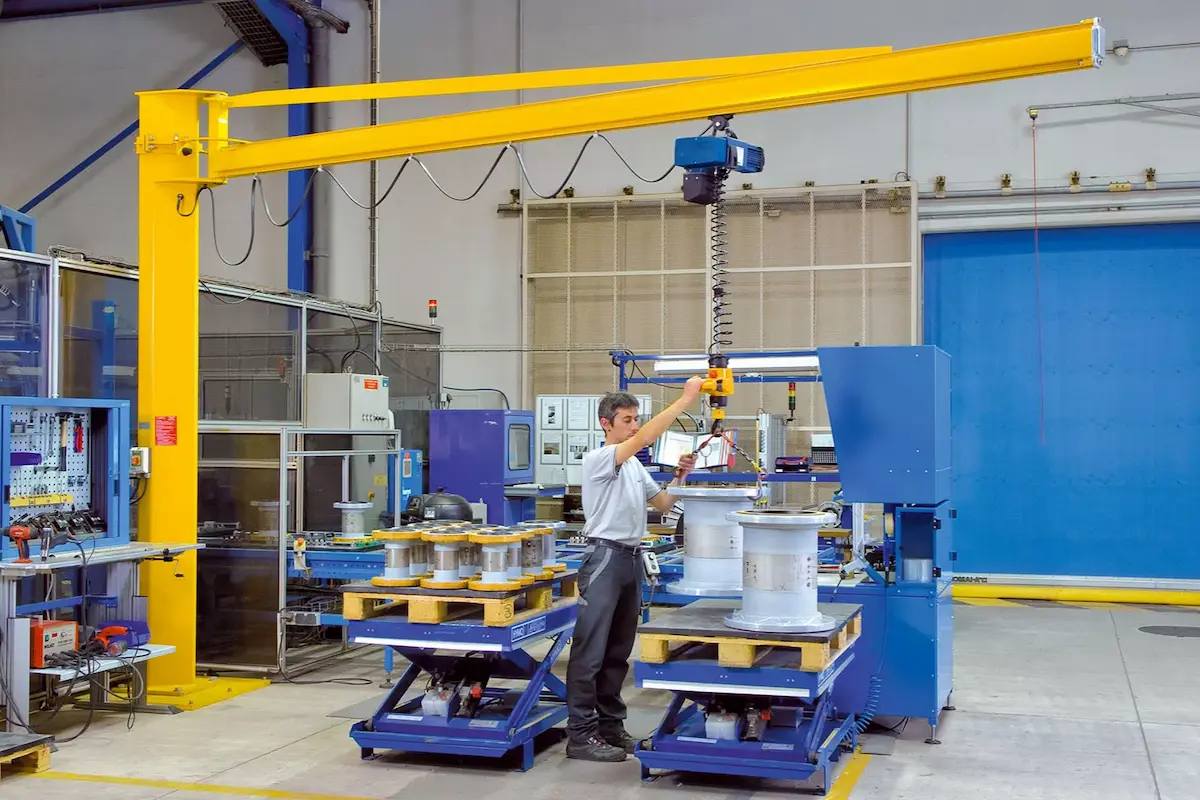
The machining workshop is the “main battlefield” for jib cranes. When CNC machines or lathes process large metal parts, the workpiece weight often ranges from tens to hundreds of kilograms.
●Pain point: Manual handling easily causes waist strain. Inaccurate positioning can easily damage precision tools. If you call the main workshop crane, the waiting time is often longer than the processing time.
●Solution: Install a pillar-mounted jib crane independently next to the machine tool, paired with an electric chain hoist. Workers only need to press the handle to easily complete loading and unloading of blanks and finished parts. Millimeter-level micro-motion ensures the workpiece fits precisely into the fixture, significantly increasing machine tool utilization.
Scenario 2: Dense assembly lines for automobiles and parts
The production pace is extremely fast on assembly lines for car engines, chassis welding, or heavy engineering machinery.
●Pain point: Assembly stations are dense and space is narrow. Large lifting equipment simply cannot enter. If too many tracks are laid on the ground, it will affect the passage of forklifts and AGV carts.
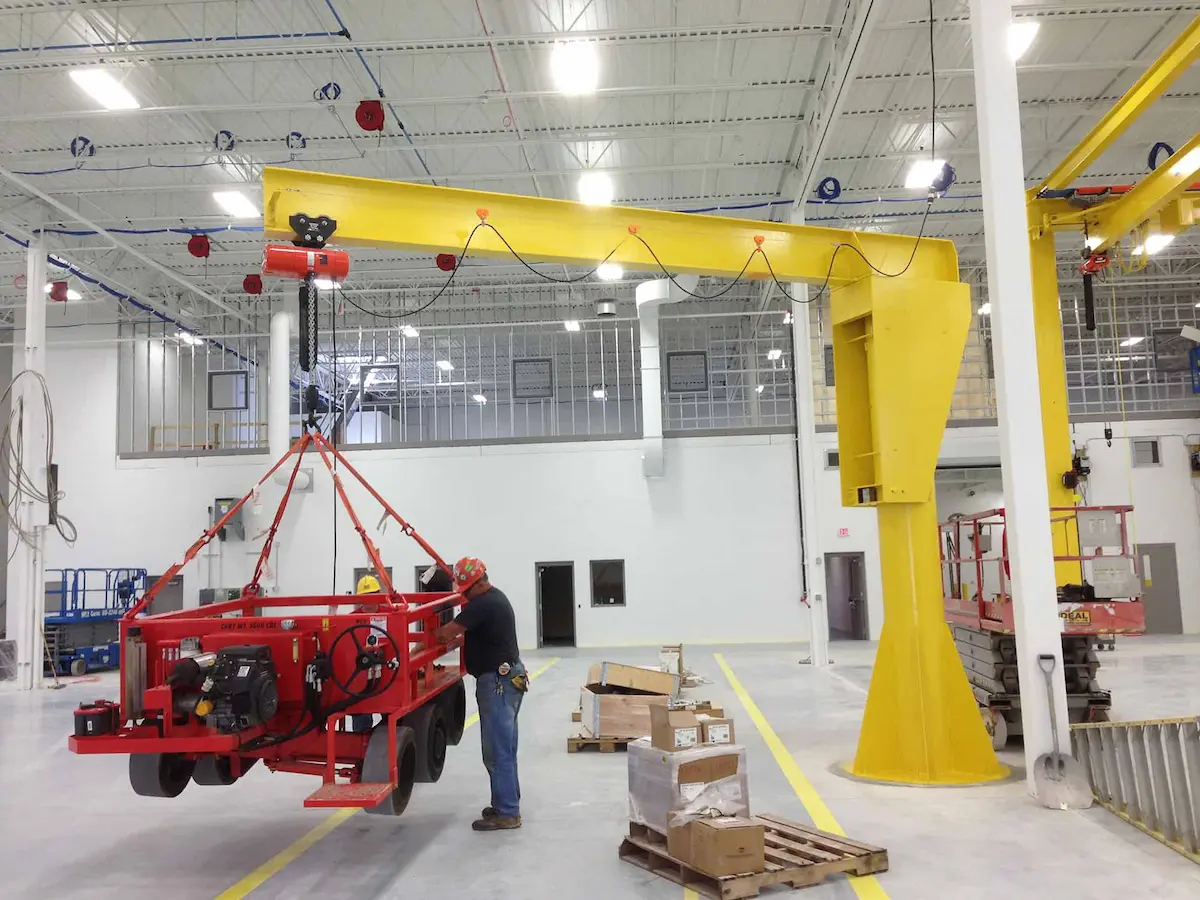
●Solution: Use a wall-mounted or wall-traveling jib crane. Install it directly on the workshop’s existing load-bearing columns or walls. It takes up no floor space at all. Within their own working radius, workers can lift heavy objects like engine blocks or gearboxes and connect them accurately, truly achieving seamless assembly line operation.
Scenario 3: Modern logistics and intensive warehousing sorting
Heavy goods sorting in e-commerce and logistics parks has strict time requirements.
●Pain point: Palletized heavy goods need frequent movement between platforms, conveyor belts, and trucks. Traditional forklift operations have blind spots and are difficult to maneuver in narrow aisles.
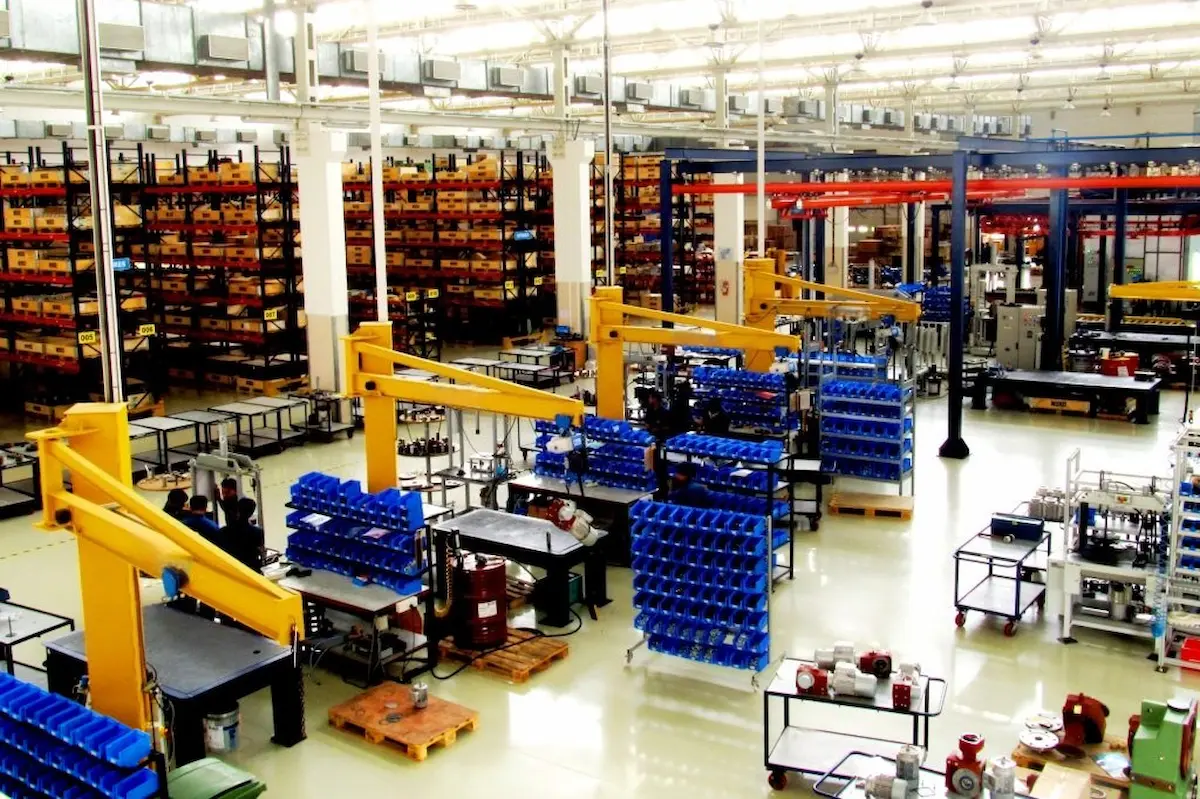
●Solution: Select a jib crane with an articulated arm function. The articulated design cleverly bypasses complex pillars and obstacles in the warehouse. It can even extend the hook directly into a container truck for unloading. High-frequency lifting and slewing make a qualitative leap in logistics inbound and outbound efficiency.
Scenario 4: Outdoor equipment maintenance and environmental water treatment plants
Not all lifting is done indoors. Equipment maintenance in many chemical plants and sewage treatment plants also requires frequent lifting.
●Pain point: Outdoor environments lack load-bearing walls. They often face wind, sun, and corrosive gases. This puts extremely high demands on equipment weather resistance.
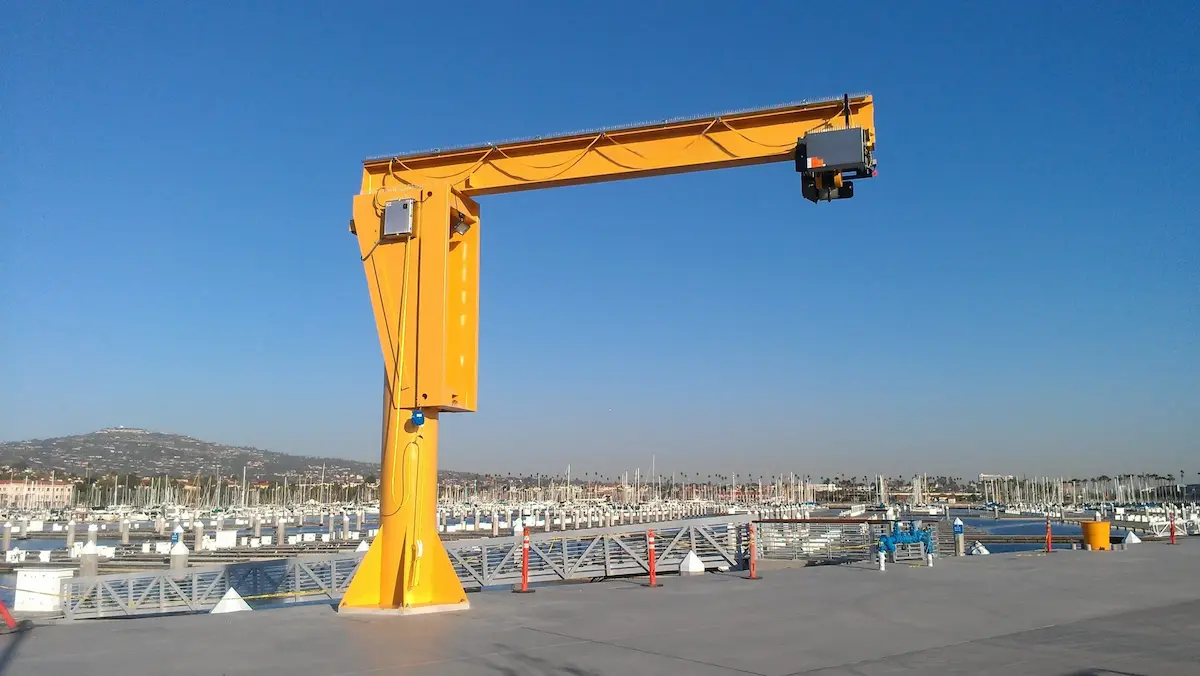
●Solution: For outdoor scenarios, usually adopt a heavy-duty pillar-mounted jib crane with customized anti-corrosion coating. It is fixed directly to the concrete foundation with anchor bolts. Whether lifting sewage pumps, replacing large valves, or routine maintenance of chemical equipment, it provides a stable and reliable outdoor lifting anchor point.
Traditional Cranes vs. Jib Cranes
To better visualize the positioning of a jib crane, let’s compare it with a traditional large workshop crane:
|
Comparison Dimension |
Jib Crane |
Overhead Crane |
| Coverage | Local station, usually circular or semicircular. | The entire rectangular space of the factory. |
| Floor Space | Minimal (pillar-mounted) or none (wall-mounted). | Requires support pillars or takes up huge overhead space. |
| Operation Frequency | Extremely high; suits frequent loading at single stations. | Lower; mainly responsible for large-scale logistics. |
| Cost | Economical, very short installation cycle. | Expensive, long installation and commissioning period. |
| Flexibility | Extremely high; lightweight, allows articulated arms. | Poor; has visual blind spots, requires human guidance. |
Why do repeat clients choose HSCRANE jib cranes?
There are countless jib crane manufacturers, but many workshop managers lock in orders with HSCRANE after trying other brands. This isn’t luck; it’s determined by product details. As a veteran brand, HSCRANE has core advantages in design and manufacturing:
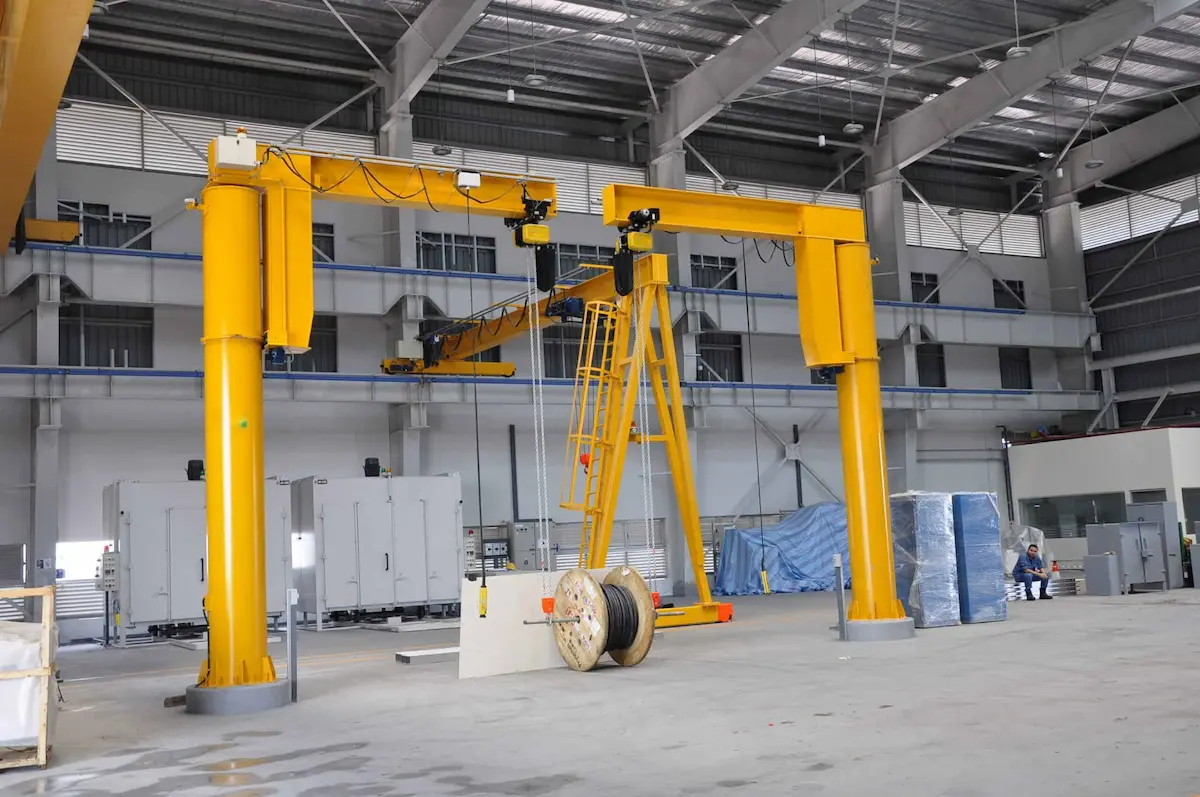
●True “one-finger push” slewing: Many low-quality jib cranes become stiff over time, making workers sweat to move them. HSCRANE uses high-precision self-aligning thrust bearings and optimized slewing structures. Even with a full load, workers can move the arm with one hand, achieving ergonomic smoothness.
●No material compromise, full safety margins: Our pillars use high-quality seamless steel pipes, and the main beam uses high-strength structural steel. Unlike brands that cut costs with thin, bent sheets, HSCRANE equipment ensures the beam won’t deform or droop, even under heavy, high-frequency loads.
●Ultimate non-standard customization: While others make you adapt to their equipment, HSCRANE makes equipment adapt to your workshop. Whether it’s low headroom, special 270°/360° dead-zone avoidance, or integration with pneumatic balancers or smart hoists, our engineers provide optimal designs within 48 hours.
●Maintenance-free design: The biggest workshop fear is frequent maintenance. HSCRANE seals key transmission parts and uses lifetime lubrication. This greatly reduces maintenance frequency, letting the equipment be a tool that works, not a “heavy burden” to maintain.
Conclusion
In today’s highly competitive manufacturing environment, every minute of waiting in the workshop is a loss of profit. A jib crane may seem like an insignificant “small part,” but it is often the key to unlocking production line efficiency. Choose a reliable HSCRANE jib crane to let your overhead cranes return to heavy-duty work and say goodbye to waiting at workstations. This is what modern lean production should look like.
This document is for reference only. Specific operations must strictly comply with local laws and regulations and equipment manuals.
Recent Post