Blog
- Home
- Blog
The Application Boundaries and Selection Guide for Semi-Gantry Crane
Overview
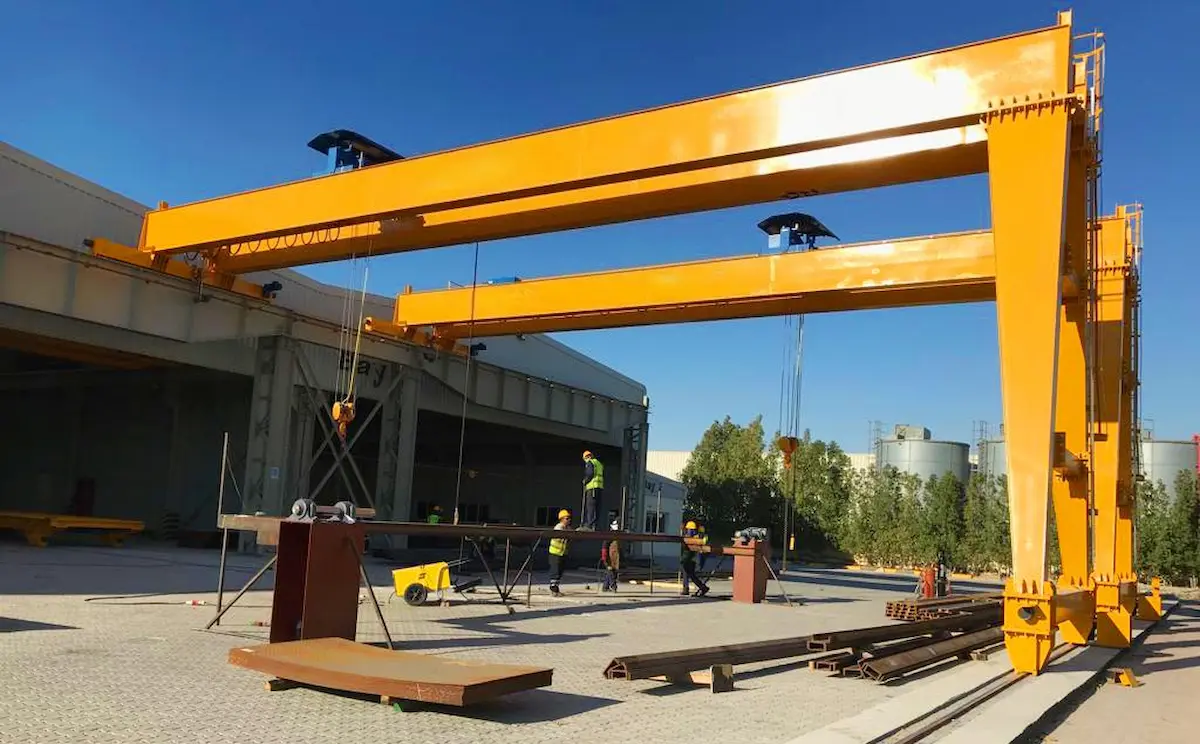
When communicating with many factory infrastructure managers, we often hear this complaint: “One side of the factory has a load-bearing wall and corbel, but the other side is open ground. There is no place to install columns for a overhead crane, and a full gantry crane takes up too much space. What should we do?” At this time, the semi-gantry crane is often the unique choice to break the deadlock. It runs with one leg on the ground and the other end on an elevated track. It looks like a “lame” giant, but under specific space limitations, it can achieve high space utilization efficiency.
However, no industrial equipment is omnipotent. Semi-gantry cranes have extremely strict “applicable boundaries.” Once the selection exceeds this boundary, it will not only increase unnecessary procurement costs but also bury hidden dangers for later production safety. Today, setting aside dry parameters and starting from actual working conditions, we will discuss where semi-gantry cranes are suitable and which minefields must never be stepped on.
What Is the “Applicable Boundary” of a Semi-Gantry Crane?
In the crane industry, the “boundary” is usually composed of three dimensions: building structure, budget limitations, and operation cross rate. The original design intent of the semi-gantry crane is a compromise. It is a middle solution between a bridge crane (fully relying on load-bearing walls) and a gantry crane (fully independent of load-bearing walls).
Its applicable boundary is precisely those awkward zones where you can neither fully rely on the wall nor fully rely on the ground.
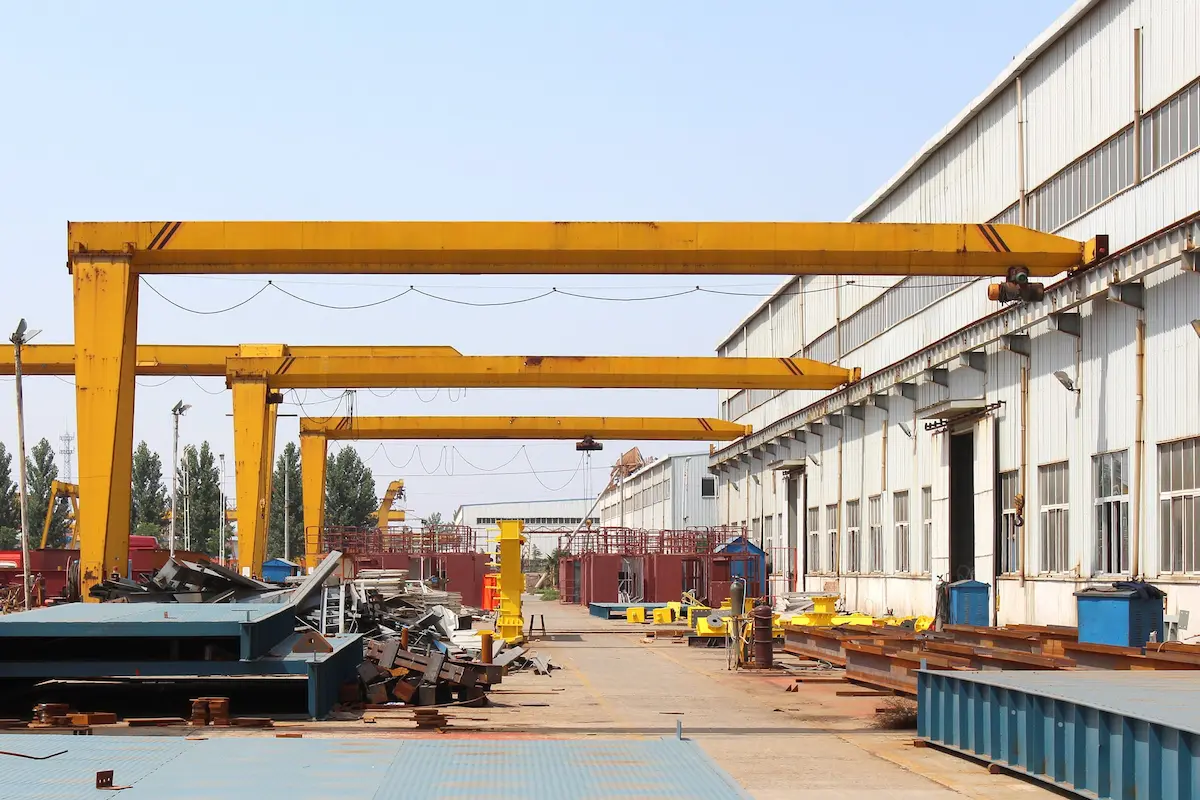
Core Application Scenarios Analysis
Scenario 1: Special-Shaped Factories with a Load-Bearing Wall or Corbel on One Side
This is the most classic survival soil for semi-gantry cranes. Many old factories during expansion, or non-standard workshops built against hills and walls, only have one side meeting the load-bearing conditions for installing elevated runways. At this time, forcing foundations and columns on the other side breaks the ground and compresses operation channels. The “ground rail + elevated rail” design of the semi-gantry crane perfectly absorbs this asymmetrical building structure.
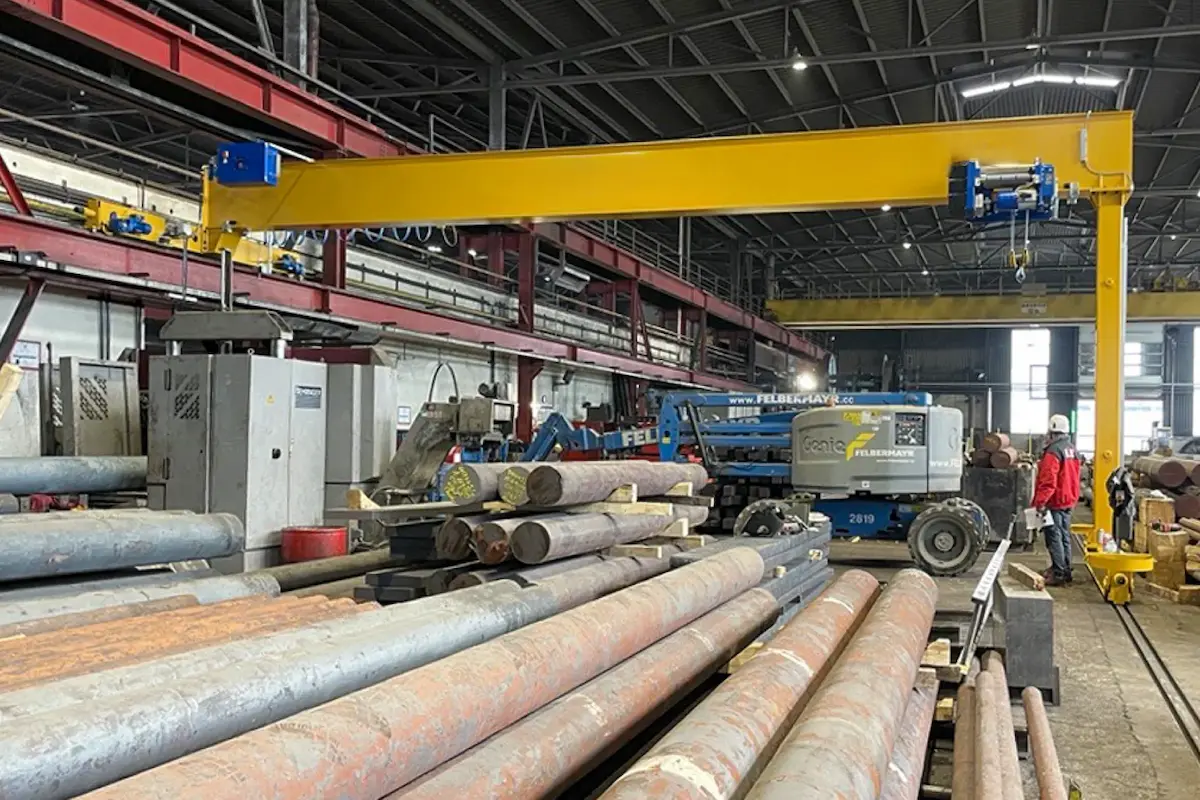
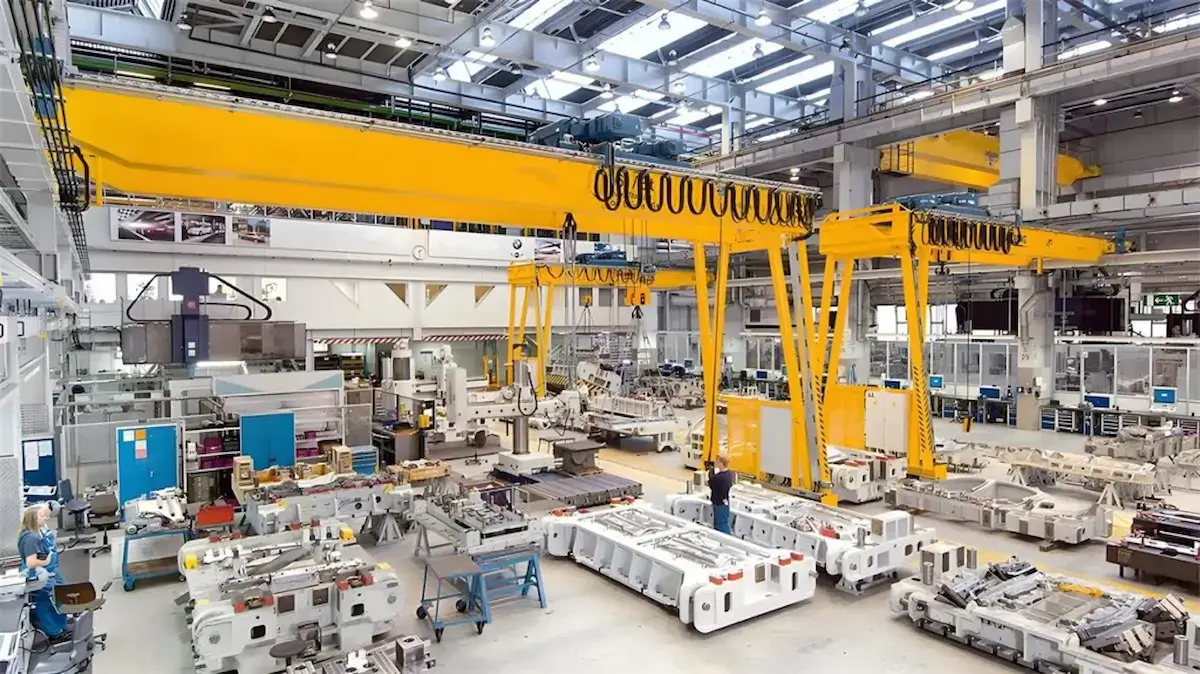
Scenario 2: Cross Operations Requiring Bunk-Bed Layouts with Bridge Cranes
In some heavy machinery manufacturing workshops, large-tonnage bridge cranes are already installed overhead for overall dispatching. However, local workstations below, like assembly lines or machining areas, need frequent lifting of medium and small parts. Waiting for the large overhead crane every time is extremely inefficient.
At this time, installing a semi-gantry crane below along the wall allows it to shuttle within its exclusive lower runway zone. It works without interfering with the bridge crane above, forming a three-dimensional material handling network.
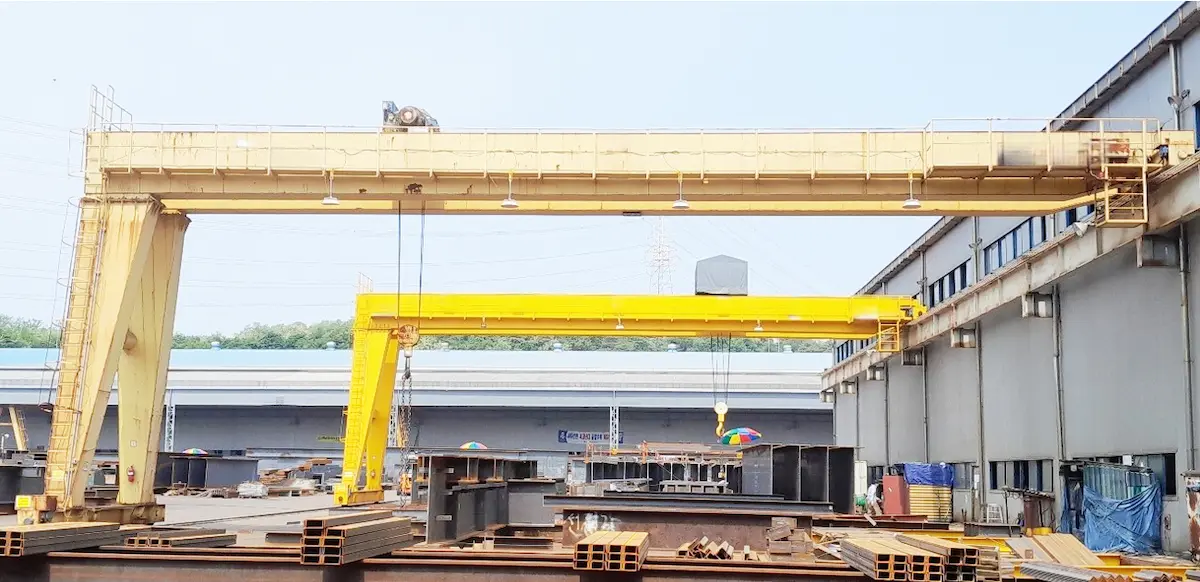
Scenario 3: Outdoor Storage Yards Against Walls Outside the Factory
Many enterprises have finished product storage yards right next to the factory outer walls. If a full gantry crane is used, the leg on the wall side occupies valuable channel space. By fixing one end track directly onto the corbel of the factory outer wall and adopting a semi-gantry structure, ground utilization reaches its maximum. This is especially suitable for long material handling areas.
Horizontal Comparison of Three Mainstream Cranes
|
Comparison Dimensions |
Semi-Gantry Crane |
Overhead Crane |
Full Gantry Crane |
| Dependency on Factory Structure | Medium (requires load-bearing structure on one side) | Extremely high (requires load-bearing walls/corbels on both sides) | Extremely low (completely independent, only requires laying ground rails) |
| Ground Space Occupation Rate | Relatively small (only occupies ground rail space on one side) | Zero occupation (all operations run in mid-air) | Relatively large (legs and ground rails on both sides occupy more space) |
| Comprehensive Construction Cost | Medium (slightly higher equipment cost, saves money on infrastructure) | Lowest (provided that the factory already meets load-bearing conditions) | Highest (when the span is large, equipment dead weight and cost are high) |
| Most Matching Working Conditions | Local workshop lifting, wall-adjacent storage yards, three-dimensional cross operations | Standard enclosed factories, overall heavy-duty lifting | Open-air freight yards, large docks, workshops without walls |
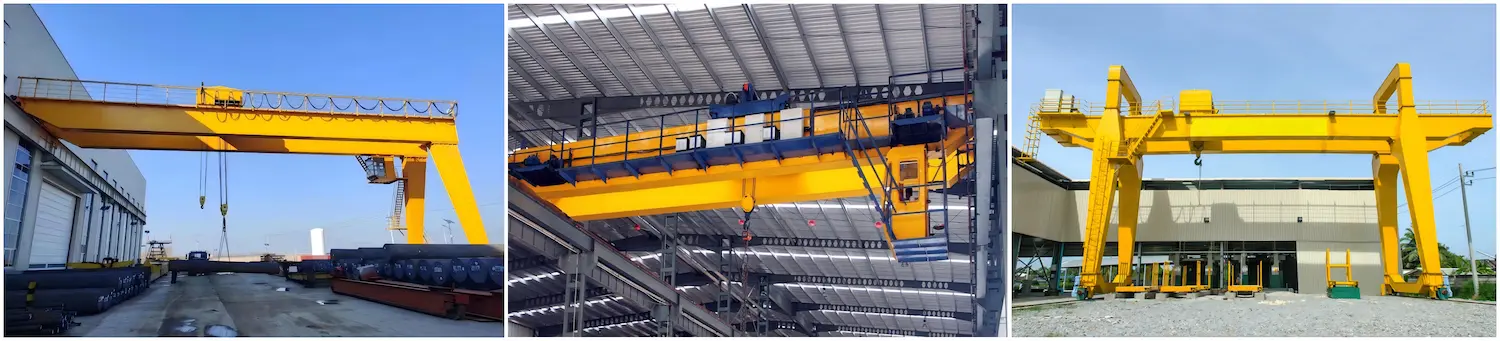
When Should You Absolutely Not Choose a Semi-Gantry Crane?
Understanding what it can do is important. However, as a professional engineering decision-maker, knowing what it cannot do is even more crucial. Please avoid semi-gantry cranes in the following two scenarios:
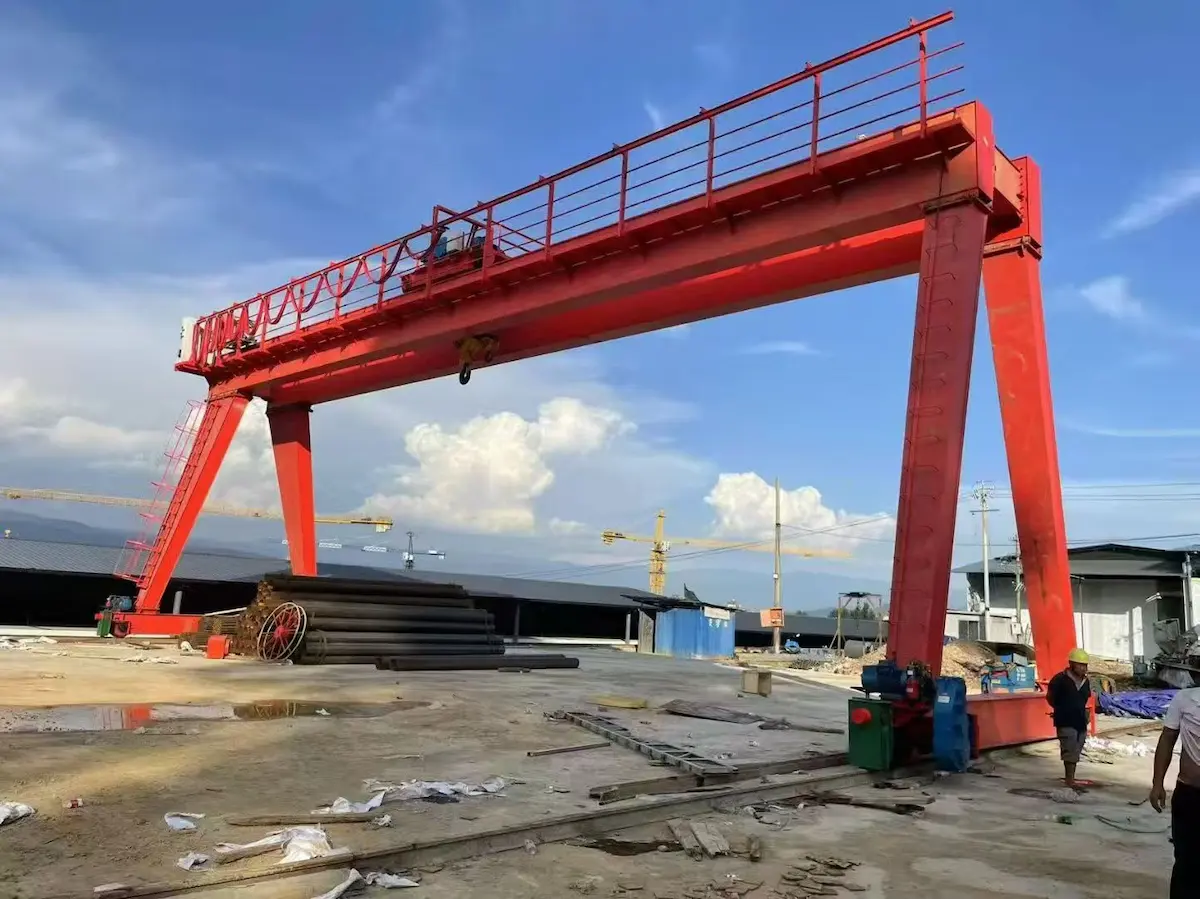
Minefield 1: Soft Soil Foundations with Inconsistent Ground Settlement Risks on Both Sides
The greatest load-bearing characteristic of a semi-gantry crane is asymmetry. The force feedback of the upper track and the lower track is completely different. If the factory sits on a soft soil foundation and the ground rail side has settlement risks, the span between upper and lower tracks will change slightly. This twisting phenomenon will aggravate rail gnawing. In severe cases, it causes motor overload or even derailment. As long as the foundation is unstable, you should rather drive deep piles for a full gantry crane than use a semi-gantry crane.
Minefield 2: Extremely High-Frequency, Full-Load, Ultra-Heavy-Duty Conditions (e.g., Heavy Metallurgy)
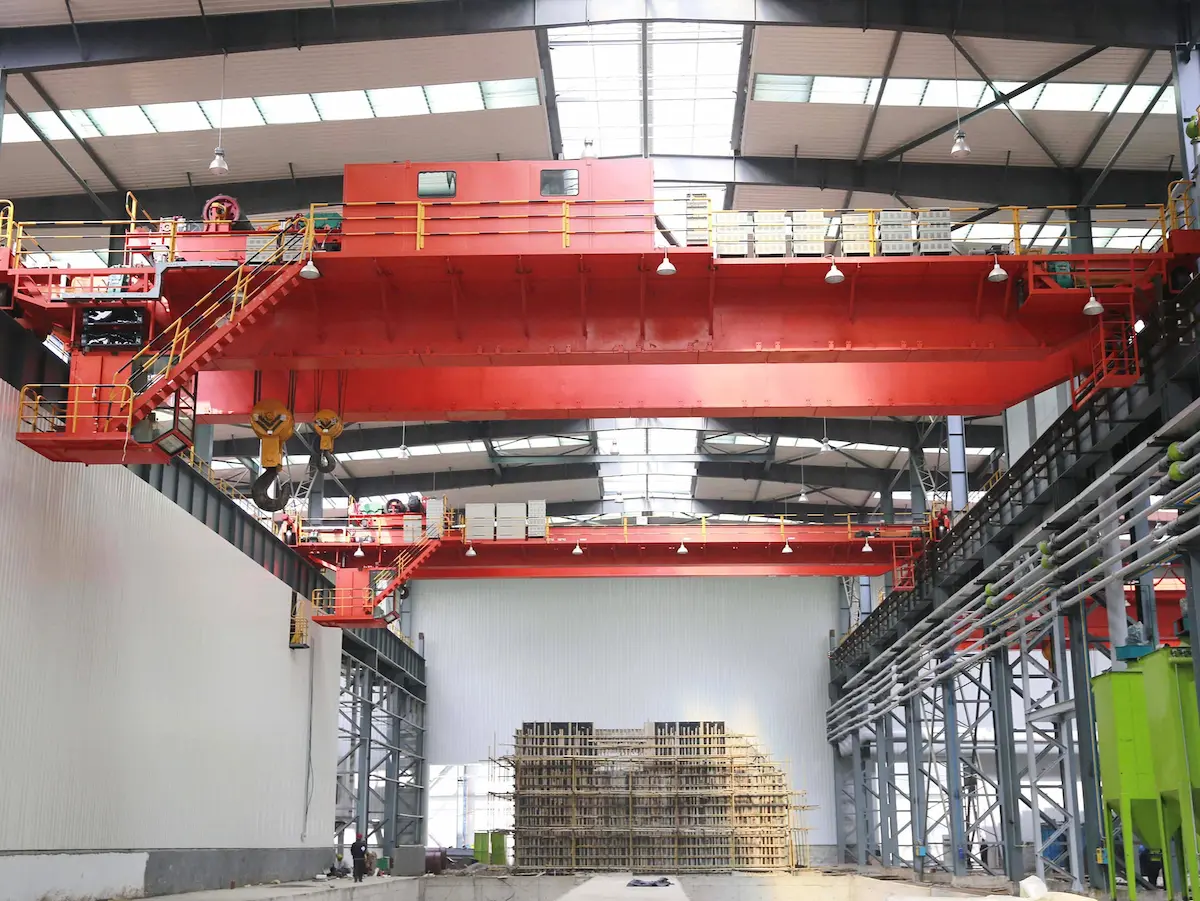
Although semi-gantry cranes can reach lifting capacities of dozens of tons, their structural asymmetry limits them in A7/A8 high-frequency continuous full-load operations (such as scrap spans in steel plants). The rigidity and torsional resistance of the overall steel structure are inferior to a double-girder overhead crane. Long-term, high-intensity eccentric torque accelerates wear on ground-side wheels and elevated-side tracks. For such extreme conditions, reinforcing the factory to install an overhead crane is the long-term solution.
Conclusion
Procuring a crane is never a simple purchase by intuition. It is a comprehensive game involving building structures, available space, equipment budgets, and future capacity planning.
The semi-gantry crane is not a conventional option. It acts more like a custom key designed specifically to unlock the dead ends of restricted spaces. When your factory faces insufficient single-side load-bearing capacity, needs three-dimensional cross operations, or wants to squeeze out more handling area in tight spaces, it becomes your best choice.
If you still doubt whether your factory status meets the applicable boundary during the equipment selection stage, we suggest inviting professional crane engineers for on-site surveys. After all, calculating one more inch on the drawing saves one less worry over the next ten years.
This document is for reference only. Specific operations must strictly comply with local laws and regulations and equipment manuals.