Blog
- Home
- Blog
Jib Crane Duty Class: How to Choose A3, A4, and A5?
Overview
The jib crane duty class is an important technical indicator. It measures the equipment’s ability to withstand loads and operating cycles throughout its design life. It directly affects design requirements for the steel structure, hoisting mechanism, slewing mechanism, electrical system, and key components.
According to crane classification systems, the duty class is generally determined by two core parameters:
1.Utilization Class: Reflects the total number of operating cycles throughout the equipment’s design life.
2.Load Spectrum: Reflects the proportions of different load levels during actual operation.
Therefore, the jib crane duty class cannot be determined by rated capacity or daily operating hours alone. Actual production conditions must also be considered. A3, A4, and A5 represent different equipment duty classes. Each corresponds to different operating intensities and loading conditions. Selection requires evaluating operating frequency, load distribution, and expected service life.
What Are the Differences Between A3, A4, and A5 Duty Classes?
The main differences between jib crane duty classes A3, A4, and A5 involve operating cycles and load spectrum requirements. Higher duty classes require greater structural fatigue resistance and mechanism reliability.
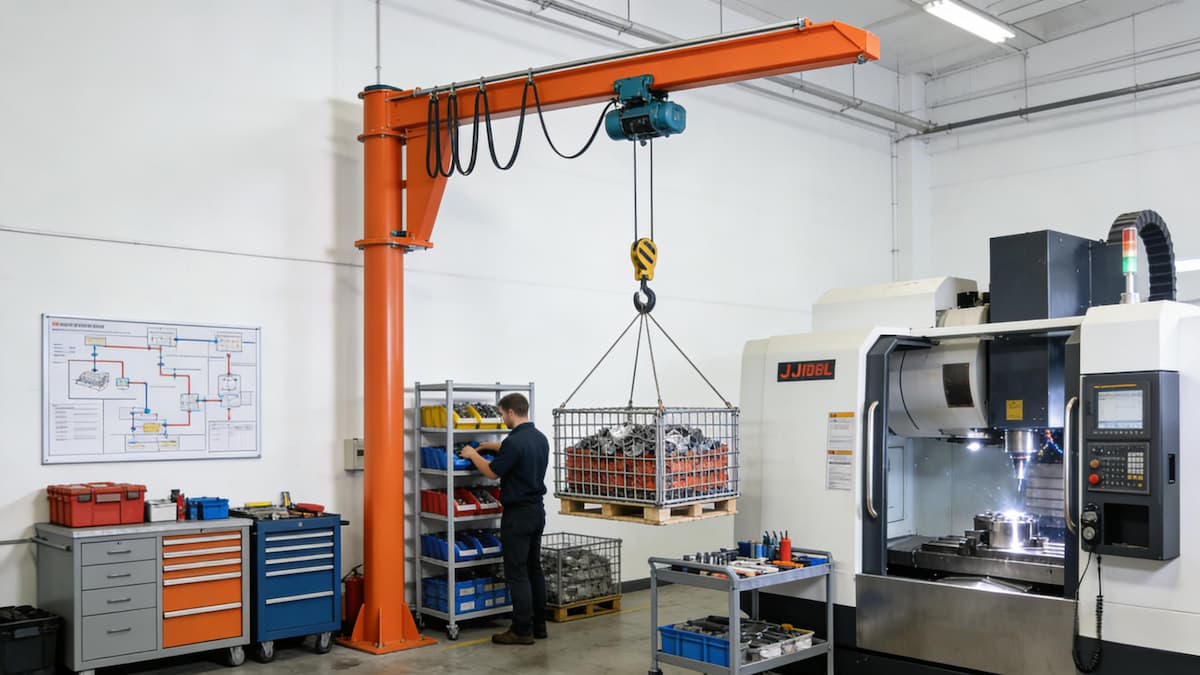
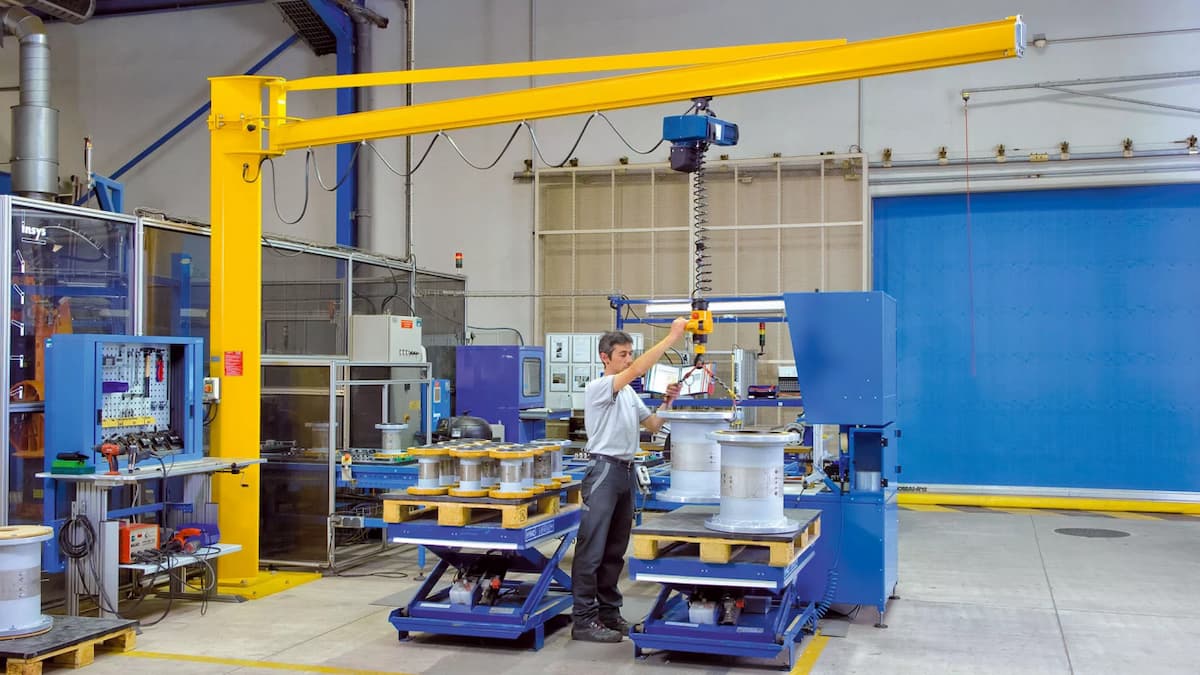
A3 Duty Class: Light Intermittent Operations
A3 suits applications with relatively few operating cycles and low load levels. Equipment typically does not operate continuously for extended periods. Rated capacity is also used less frequently.
Typical applications include:
●Auxiliary lifting in small machining workshops.
●Component handling in equipment maintenance areas.
●Intermittent lifting in warehouses and assembly stations.
●Material transfer on low-frequency production lines.
For jib crane duty class selection involving low operating frequencies and stable tasks, A3 usually meets basic requirements.
A4 Duty Class: Medium-Duty Regular Operations
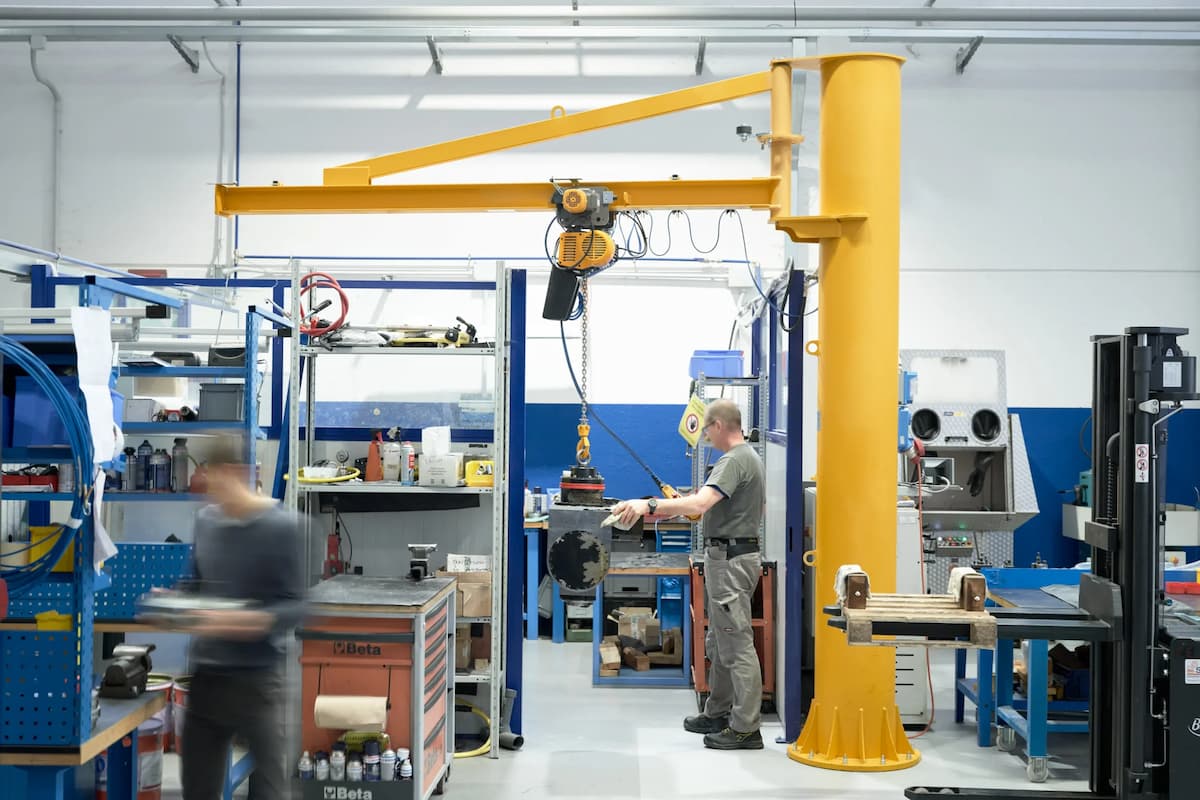
A4 suits industrial environments with regular production tasks and more operating cycles. Compared with A3, equipment must withstand higher cumulative workloads. It must also accommodate relatively frequent hoisting and slewing operations.
Typical applications include:
●General machinery manufacturing workshops.
●Metal processing and component assembly areas.
●Medium-frequency material handling on production lines.
●Material transfer between industrial storage areas and workstations.
A4 is generally more suitable than A3 for equipment performing multiple daily lifting tasks. It also supports relatively consistent operating schedules.
A5 Duty Class: Higher-Intensity Continuous Operations
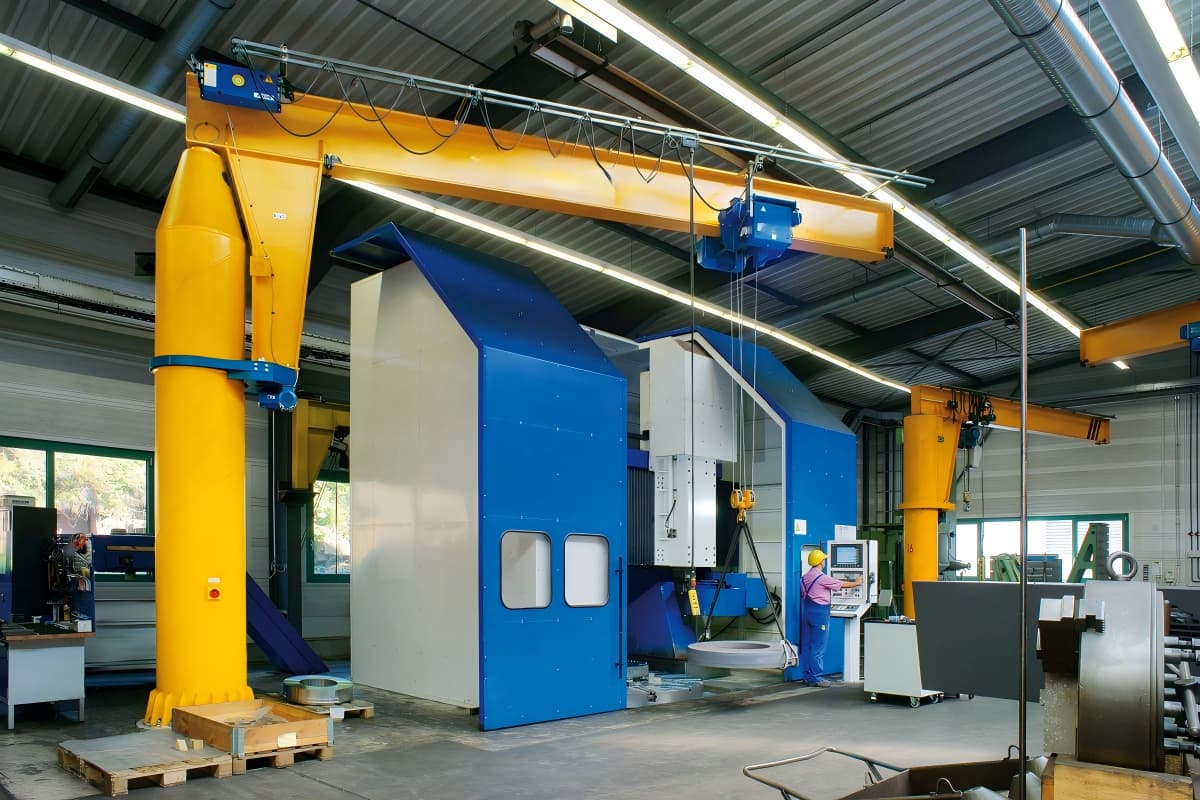
A5 suits industrial applications involving numerous operating cycles and frequent loading. Equipment requires greater fatigue resistance. This helps accommodate structural stress and mechanism wear during long-term operation.
Typical applications include:
●Heavy-duty machining workshops.
●Manufacturing plants with fast production cycles.
●Assembly areas frequently handling heavy workpieces.
●Industrial production lines with intensive operating cycles.
A5 configurations deserve particular consideration when equipment frequently approaches rated capacity. They are also suitable for frequent hoisting and slewing operations.
Technical Comparison of Jib Crane Duty Classes A3, A4, and A5
|
Comparison Item |
A3 |
A4 |
A5 |
| Operating intensity | Low | Medium | High |
| Operating cycles | Relatively few | Regular | Relatively intensive |
| Load usage | Mainly light loads | Medium loads are common | Frequent higher-load operation |
| Typical applications | Maintenance and auxiliary lifting | General manufacturing and assembly | High-intensity production |
| Design priorities | Basic fatigue requirements | Improved cycle load capacity | Higher fatigue resistance |
The table provides application-based selection guidance. It does not define fixed load proportions or daily operating hours for A3, A4, and A5. Actual classification requires calculations based on utilization class and load spectrum.
How to Select a Jib Crane Duty Class Based on Actual Operating Conditions?
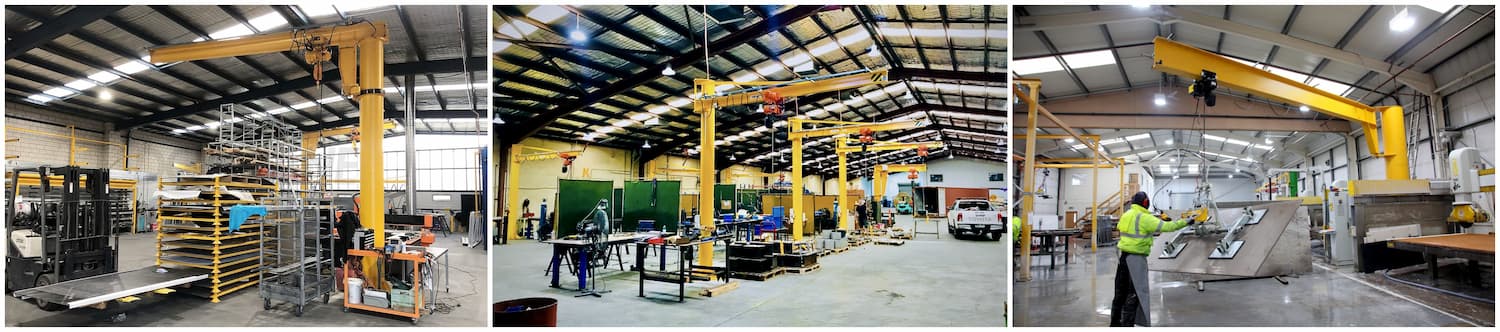
Selecting a jib crane duty class requires evaluating operating frequency, actual load spectrum, and structural loading conditions. Rated capacity and daily working hours alone are insufficient. Consider these three aspects:
1.Analyze Operating Cycles: Record lifting operations per shift. Include hoisting, movement, slewing, and lowering. Calculate cumulative operating cycles based on the expected service life. Low-frequency auxiliary operations may suit A3. Regular production may suit A4, while frequent lifting warrants A5 evaluation.
2.Evaluate the Actual Load Spectrum: Analyze the proportion of operations at different load levels. Long-term light-load operation may suit A3. Alternating light and medium loads may suit A3 or A4. Frequent operation near rated capacity requires careful A4 or A5 evaluation. Equipment with identical capacities can experience different fatigue damage.
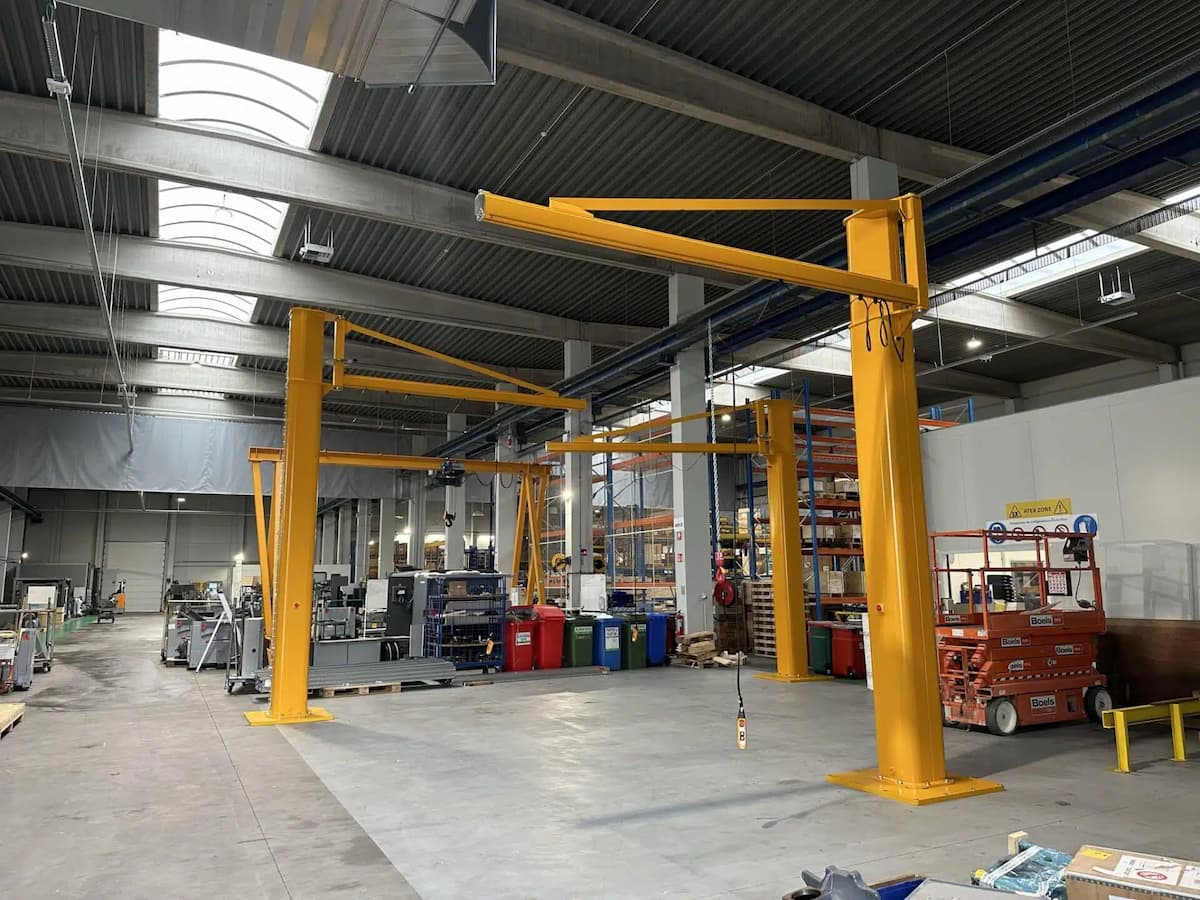
3.Verify Structural and Mechanism Requirements: Check the jib, column, slewing bearing, hoisting mechanism, braking system, and anchoring foundation. Evaluate their strength and fatigue performance. For pillar-mounted and wall-mounted designs, verify structural loading and load-bearing capacity separately. Ensure every component meets its applicable design requirements.
What Should You Consider When Selecting A3, A4, and A5?
When selecting a jib crane, consider duty class, rated capacity, mechanism configuration, and future production requirements. Pay particular attention to these three aspects:
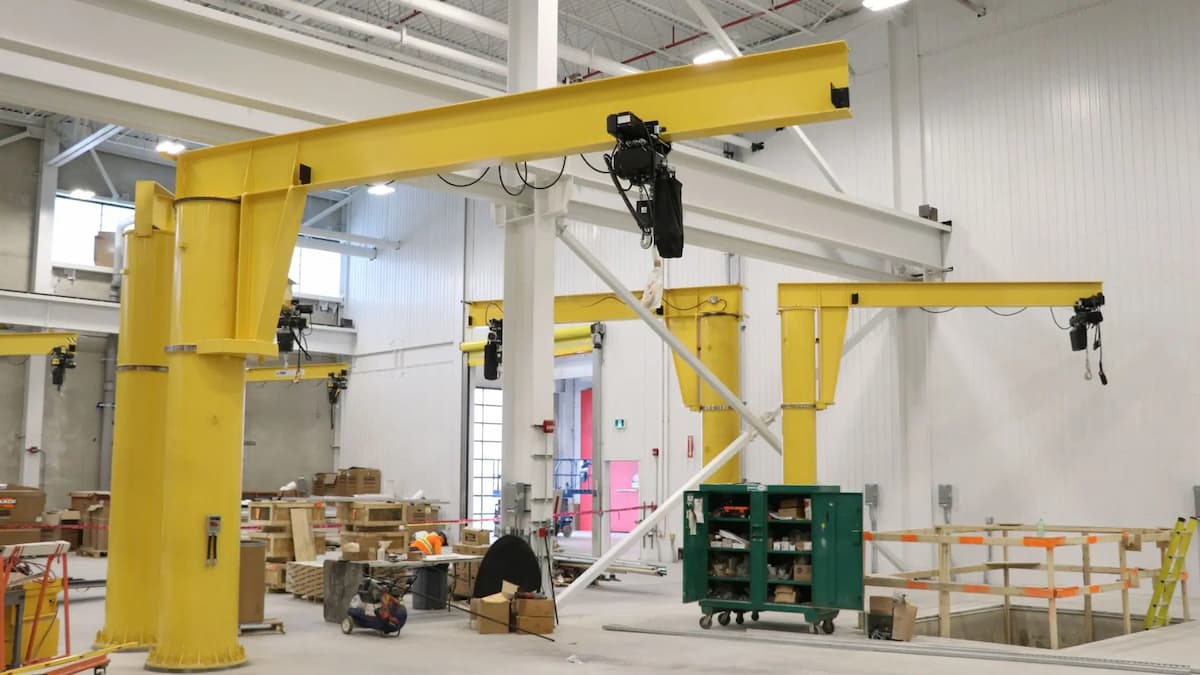
●Distinguish Rated Capacity from Duty Class: Rated capacity indicates the maximum permitted lifting load. Duty class reflects the equipment’s ability to withstand loads and operating cycles throughout its design life. Equipment with identical capacities may require different duty classes. Operating frequency and load distribution determine these differences.
●Calculate Requirements for Individual Mechanisms: The overall crane duty class cannot replace individual mechanism selection. Evaluate the hoisting mechanism, slewing mechanism, motor, gearbox, brake, and wire rope separately. Consider operating cycles, load spectrum, thermal loading, and fatigue performance. Ensure every component meets its applicable design requirements.
●Consider Future Production Requirements: Before purchasing, confirm daily operating cycles, production speed, actual loads, expected service life, and working environment. If future capacity increases or more frequent lifting is expected, reserve reasonable design margins. This prevents insufficient initial duty class selection from affecting long-term operation.
Jib Crane Duty Class Selection Recommendations
Based on operating frequency, load spectrum, and application environment, use the following guidance for preliminary jib crane duty class selection:
|
Selection Conditions |
Recommended Assessment |
Main Reason |
| Occasional use, mainly light loads | A3 | Relatively low operating cycles and load levels |
| Regular use, medium loads | A4 | Requires consistent production performance |
| Frequent use, numerous heavy loads | A5 | Requires higher fatigue resistance |
| Conditions exceeding typical A5 applications | Further calculation | A higher duty class may be necessary |
These recommendations support preliminary selection only. They cannot replace formal duty class calculations. Under the ISO 4301 series, overall crane classification considers utilization class and load spectrum. Jib cranes also require attention to the dedicated classification standard ISO 4301-4:2025. Verify compliance against the design standards applicable to each project.
Conclusion
Choosing between jib crane duty classes A3, A4, and A5 depends primarily on actual operating cycles. Load distribution and expected design life are equally important. A3 suits low-frequency auxiliary lifting, mainly involving light loads. A4 suits conventional industrial production with regular operating cycles. A5 better suits high-frequency operations and frequent heavy-load handling.
Selecting the appropriate jib crane duty class affects structural safety and service life. It also influences purchasing costs and future maintenance efficiency. Before purchasing, provide the manufacturer with essential project parameters. These include rated capacity, jib length, lifting height, daily operating cycles, and actual load distribution. Professional engineers can then perform duty class calculations and structural verification. This ensures the equipment meets actual operating conditions and long-term operational requirements.
This document is for reference only. Specific operations must strictly comply with local laws and regulations and equipment manuals.
Recent Post