Blog
- Home
- Blog
What Anti-Corrosion Designs Are Needed for Outdoor Jib Crane?
Abstract
Moving a jib crane outdoors means facing rain, UV rays, and salt spray. For lifting equipment, corrosion threatens structural strength and operational safety. To ensure a long service life for an outdoor jib crane, systematic anti-corrosion design is essential across all stages. This includes manufacturing, processing, painting, and electrical protection.
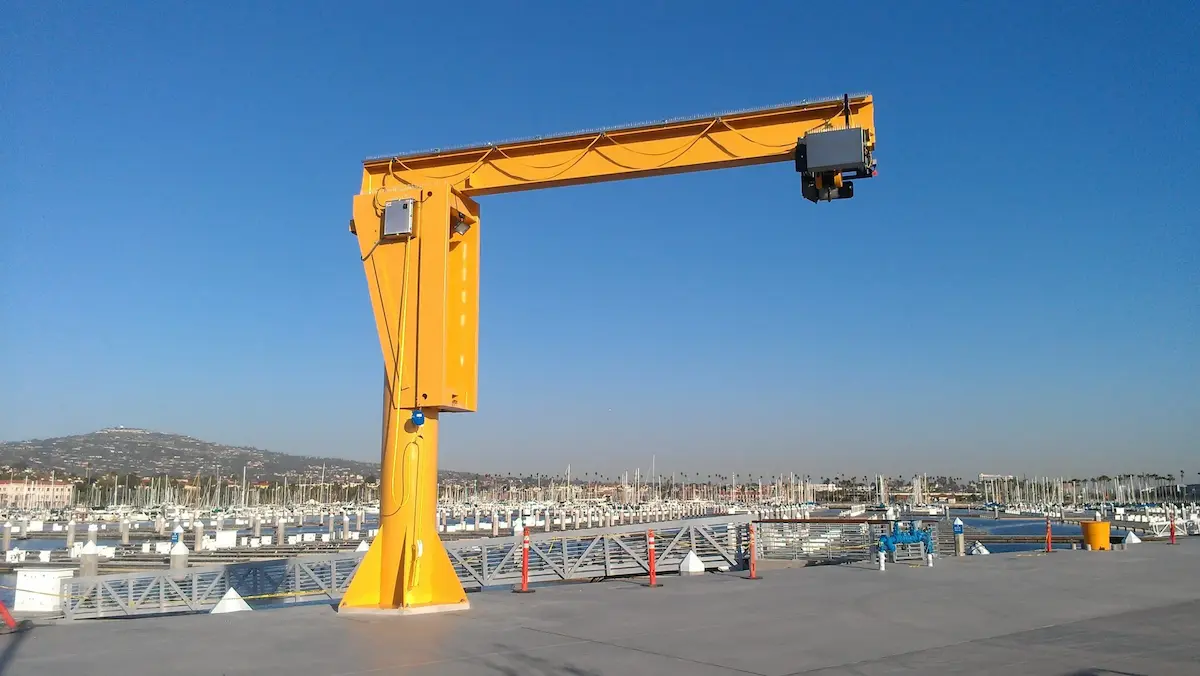
Core Corrosion Factors of Outdoor Environments for Jib Cranes
Before designing anti-corrosion solutions for a jib crane, we must understand outdoor threats. According to ISO 12944, destructiveness to steel structures increases exponentially from C3 medium to C5-M marine high-corrosion environments.
Climate and Physical Erosion
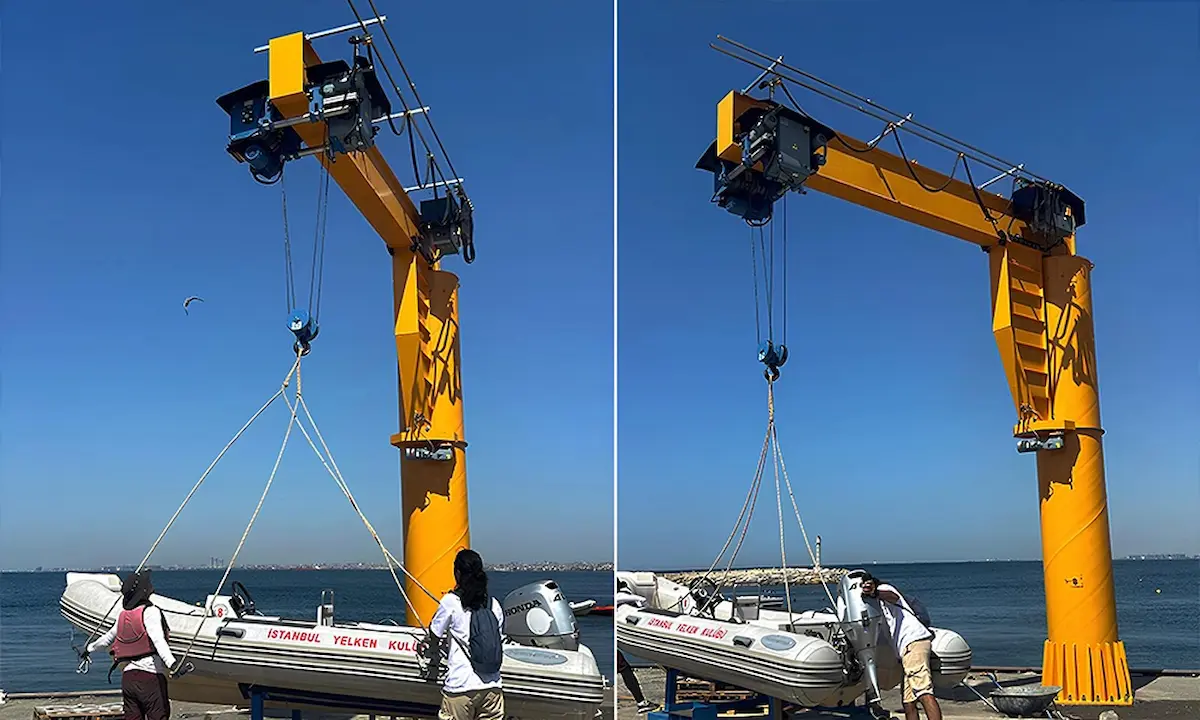
●Moisture and precipitation: Rain and high humidity cause electrochemical corrosion in carbon steel. If structures have water accumulation dead zones, corrosion speeds multiply.
●UV radiation: Strong UV rays accelerate paint chalking, cracking, and peeling. This causes underlying steel structures to lose their protective barriers.
●Temperature changes: Severe temperature fluctuations cause asynchronous thermal expansion between steel and coatings. Over time, this easily triggers micro-cracks in coatings.
Chemical and Industrial Pollution
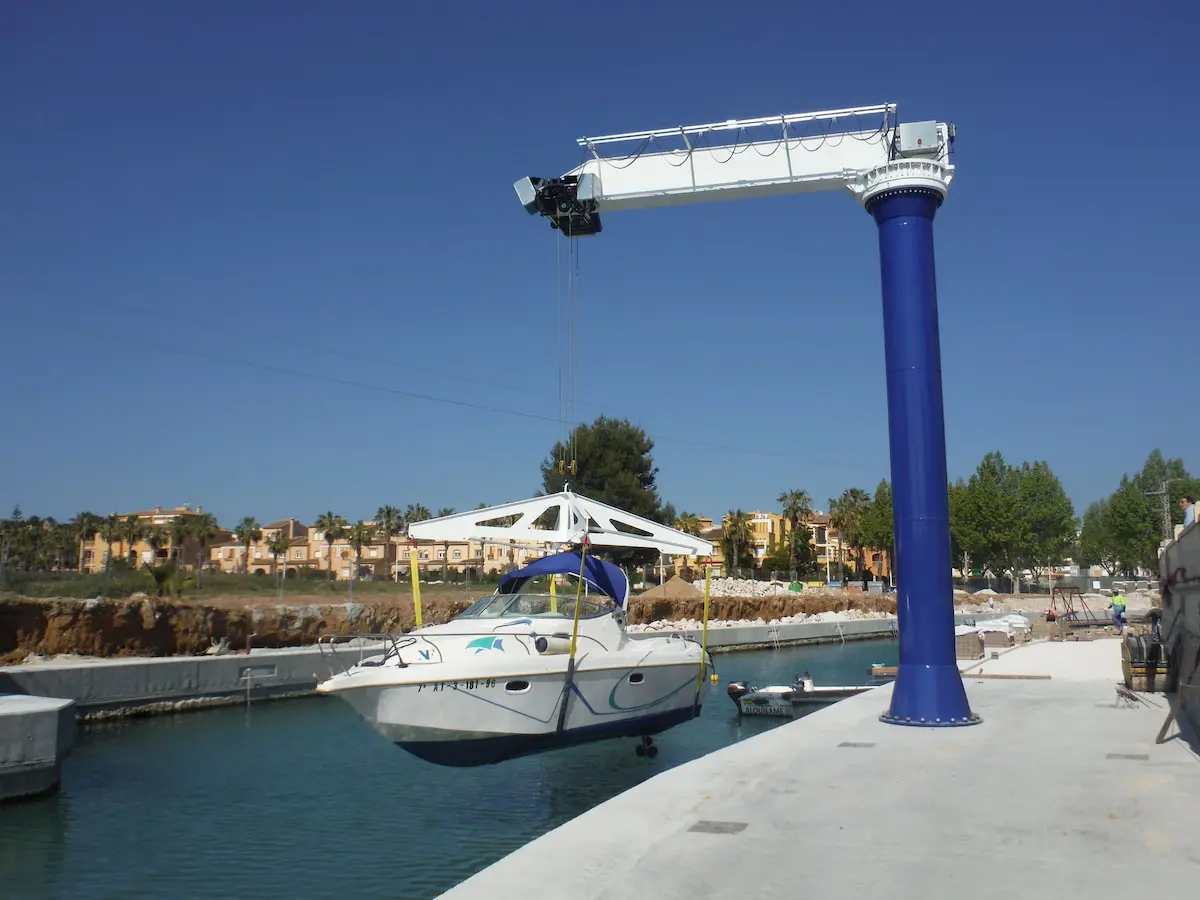
●Salt spray environment: For a jib crane in coastal ports, high chloride ion concentrations destroy metal passivation films rapidly.
●Industrial exhaust: Outdoor air near chemical plants often contains sulfur dioxide. Water turns this into acid rain, causing severe acid corrosion on steel and electrical components.
Systemic Anti-Corrosion Design Solutions for Jib Cranes
To cope with harsh conditions, professional manufacturers perform deep anti-corrosion design for a jib crane across four dimensions.
Surface Treatment and Heavy-Duty Painting Process System
Painting is the first and most important defense line. An outdoor jib crane cannot use indoor single-layer rust paint. It must adopt a heavy-duty system combining surface pretreatment and three-layer painting.
Pretreatment standard: Before painting, steel surfaces must undergo shot blasting or sandblasting to remove scale, rust, and oil. Surface roughness must reach Sa2.5 level. This step directly determines primer adhesion. If treatment fails, even the best paint will blister and peel within months.
|
Coating Level |
Recommended Coating Type |
Core Functions and Mechanism |
Recommended DFT |
|
Primer |
Epoxy zinc-rich primer |
Provides cathodic electrochemical protection using zinc powder as a sacrificial anode. |
60 – 80 μm |
|
Mid-coat |
Epoxy micaceous iron oxide intermediate paint |
Flake arrangement increases coating density and blocks moisture and oxygen penetration. |
100 – 120 μm |
|
Top-coat |
Aliphatic polyurethane topcoat |
Offers exceptional UV resistance and weatherability, preventing paint chalking and cracking. |
60 – 80 μm |
|
Total Dry Film Thickness |
– |
For C3 environments, total thickness is at least 220 \mum. For C5, it must reach 320 \mum or more. |
≥ 220 μm |
Structural Anti-Water Accumulation and Welding Anti-Corrosion Design
Besides paint, structural design determines anti-corrosion success. Water accumulation is the main culprit causing local perforation and rust.
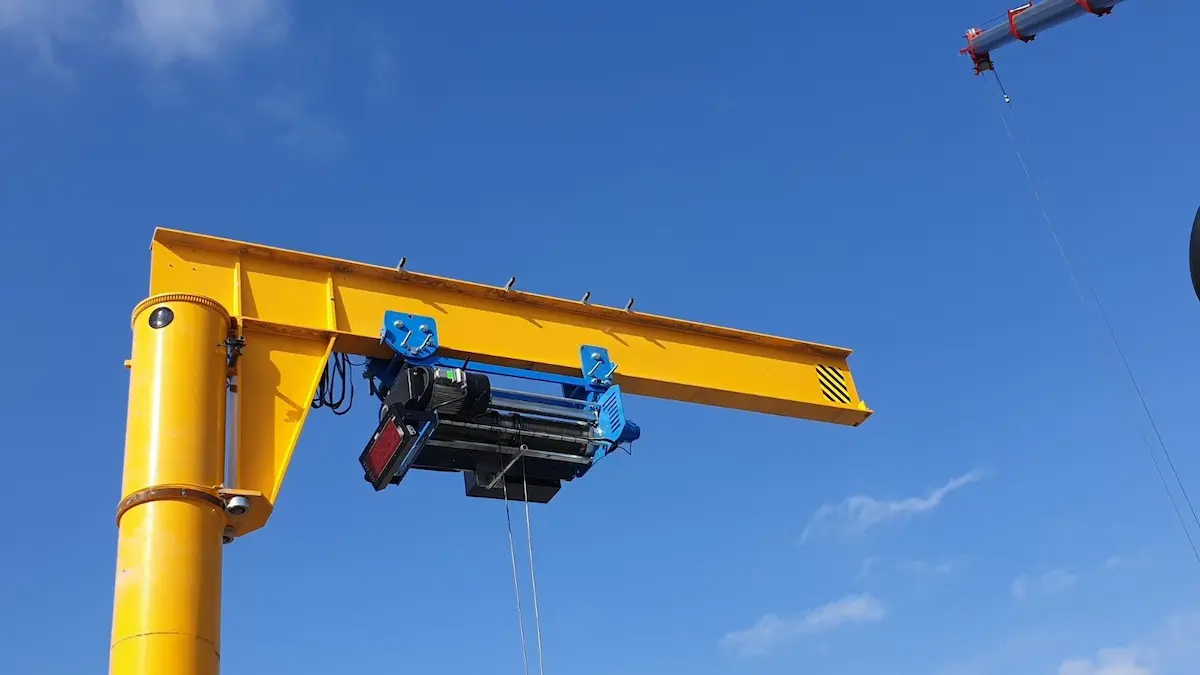
●Eliminate water dead zones: The column top of a jib crane must have a sealed rain cap. If a box girder is used, drainage holes must be opened at the lowest point. This prevents internal corrosion caused by condensed water accumulation.
●Fully sealed continuous welding: Intermittent welding is strictly prohibited for stressed structural components of outdoor jib cranes. All joint gaps must use continuous full welding to seal gaps completely. This prevents crevice corrosion caused by moisture and capillary action.
●Fillet transition design: Edges and sharp corners are the weakest areas for paint due to edge effects. Excellent design bevels or grinds steel edges into arcs with a radius of 2mm or more. This ensures sufficient paint thickness adheres to edge positions.
Material Upgrades for Transmission Parts and Fasteners
A jib crane contains steel structures, movable joints, and connectors. Thick paint cannot protect these parts against corrosion.
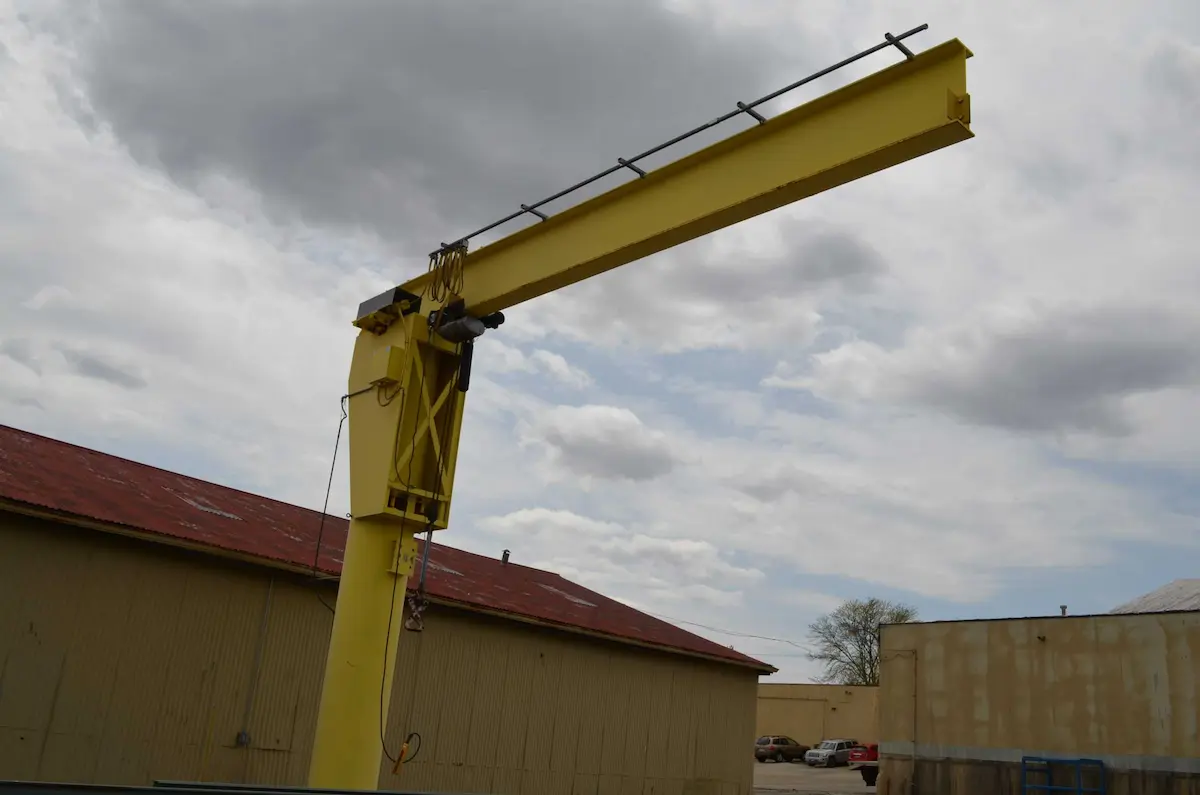
●Slewing rings and pins: Jib crane slewing pivots, bearings, and pins should use high-strength stainless steel (304 or 316L) or chrome plating. Bearing housings need dust seals and grease nipples. Regular greasing squeezes out internal moisture and forms a protective oil film.
●Fastener treatment: All exposed bolts, nuts, and washers must avoid standard blackening or galvanizing processes. They must use hot-dip galvanizing or Dacromet coatings. This prevents rust streaks from polluting the overall jib crane.
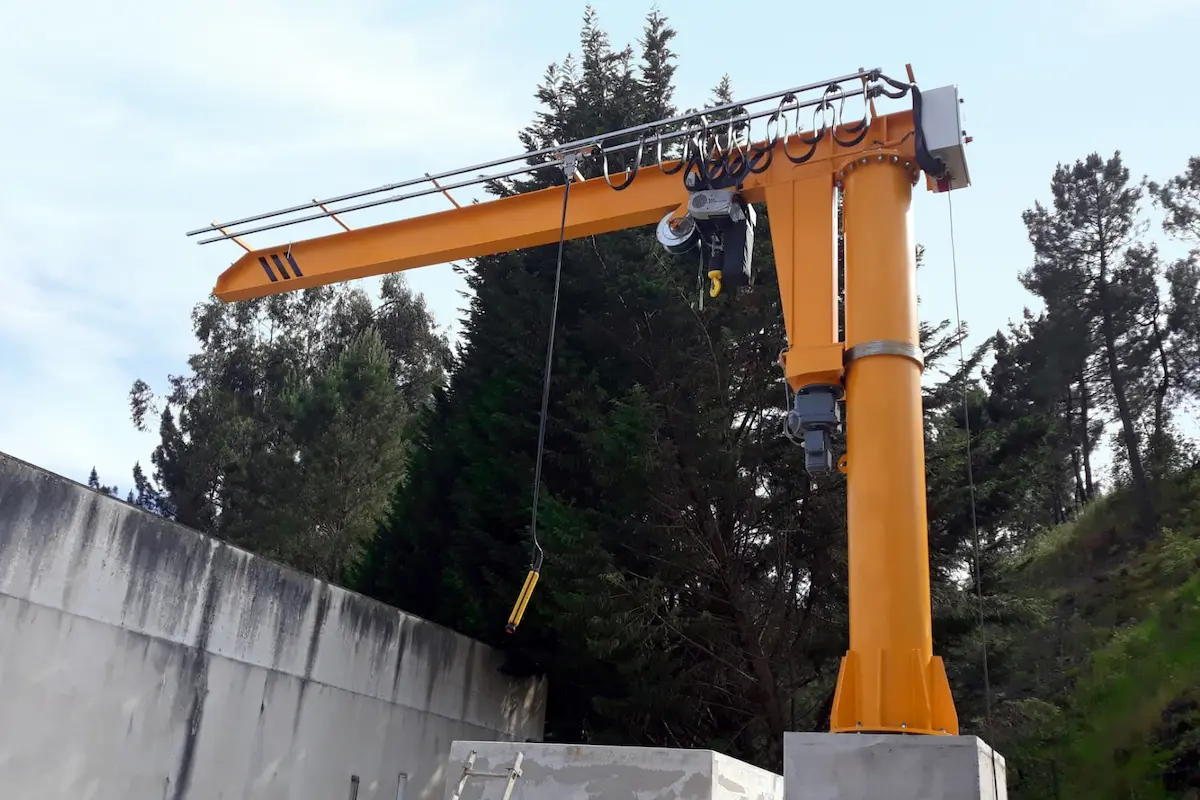
Weatherproofing for Electrical Systems and Hoisting Mechanisms
Outdoor moisture damages electrical systems rapidly. A short circuit will instantly paralyze a jib crane.
●Upgrade Electrical Protection Ratings (IP Rating):
1.All motors and brakes must reach IP55 protection or higher. Rainy or dusty areas require upgrading to IP65.
2.Electrical control cabinets must resist rainwater splashing. Box doors need high-elasticity silicone sealing strips. The protection rating must reach IP65.
●Install mechanical rain covers: Electric hoists and slewing drives need special metal or FRP rain covers. These covers prevent rain from washing motor cooling fans. They also protect motors from overheating due to direct sunlight.
●Anti-UV cables: Power and control cables must use outdoor UV-resistant weather-rated cables. This prevents outer sheaths from hardening, cracking, and leaking under UV rays.
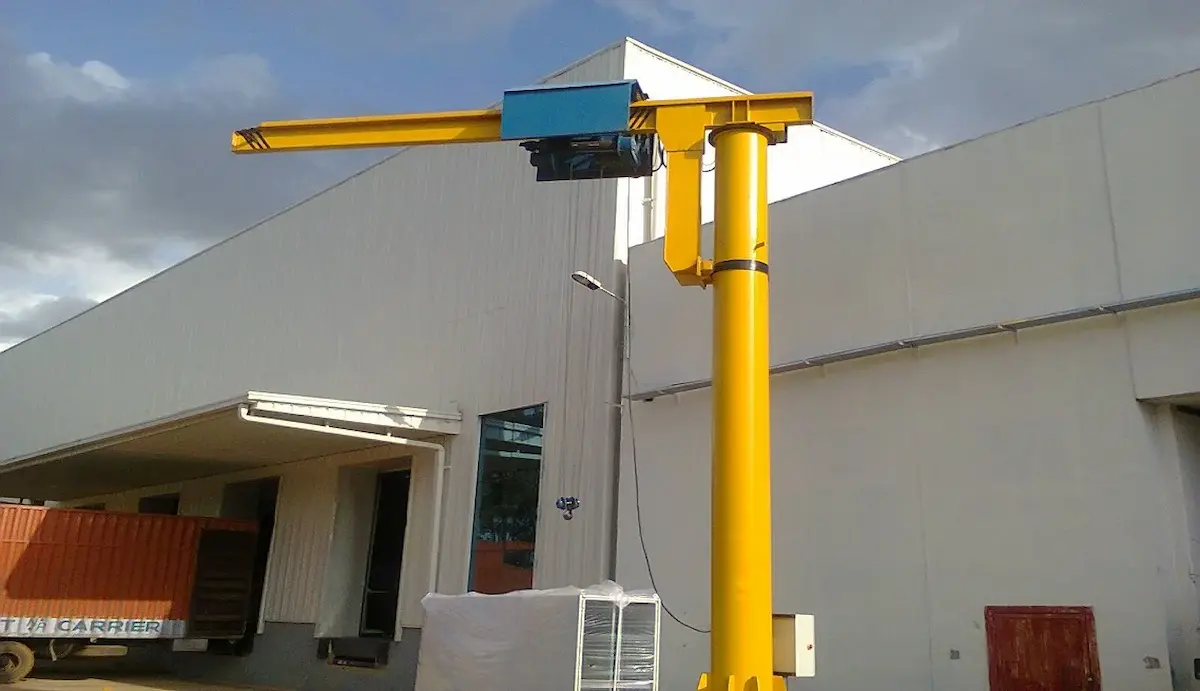
User Daily Inspection and Maintenance Strategies
Top anti-corrosion design requires scientific maintenance. To keep an outdoor jib crane in good condition for over a decade, managers should follow these steps:
1.Regular lubrication: Lubricate slewing bearings, wire ropes, or chains monthly. Grease acts as a lubricant and a protective film against air and moisture.
2.Paint repair: Inspect the exterior of the jib crane quarterly. Grind and repaint rusted areas immediately when paint chips or rust appears. Never paint directly over rust, which causes internal decay.
3.Drain cleaning: Check drainage holes on columns and beams before rainy seasons. Clear blocked sand and leaves to ensure smooth drainage.
4.Electrical seal check: Inspect control box seals for aging and deformation. Ensure waterproof cable glands are locked to prevent water backflow into boxes.
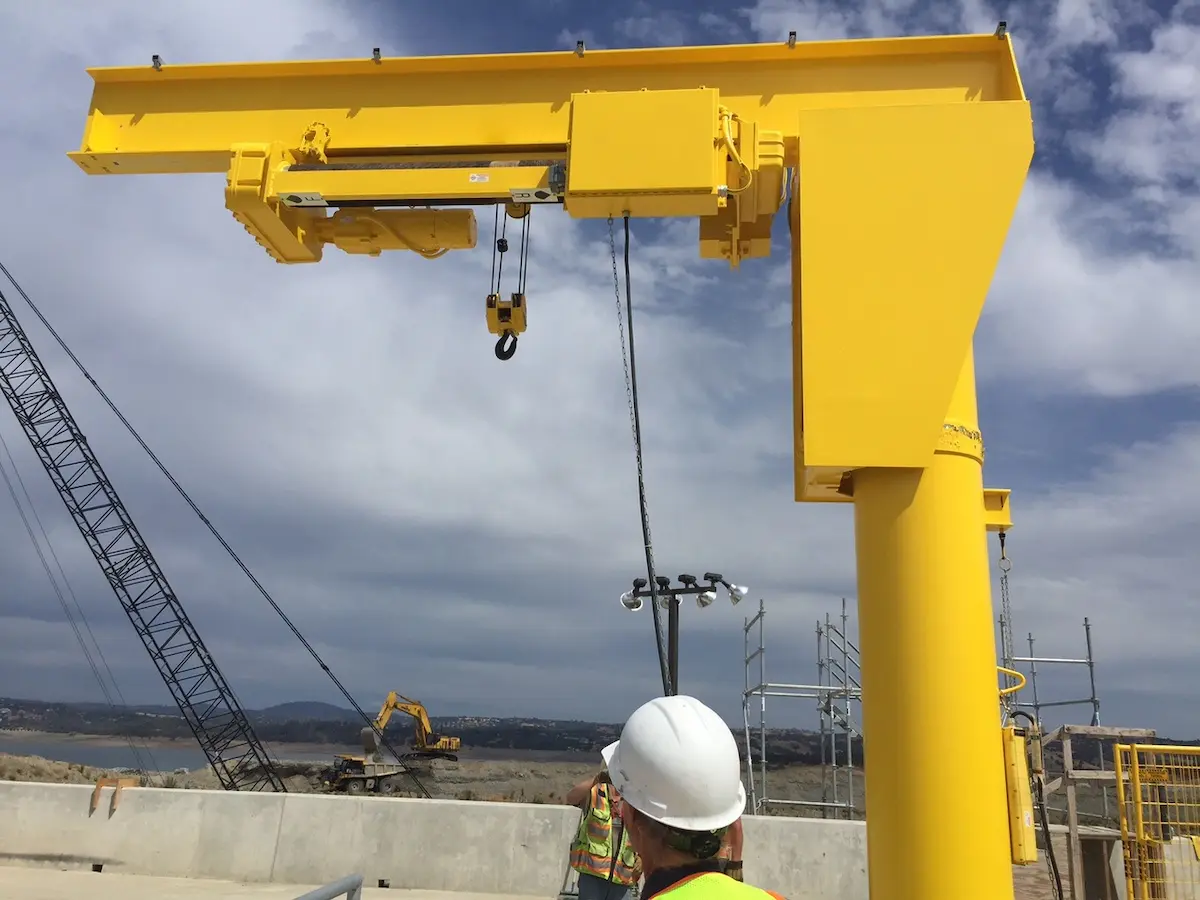
Conclusion: Anti-Corrosion is an Investment, Not a Cost
Investing in an outdoor jib crane requires more than extra paint. It requires a system engineering design that withstands extreme environments. From Sa2.5 shot blasting to paint combinations, details matter. Any compromised detail can cause high maintenance costs or safety hazards. Environmental corrosion multiplies for heavy lifting equipment in ports or coastal hubs. Standard processes are often inadequate for a jib crane in these severe conditions. Buyers must thoroughly evaluate the manufacturer’s anti-corrosion customization capabilities early. Good anti-corrosion designs ensure structural stability throughout the jib crane lifecycle. Anti-corrosion for an outdoor jib crane protects appearance and ensures material handling efficiency. Combining custom manufacturing with scientific maintenance keeps your jib crane stable and valuable.
Seeking corrosion-resistant material handling equipment for your outdoor project?
We offer rich experience in customizing heavy-duty jib cranes. We provide precise anti-corrosion jib crane solutions for ports and yards. Contact our engineering team now for a free evaluation!
[Contact HSCRANE Technical Team]
This document is for reference only. Specific operations must strictly comply with local laws and regulations and equipment manuals.
Recent Post