Blog
- Home
- Blog
Expert Analysis to Overhead Crane Export Transport and Installation (2026 Guide)
Overview
Overhead cranes are typical extra-long and heavy non-standard equipment. Exporting them tests both manufacturing and logistics capabilities. It demands seamless international shipping and overseas site delivery skills. The delivery process includes complex inland transportation and container loading. It also involves customs clearance, ocean shipping, and high-altitude installation. Any oversight can damage equipment, delay project schedules, or cause accidents. This guide outlines practical guidelines for overhead crane exporting. We cover protective packaging, shipping logistics, customs practices, and installation. It helps buyers and engineering contractors manage risks and ensure delivery.
Preparation and Packaging Planning Before Exporting Overhead Cranes
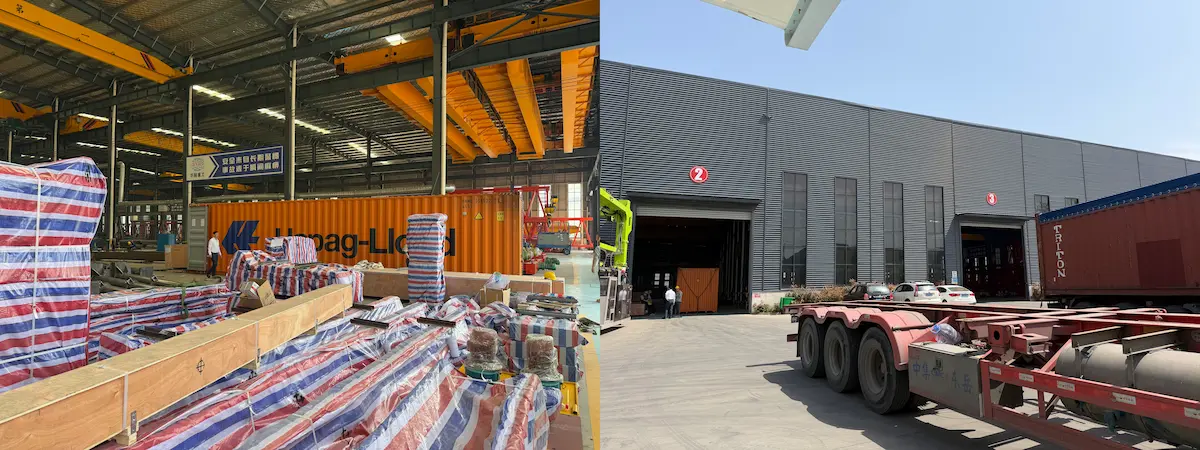
Long sea voyages feature high salt and humidity. Unprotected metal surfaces and electric parts rust or suffer moisture damage easily. Scientific classified packaging is the vital first step for safe port delivery.
Core Component Disassembly and Packaging Standards
Before leaving the factory, overhead cranes undergo strict trial assembly. Workers inspect all dimensions and tolerances before disassembly.
|
Component Name |
Packaging and Protection Requirements |
Loading Suggestions |
| Main Girder | Shot-blast for rust removal, then apply epoxy zinc-rich primer and polyurethane topcoat. Coat connection plates with anti-rust grease and wrap in waterproof cloth. | Cut into segments if needed. Load as bare steel in containers or flat racks. |
| End Carriage | Coat wheel sets and gears with heavy anti-rust oil. Wrap exteriors tightly with thick plastic film. | Place at container bottom. Secure firmly on four sides with wooden wedges. |
| Electric Hoist / Lifting Mechanism | Wrap entirely in VCI anti-rust film. Place inside non-fumigation composite wooden crates with reinforced bottoms. | Priority loading into standard dry containers. Avoid squeezing against heavy steel structures. |
| Electrical Control Cabinet | Place industrial desiccants inside cabinets. Seal tightly in vacuum aluminum foil bags and pack in anti-vibration boxes. | Keep waterproof and moisture-proof. Position at the deepest or highest container spot. |
| Accessories and Conductor Bars | Classify bolts, rail accessories, and cables into wooden boxes. Attach clear bilingual packing lists outside. | Fill remaining container spaces. Secure tightly with heavy-duty binding straps. |
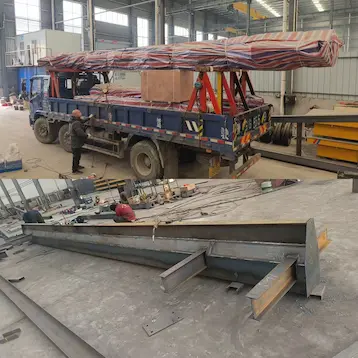
Segmented Design for Over-Length Main Girders: Standard 40HQ containers have an internal length of about 11.8 meters. If the main girder exceeds this limit, designers must use bolted segmented structures. Flange connections are placed at girder webs and flanges. The main girder is divided into two or three packed segments. This fits standard containers and avoids high flat-rack sea freight. Post-assembly structural strength fully complies with international ISO standards.
International Logistics and Ocean Freight Options
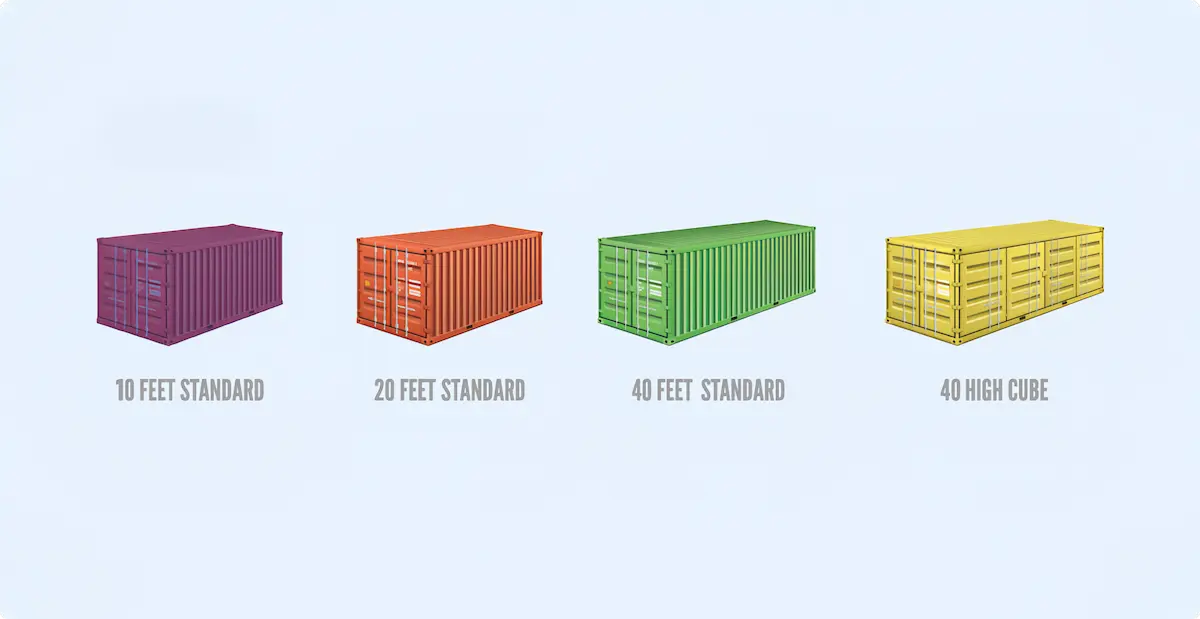
Selecting container types based on overhead crane tonnage, span, and volume controls export costs.
Container Selection Guide
|
Overhead Crane Specs |
Recommended Shipping Method |
Logistics Notes and Considerations |
| Single Girder Overhead Crane (≤20t) | 40HQ Container | Lowest shipping cost. Main girders require segmented design, while end carriages fit leftover spaces. |
| Double Girder Overhead Crane (Large Span) | 40′ Open Top (OT) Container | Best for tall trolleys that cannot enter doors horizontally. Load using cranes from above. |
| Heavy / Metallurgical Crane (Overwide) | 40′ Flat Rack (FR) Container | Ideal for non-dismantlable overwide girders or massive winches. Higher freight cost requires strict lashing. |
| Giant Overhead Crane (Bulk Cargo) | Breakbulk Ship | Designed for hundreds of tons of non-standard cranes. Loaded directly onto holds with special anti-corrosion. |
Internal Lashing and Securing Standards
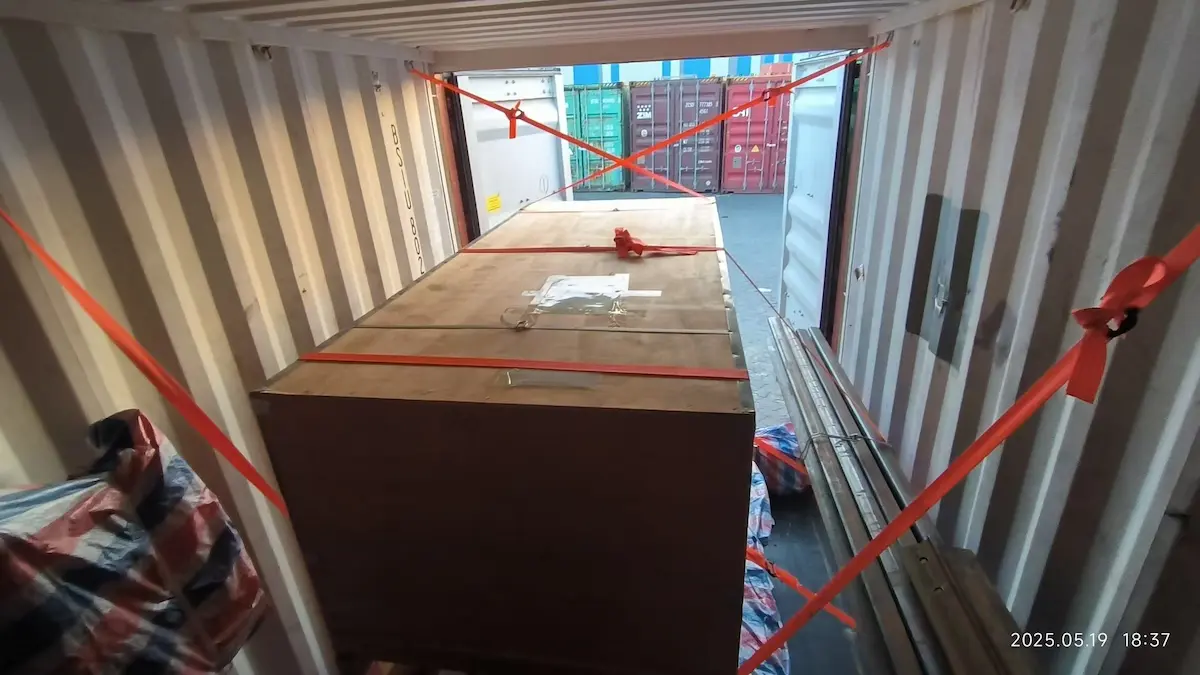
Ship swaying during sea transit moves heavy steel structures and damages containers. Loading must strictly follow these core principles:
●Balance Center of Gravity: Place heavy components, like hoist crates and end carriages, on the floor along the center line.
●Rigid Support: Place wooden blocks above 10cm under girders. This prevents direct steel friction against container floors.
●Flexible Lashing: Use steel ropes or polyester straps with 5-ton tensile strength. Fix equipment to interior rings using cross-lashing.
Customs Declaration Documents and Export Clearance
Exporters must prepare complete clearance documents in advance for smooth destination port clearance. Because overhead cranes are special machinery, many countries enforce mandatory certification rules strictly.
●Basic Commercial Documents: Commercial Invoice, Packing List, and Bill of Lading. Data across all documents must match perfectly, especially weight and volume.
●Certificate of Origin: Apply for general CO or preferential certificates (like Form E or FTA) to reduce destination customs tariffs.
●Compliance Certifications:
1.Exports to the EU require CE certification (MD Machinery and LVD Low Voltage Directives).
2.Exports to Russia and CIS countries require EAC Customs Union certification.
3.Exports to Middle East or Africa require pre-shipment inspections like SGS, BV, PVOC, or SABER.

Pre-Installation Preparations on Overseas Sites
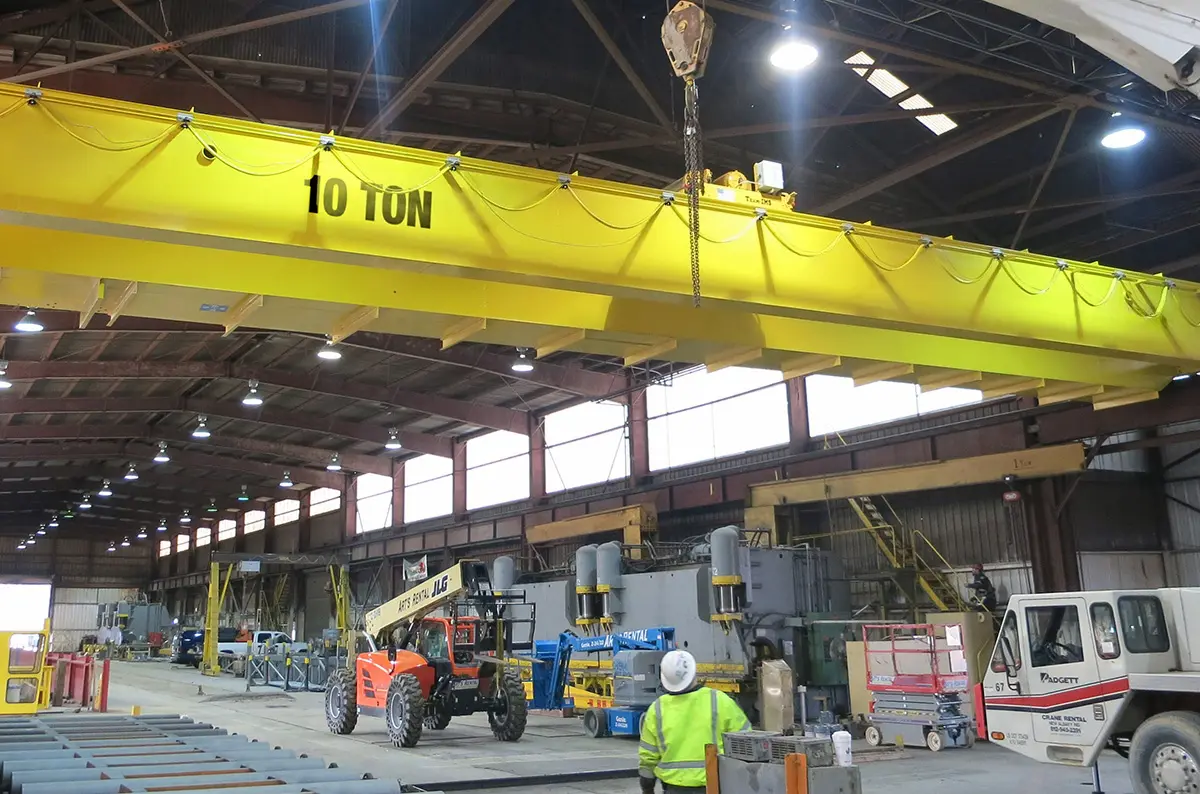
Do not unbox and construct blindly after goods arrive at overseas workshops. High-altitude assembly of overhead cranes is high-risk. Detailed site surveys and tool preparations are mandatory.
Site Survey and Condition Verification
●Workshop Rail Inspection: Use laser distance meters to verify corbel heights, runway beam straightness, and actual rail span. Errors must stay within allowable tolerances (typically ±5mm), or shims must adjust them.
●Power Supply Matching: Confirm site industrial voltage matches crane nameplate specs exactly (e.g., 380V/50Hz in Southeast Asia, 460V/60Hz in North America, 220V/60Hz in parts of the Middle East).
●Safety Work Zone Planning: Set warning lines around installation areas. Clear all non-construction personnel and debris underneath to guarantee sufficient boom space and solid ground support for truck cranes.
Core Installation Tool Checklist
●Lifting Machinery: Mobile truck cranes (usually two units, capacity > 1.5 times crane dead weight), aerial work platforms (scissor lifts), or scaffolding.
●Measurement Tools: Total stations, optical levels, laser meters, vernier calipers, and 50m steel measuring tapes.
●Fastening and Welding Equipment: High-power torque wrenches, welding machines, angle grinders, and hydraulic jacks.
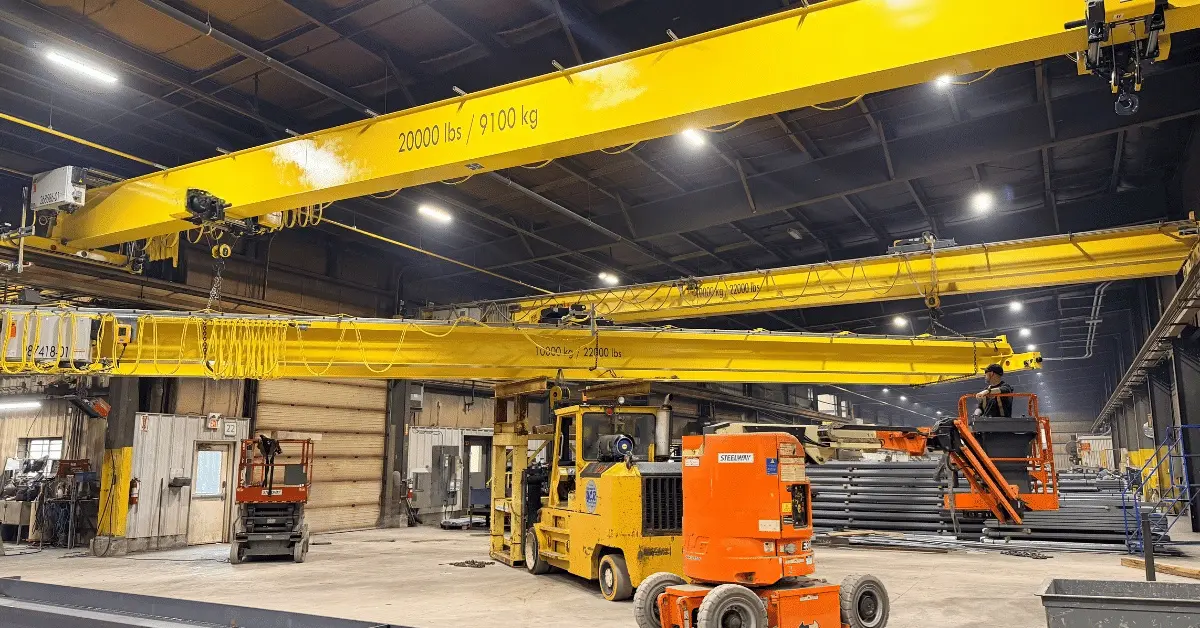
Standard On-Site Installation Process for Overhead Cranes
Certified special equipment engineers must direct the installation. Follow a step-by-step approach: bottom-to-top and mechanical-before-electrical.
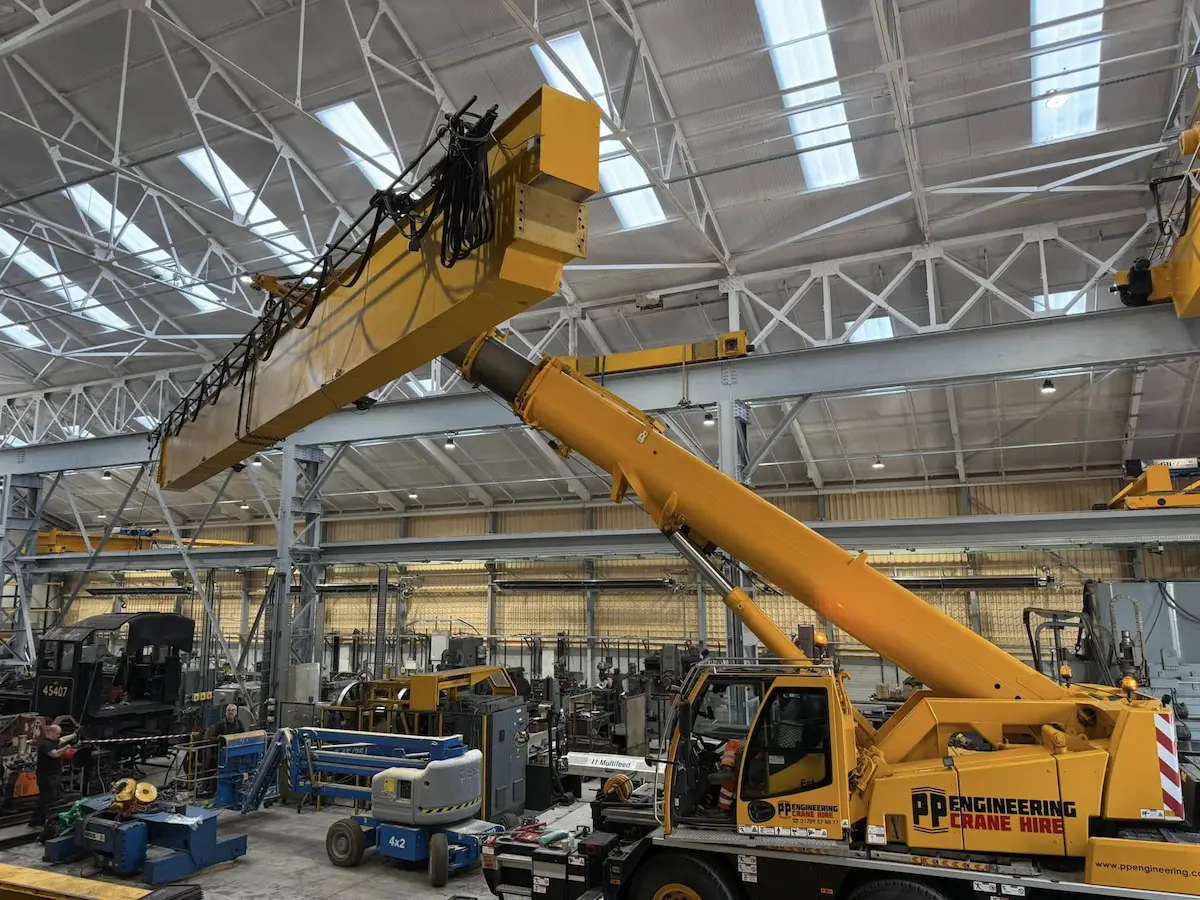
●Step 1: End Carriage Placement and Main Girder Assembly: If the main girder is segmented, assemble segments on flat ground using high-strength bolts. Verify camber against drawing specifications strictly. Then, lift end carriages onto elevated rails using truck cranes and secure them temporarily with chain blocks.
●Step 2: Dual-Crane Tandem Lifting of Main Girder: This is the most critical and highest-risk step. Two truck cranes hook lifting points at both girder ends, rising synchronously. Lift the girder above end carriages and align connection holes. Workers approach using aerial lifts to insert and tighten high-strength bolts. Cranes unhook only after both ends are fully fixed with correct torque.
●Step 3: Electric Hoist / Trolley Lifting: For single-girder overhead cranes, fit electric hoists onto the bottom flange before girder lifting. For double-girder cranes, lift the trolley separately onto main girder rails after securing girders.
●Step 4: Electrical System and Conductor Bar Installation:
1.Install crane conductor bars (C-rail or seamless lines) ensuring smooth collector sliding.
2.Mount control boxes and connect power cables, limit switches, and remote receiver signals following electrical schematics.
3.Inspect cable insulation and ensure proper grounding.
Commissioning, Load Testing, and Delivery Acceptance
Installation completion does not mean immediate operation. Perform three test phases strictly following ISO 4310 and FEM standards to verify safety and structural stability.
|
Testing Phase |
Testing Method and Acceptance Standard |
Purpose and Significance |
| No-Load Test | Operate crane travel, trolley travel, and hook lifting without load. Test limit switches, emergency stops, and anti-collision devices. | Check if mechanical transmission is smooth without noise and electrical control circuits function correctly. |
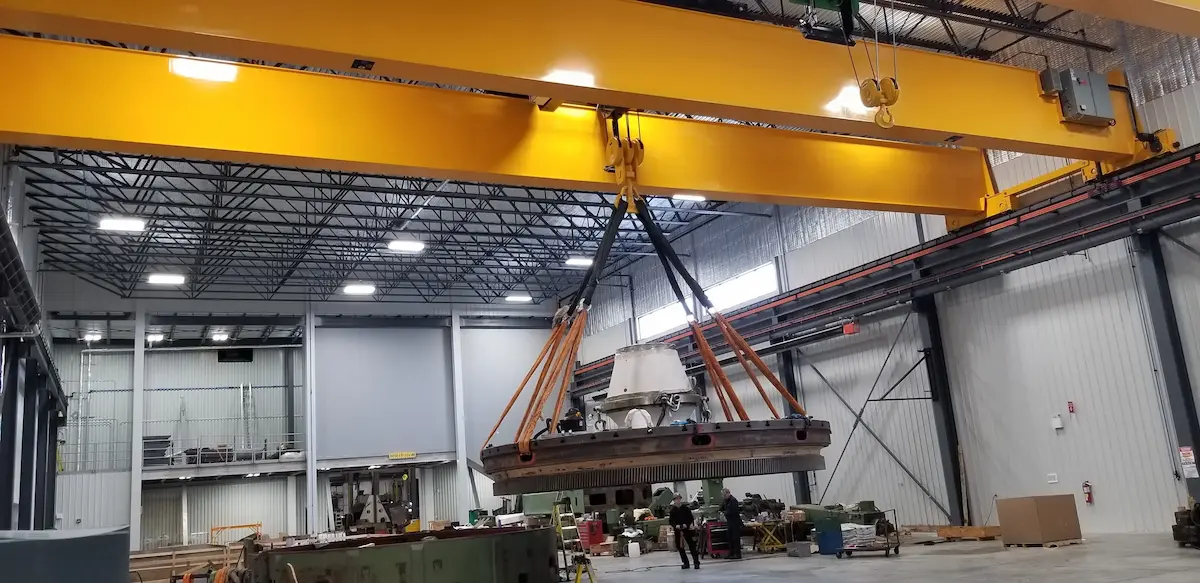
| Static Load Test | Lift 125% rated load 10-20cm off the ground and hold for 10 minutes. Unload and inspect the main girder for permanent deformation. | Verify girder rigidity, steel welding quality, and test brake slippage distance. |
| Dynamic Load Test | Lift 110% rated load and run combined multi-directional movements for crane and trolley across the workshop. | Evaluate overall dynamic overload performance and drive mechanism reliability. |
Record all test data (brake slippage, deflection, motor current) accurately in the Acceptance Test Data Record. Factory engineers and client representatives must sign for confirmation. Formal handover occurs only after completing operational training.
Conclusion
Export transportation and overseas installation of overhead cranes form a systematic engineering project. It combines precision manufacturing, cross-border logistics, and high-risk field construction. Choosing an experienced crane manufacturer is vital for overseas buyers. Optimizing every detail—from container space utilization and segmented main girders to site manuals—saves valuable time and costs. Following these standard procedures ensures your overseas overhead crane project completes safely, efficiently, and smoothly.
This document is for reference only. Specific operations must strictly comply with local laws and regulations and equipment manuals.
Recent Post