Blog
- Home
- Blog
Causes and Solutions of Overhead Crane Rail Gnawing: A Complete Troubleshooting Guide
Abstract
In industrial production, the overhead crane handles material moving and equipment lifting. However, many companies face a common issue: overhead crane rail gnawing. This causes abnormal wear on rails and wheels. Severe cases lead to vibration and structural misalignment, threatening production safety.
How does overhead crane rail gnawing happen? How can we solve and prevent it? This article analyzes technical principles, causes, solutions, and maintenance. We help companies locate issues and reduce costs.
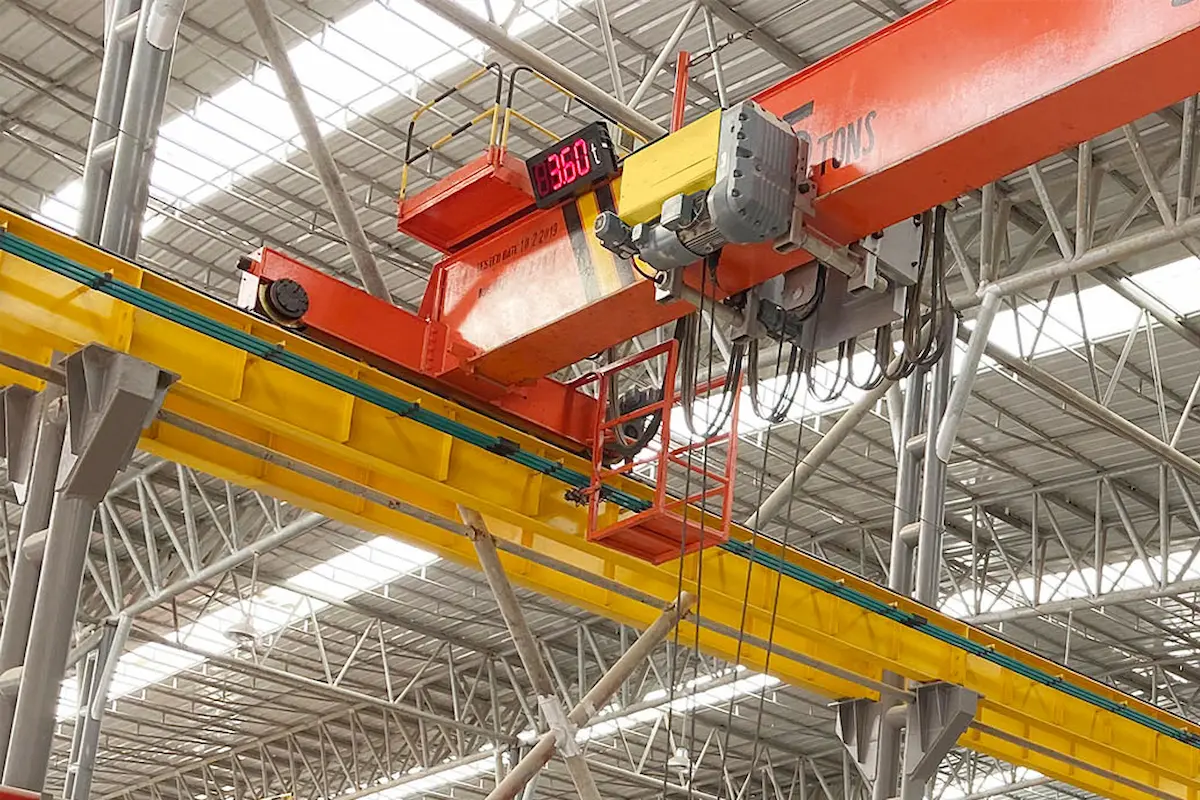
What is Overhead Crane Rail Gnawing?
“Rail gnawing” refers to continuous friction between wheel flanges and rail sides. This phenomenon involves loud noises, rail wear, and increased resistance.
Symptoms of Rail Gnawing:
|
Symptom |
Description |
Potential Impact |
| Rail Side Wear | Visible scratch marks appear on rail edges. | Shortens rail service life. |
| Abnormal Flange Wear | Severe uneven wear on one side of the flange. | Increases replacement costs. |
| Operating Noise | Harsh friction or metal clashing sounds occur. | Impacts equipment stability. |
| Crane Deviation | The crane shifts toward one side during travel. | Increases safety risks. |
| Increased Resistance | Difficult starts and higher power consumption. | Reduces operational efficiency. |
Neglecting overhead crane rail gnawing increases repair costs and shortens equipment lifespan. Prompt action is necessary to maintain production efficiency.
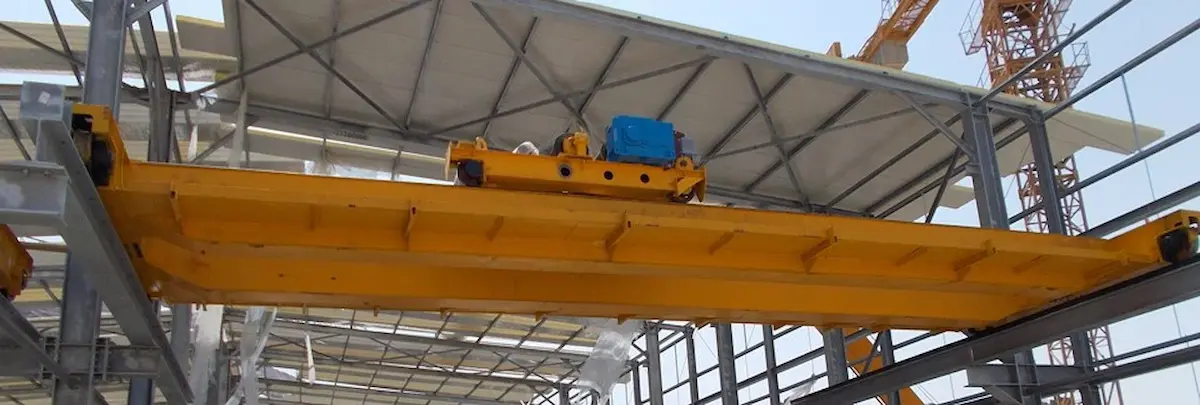
Main Causes of Overhead Crane Rail Gnawing
Overhead crane rail gnawing usually results from a combination of installation errors, rail issues, structural deformation, and operational factors.
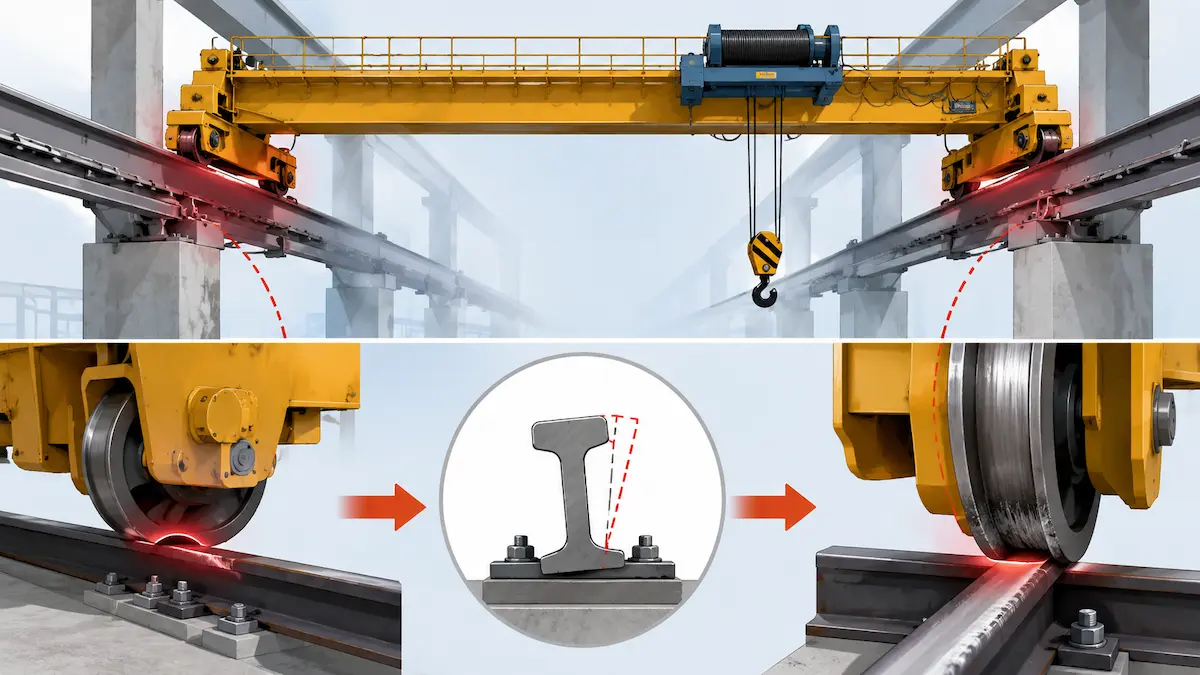
Rail Installation Errors
Substandard rail installation is a primary cause of gnawing. When rails are not parallel or level, wheels face lateral forces that squeeze the rail sides.
·Span Deviation: If the distance between rails exceeds tolerances, wheels cannot align, causing one-sided pressure.
·Centerline Misalignment: Crooked rails force the crane to drift during travel.
·Uneven Elevation: Height differences can cause wheel suspension and uneven loading, triggering overhead crane rail gnawing.
Solutions:
·Recalibrate rails using laser measuring tools.
·Adjust the span to within design tolerances.
·Level or relay uneven rail sections.
·Periodically check rail straightness and horizontal alignment.
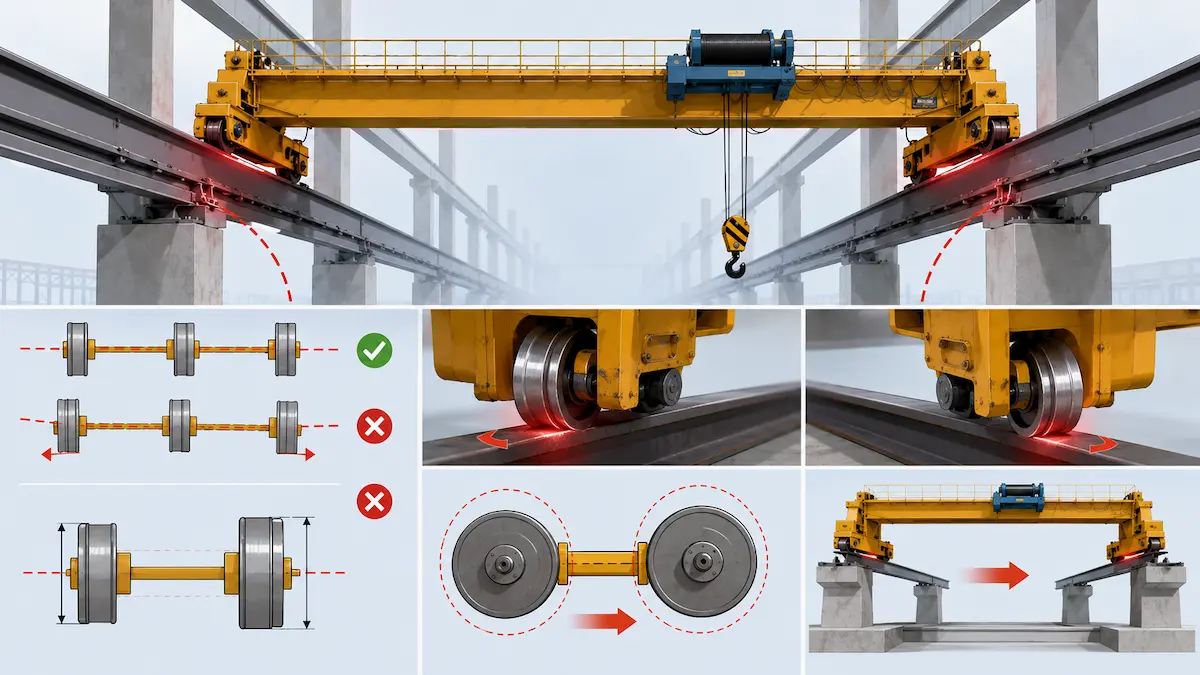
Wheel Installation Deviations
Wheel precision determines the stability of an overhead crane. Non-parallel axes or diameter differences cause inconsistent tracking and lateral friction. For example, larger wheels on one side create a speed delta, leading to constant drifting.
Common Symptoms:
·Severe wear on a single wheel flange.
·The crane consistently drifts in one direction.
·Noticeable vibration during operation.
Solutions:
·Correct wheel installation angles and verticality.
·Inspect the condition of bearings and couplings.
·Replace worn wheels or those with significant diameter differences.
·Ensure driving wheels have identical diameters.
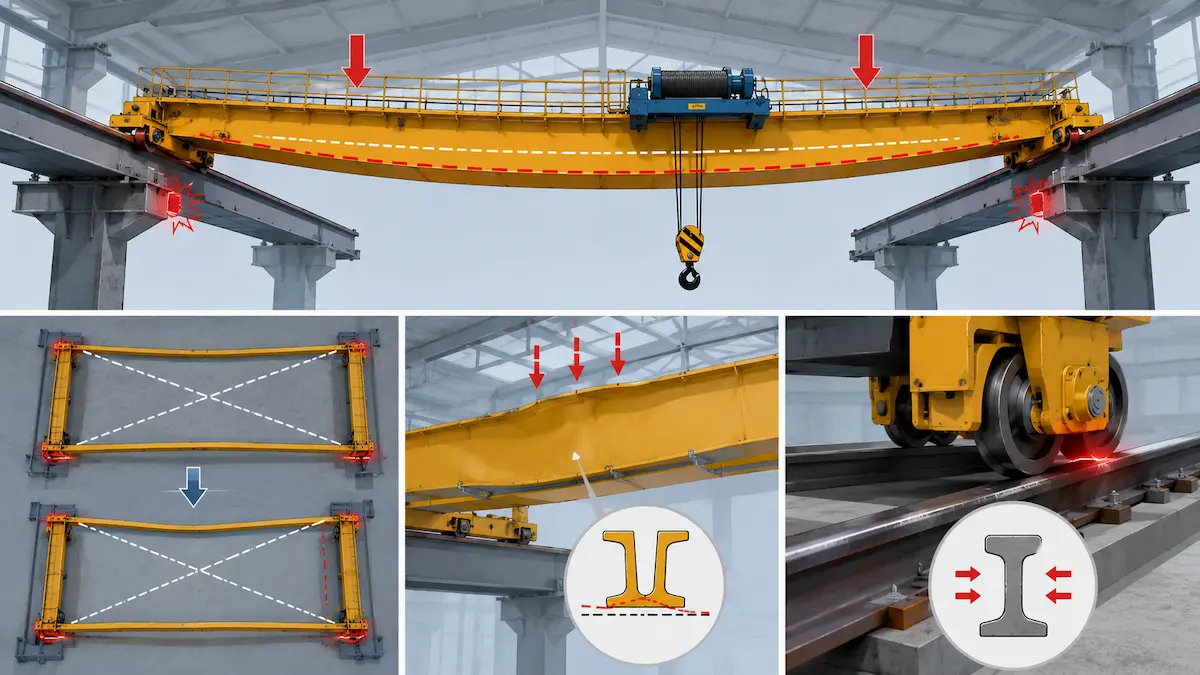
Structural Deformation
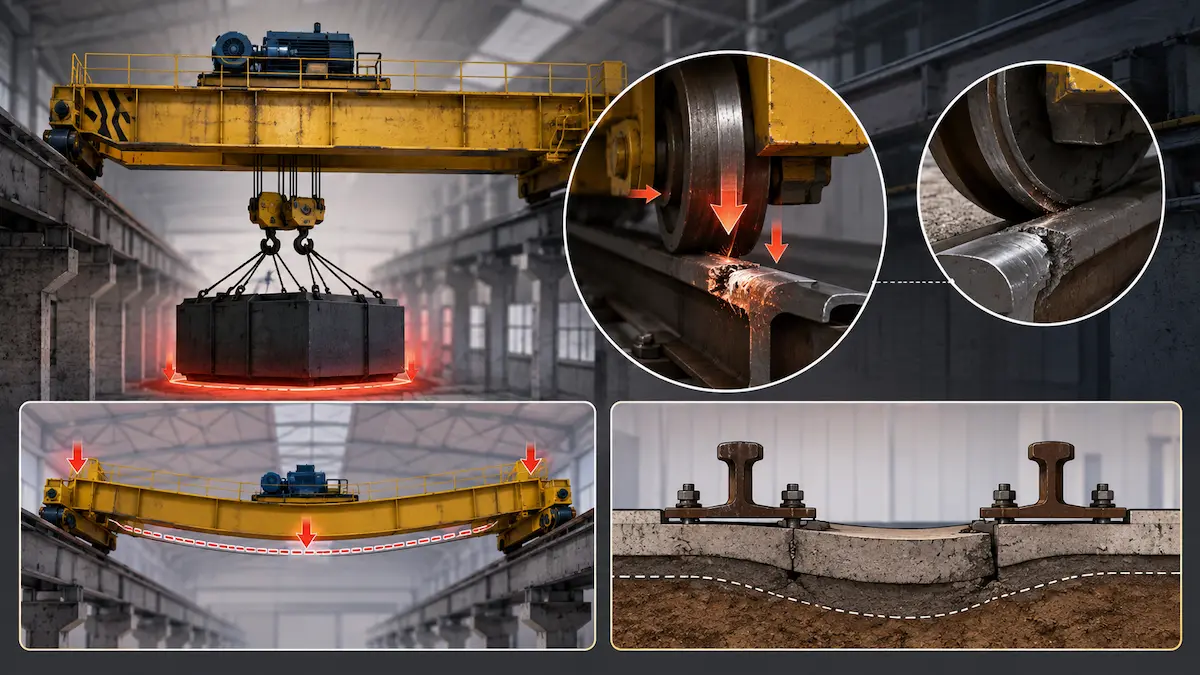
Long-term overloading or impact loads can cause the bridge structure to deform. When diagonal errors increase or main girder deflection exceeds limits, the overall rigidity of the overhead crane decreases. This alters wheel loading and leads to overhead crane rail gnawing. Large-span cranes are especially vulnerable to uneven stress caused by structural fatigue.
Solutions:
·Measure main girder camber and bridge diagonals.
·Repair deformed structural components.
·Reinforce or replace equipment with severe deformation.
·Avoid long-term overloaded operations.
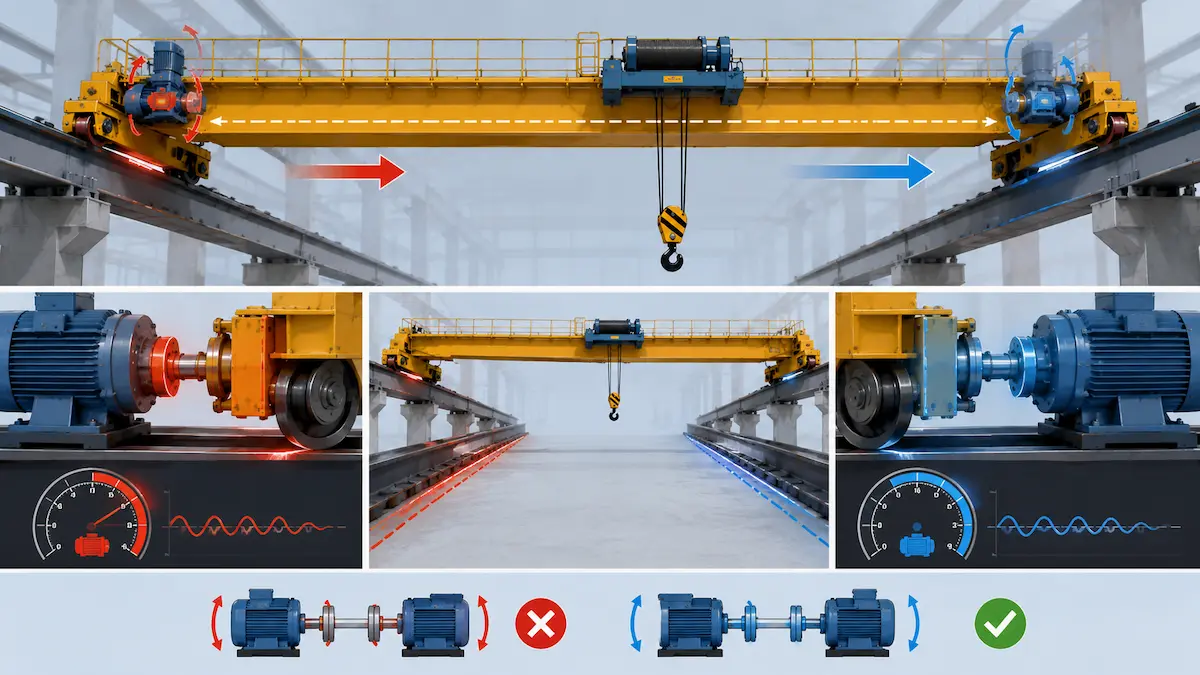
Drive System Out of Sync
An overhead crane often uses a dual-drive system. If the motors on both sides are not synchronized, the equipment will drift.
Common Factors:
·Inconsistent motor parameters or performance.
·Uneven brake tension or clearance.
·Severe wear in the gear reducers.
·Incorrect VFD (Variable Frequency Drive) parameter settings.
These issues create speed differences between the left and right sides.
Solutions:
●Check motor synchronization performance.
●Adjust VFD parameters for balanced output.
●Calibrate brake gaps on both drive units.
●Overhaul gearboxes and couplings.
Long-term Overloading
Overloading increases the pressure between wheels and rails. This intensifies the force on the wheel flange, further inducing overhead crane rail gnawing. Additionally, frequent overloading causes structural deformation and foundation settlement.
Solutions:
●Operate strictly within the rated load capacity.
●Install overload limiters to prevent misuse.
●Strengthen operator training and safety awareness.
●Establish a formal equipment operation log system.
How to Detect Overhead Crane Rail Gnawing
Early detection is critical to prevent severe damage. Identifying abnormal signals early helps maintain operational safety.
●Listen for Noise: Operation should be smooth and quiet. Sharp friction sounds or metal clashing indicate a need for inspection.
●Observe Wear: Check wheel flanges and rail sides for abnormal wear marks or shiny metallic streaks.
●Track Movement: Monitor if the equipment consistently drifts or skews toward one side during travel.
●Check Temperature: Severe overhead crane rail gnawing can cause abnormal temperature spikes in wheels and bearings.
Establish a regular inspection routine to identify these signs early.
Hazards of Overhead Crane Rail Gnawing
Rail gnawing is not a minor issue; it can lead to serious operational consequences:
●Increased Maintenance Costs: Rapid wear on rails and wheels requires frequent parts replacement.
●Reduced Efficiency: Increased running resistance slows down operations and raises energy consumption.
●Safety Risks: Severe cases may cause wheel derailment, leading to catastrophic accidents.
●Shortened Lifespan: Uneven stress affects the longevity of the bridge structure, motors, and reducers.
Prompt corrective action is necessary once gnawing is detected.
How to Prevent Overhead Crane Rail Gnawing
Prevention is far more cost-effective than reactive repairs. Use these strategies to mitigate risks:
1.Strict Installation Acceptance: Ensure rail installation strictly follows technical specifications.
2.Regular Rail Calibration: Perform a professional rail precision test annually.
3.Enhanced Equipment Maintenance:
|
Item |
Recommended Frequency |
Inspection Focus |
| Rail Leveling | Every 6 months | Check for deformation or foundation settlement. |
| Wheel Wear | Every 3 months | Look for uneven flange wear. |
| Motor Sync | Every 6 months | Ensure left and right drives are synchronized. |
| Brakes | Every 3 months | Verify that response times are identical on both sides. |
| Bridge Structure | Every 12 months | Check for main girder deflection or deformation. |
4.Avoid Overloading and Side-Pulling: Standardized operation significantly reduces abnormal wear.
5.Fault Warning Mechanisms: Use vibration monitoring and temperature sensors to detect issues before they escalate.
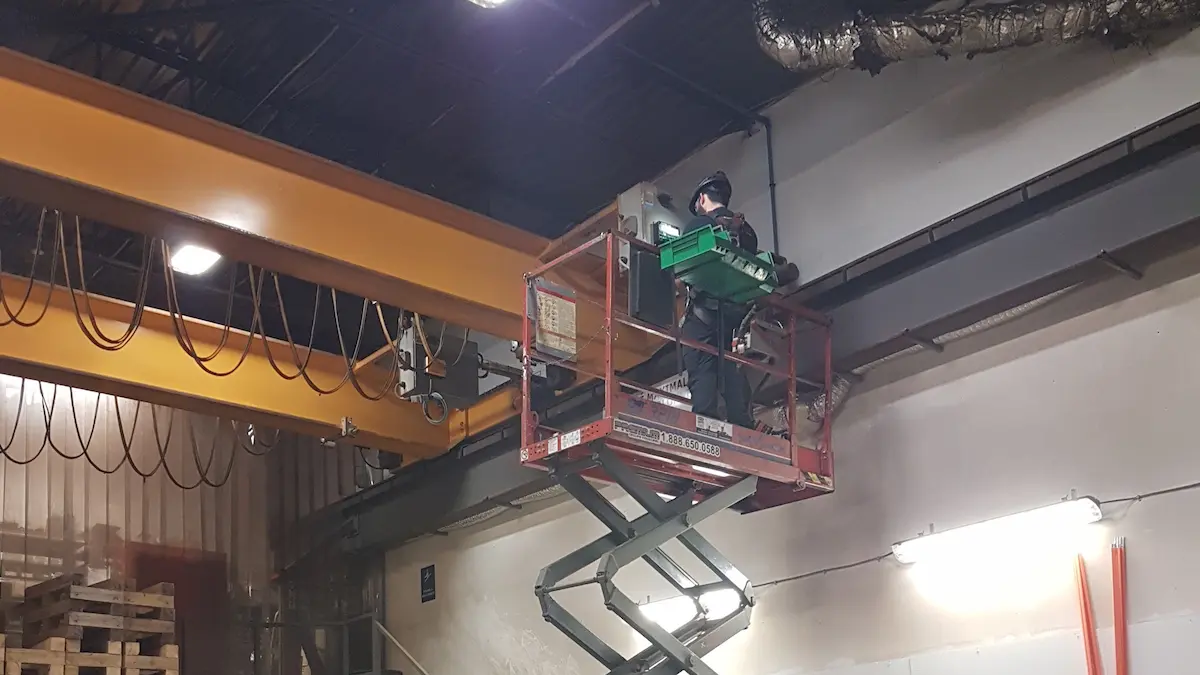
Case Study: Fault Analysis in a Manufacturing Workshop
A manufacturing company reported frequent abnormal noise and significant drifting in a 10-ton overhead crane.
Technical inspections revealed three core issues:
●Horizontal Leveling: The left rail exceeded horizontal error tolerances.
●Wheel Discrepancy: The diameter difference between the two sides reached 8mm.
●Braking Desync: The response times of the brakes were inconsistent.
Results: The team realigned the rails, replaced the wheels, and calibrated the drive system. The overhead crane returned to normal operation. Running resistance dropped by 20%, and long-term maintenance costs were significantly reduced. This case proves that overhead crane rail gnawing often stems from multiple factors requiring a systematic approach rather than just replacing single parts.
Conclusion
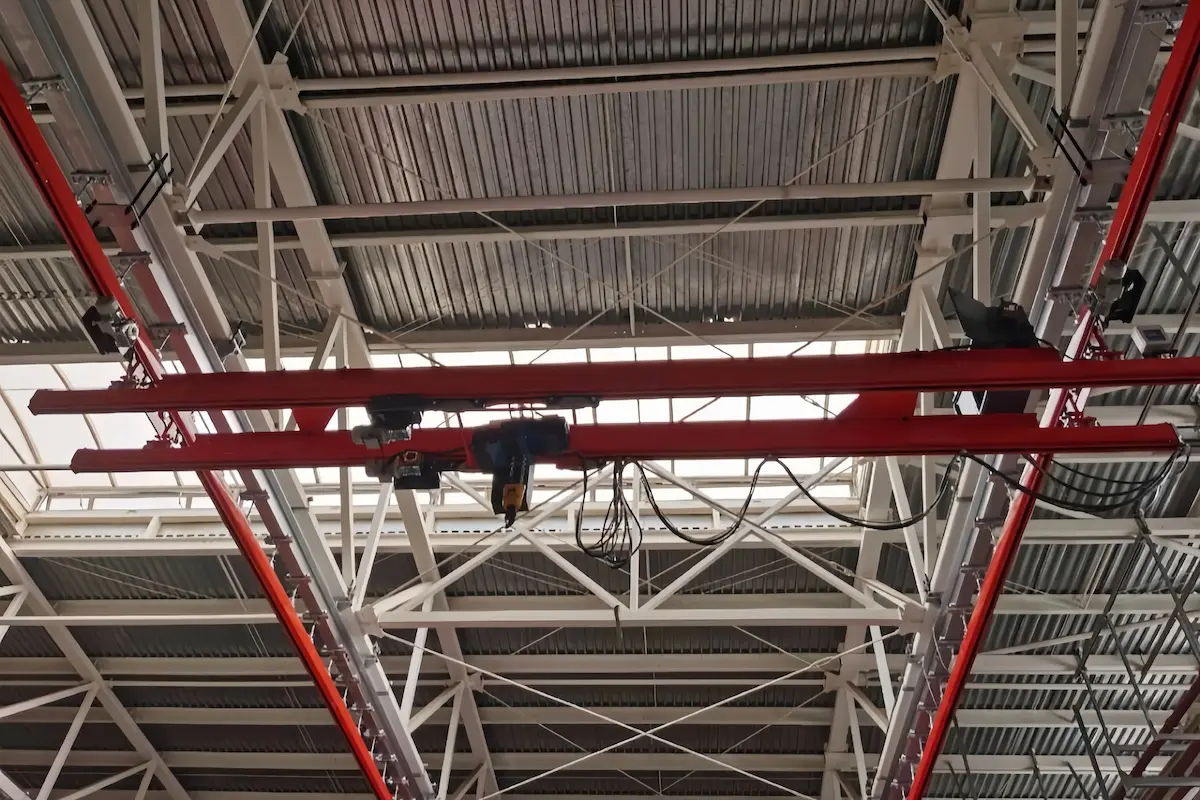
While overhead crane rail gnawing is a common fault, it must never be ignored. Rail errors, wheel deviations, structural deformation, and unsynchronized drives all contribute to the problem.
●Proactive Detection: Companies must establish inspection mechanisms to catch abnormal signals before they become major failures.
●Systemic Maintenance: Scientific installation, standardized operation, and regular maintenance reduce wear and improve safety.
●Efficiency Gains: Proper calibration not only protects assets but also enhances the operational efficiency of the overhead crane.
If your equipment frequently drifts or creates friction noise, seek professional detection and calibration immediately to ensure long-term stability.
This document is for reference only. Specific operations must strictly comply with local laws and regulations and equipment manuals.
Recent Post