Blog
- Home
- Blog
How to Extend the Service Life of Overhead Cranes? A Daily Maintenance and Care Guide
Overview
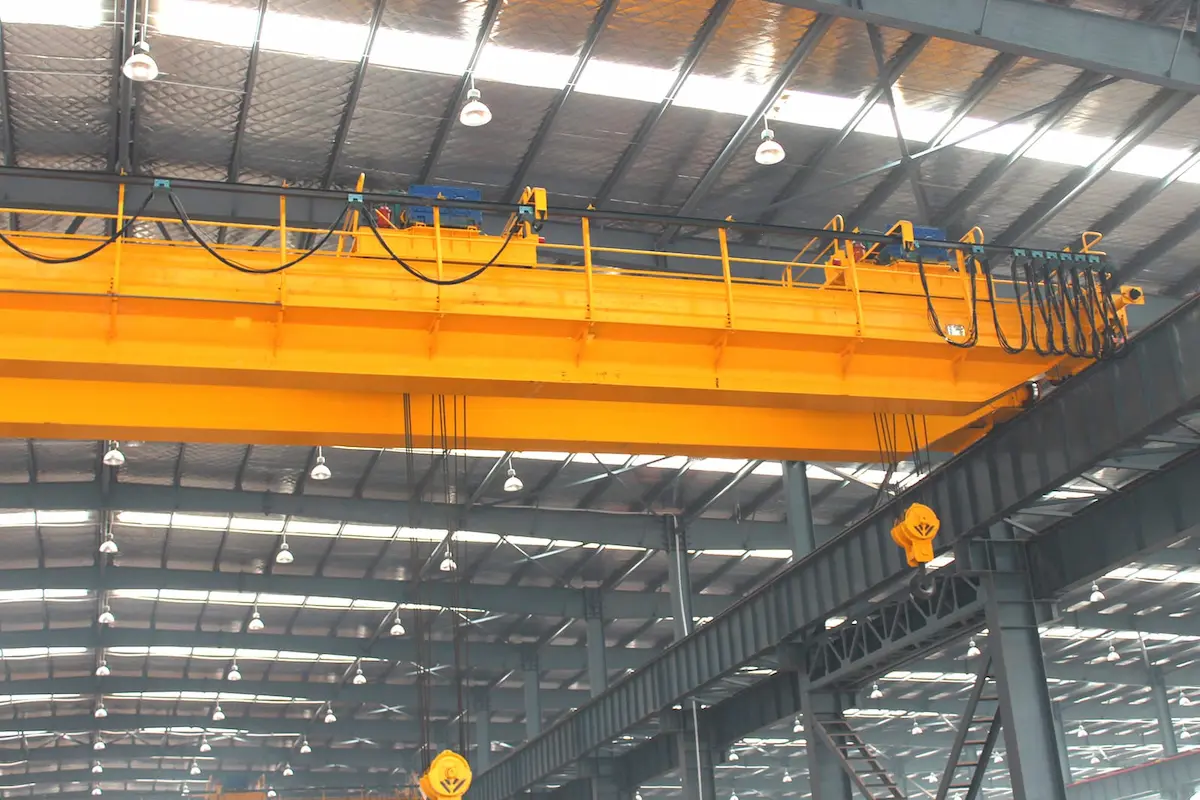
Overhead cranes serve as core material handling equipment in heavy industrial workshops, warehouses, and steel fabrication plants. They often undertake high-intensity, high-frequency lifting tasks. In practice, many enterprises easily fall into the trap of emphasizing usage while neglecting maintenance. They often rush to perform emergency repairs only when main girder deflection, gearbox rubbing, or sudden brake failures halt production lines. This not only results in high repair costs but also severely disrupts production and delivery schedules. A scientific and rigorous routine maintenance system is essential for workshop safety. It is also key to protecting fixed asset investments and reducing life cycle costs (LCC). This article analyzes how to effectively extend the service life of overhead cranes across four dimensions: core component inspection, categorized maintenance cycles, daily operation standards, and enterprise equipment management.
Daily Inspection of Core Components and Avoidance of Wear
Overhead cranes are complex mechanical and electrical coupled systems. Extending the lifespan of overhead cranes requires strict monitoring of key stress points and vulnerable parts:
●Wire Rope and Pulley System: Wire ropes are flexible members that directly carry heavy loads. Daily inspections of overhead cranes must focus on broken wires, wear, corrosion, cage deformation, or kinks. Clean pulley groove bottoms regularly and apply adequate grease. This prevents accelerated wire rope wear caused by jamming during high-speed operation.
●Braking System (“The Lifeline of Overhead Cranes”): Brake failure is the direct cause of falling objects. Regularly check the fitting clearance between brake shoes and brake wheels on overhead cranes. Ensure uniform force distribution. Replace friction pads immediately if their wear thickness reaches the set limit, usually 30% to 50% of original thickness. Prevent oil contamination on friction surfaces to avoid dropping brake torque.
●Gearbox and Lubrication Management: Gearbox gears on overhead cranes are prone to pitting or scuffing under heavy loads. Check oil levels and quality regularly through oil sight glasses. Never use non-compliant lubricants. If oil emulsification or excessive metal debris occurs, thoroughly clean and replace the oil. Ensure gear meshing surfaces maintain good boundary or fluid lubrication.
●Electrical Systems and Safety Limit Devices: Lifting height limiters, travel limiters, and overloaders form the final line of defense for overhead cranes. On-site operators must conduct no-load tests before every shift. Ensure limit switches operate sensitively and reliably. Never short-circuit or remove safety protection devices to chase deadlines.
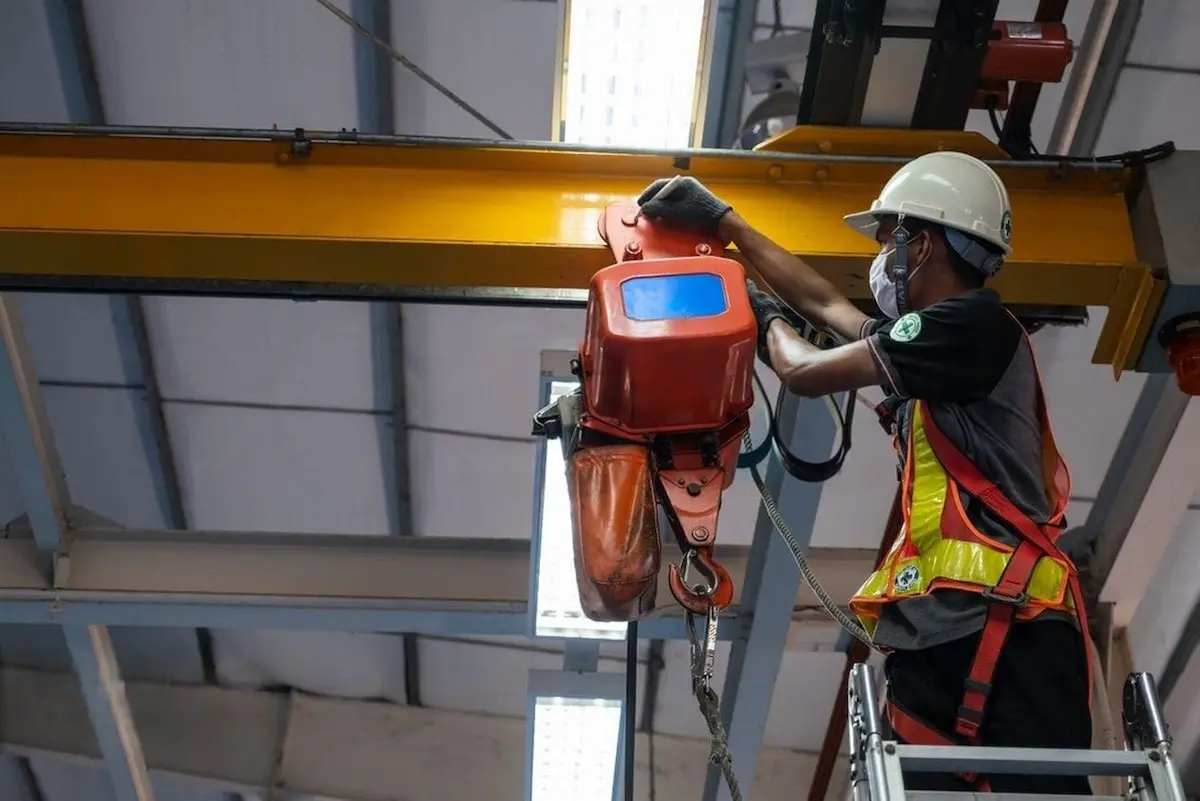
Categorized Maintenance Cycle Table for Overhead Cranes
To implement maintenance effectively, divide maintenance frequency into four levels to form standardized SOPs for overhead cranes:
|
Maintenance Level |
Execution Timing |
Core Tasks and Technical Requirements |
Responsible Party |
| Pre-Shift / Post-Shift Inspection | Before starting / after stopping daily | 1. Visually inspect wire rope appearance and fixed ends on overhead cranes. 2. Test brakes, safety limit switches, and emergency stop buttons on overhead cranes. 3. Check crane and trolley tracks for foreign object blockages. |
Frontline Operators |
| Weekly Maintenance | Once a week (after shift) | 1. Check gearbox oil levels and lubrication points on overhead cranes for oil shortages. 2. Inspect electrical control cabinets for loose terminals or overheating signs on overhead cranes. 3. Clean dust on busbars and collector carbon brushes for overhead cranes. |
Dedicated Maintenance Technicians |
| Monthly Maintenance | Once a month (planned shutdown) | 1. Measure and fine-tune brake opening and closing clearances on overhead cranes. 2. Inspect wheel flange wear and rail-gnawing phenomena on overhead cranes. 3. Perform non-destructive testing or torque checks on main girder welds and bolts of overhead cranes. |
Mechanical Maintenance Team |
| Annual Overhaul | Once a year (with annual inspection) | 1. Open gearboxes of overhead cranes to evaluate gear tooth surface wear. 2. Measure main girder camber and metal structure deformation on overhead cranes. 3. Test and calibrate all electrical components and motor insulation resistance for overhead cranes. |
Professional Special Inspection Agencies and Engineering Teams |
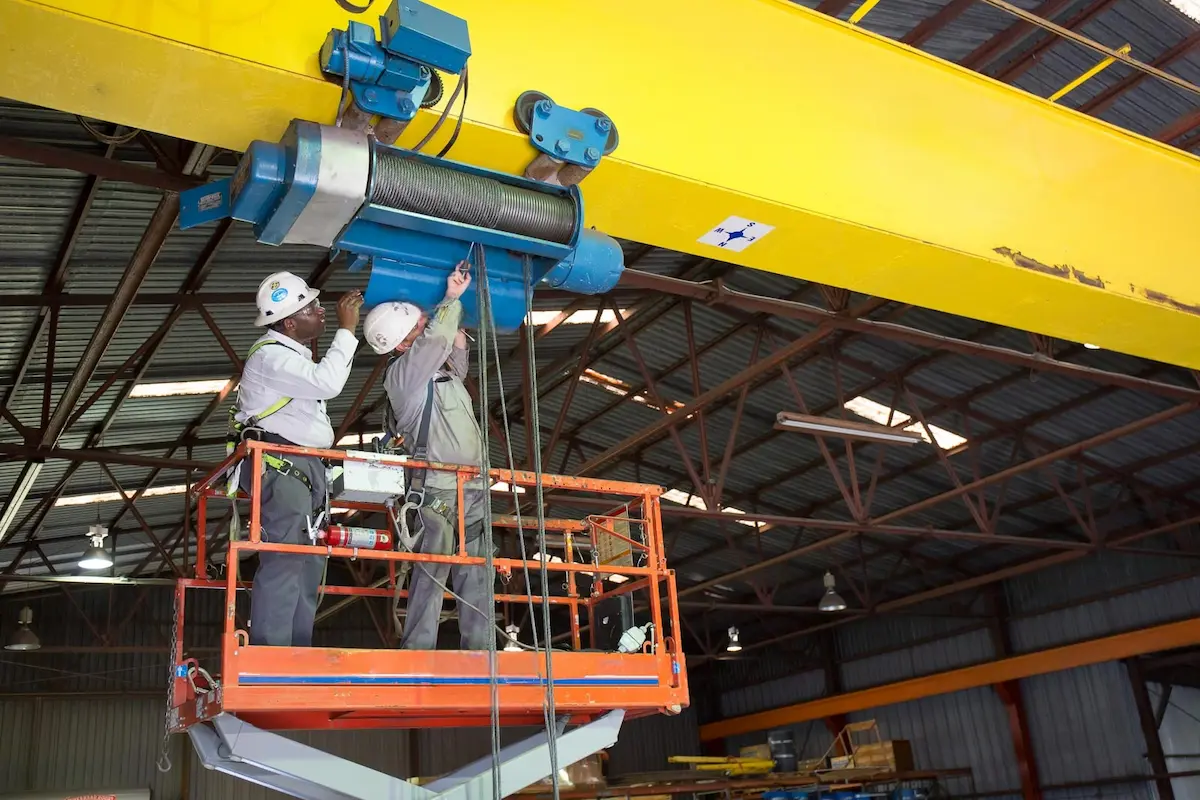
Standardized Operations and On-Site Management: Reducing Mechanical Fatigue at the Source
Even the most perfect maintenance plan cannot offset damage caused by non-compliant operations on overhead cranes. To truly extend the service life of overhead cranes, standardizing on-site operational habits is essential:
●Eliminate Angular Pulling and Side Lifting: Angular pulling causes wire rope tangling or derailment on overhead cranes. It also generates extra lateral torque on main girders and legs of overhead cranes. This easily leads to micro-cracks or permanent structural deformation.
●Strictly Prohibit Overload Operations: The rated lifting capacity on the nameplate of overhead cranes is a safety red line based on strict mechanical calculations. Overloading puts motors, gearboxes, drums, and main girders of overhead cranes into hyper-elastic limit states. This drastically shortens fatigue life.
●Smooth Starting and Braking: Avoid violent acceleration or deceleration when operating variable frequency drives or cam controllers on overhead cranes. Sudden dynamic impact loads exert massive shear impacts on transmission gears and couplings of overhead cranes.
●Ambient Temperature, Humidity, and Corrosion Control: For overhead cranes operating in coastal high-humidity or corrosive gas steel workshops, perform regular metal rust removal and painting. Install desiccants or anti-condensation heaters inside electrical cabinets of overhead cranes.

Scientific Management of Spare Parts and BOM Archiving
Efficient after-sales service and maintenance depend on precise supply chain support for overhead cranes. Enterprises should establish independent lifecycle files and Bill of Materials (BOM) for each unit among their overhead cranes.
Maintain reasonable safety stock for common wear parts of overhead cranes, such as brake pads, contactors, limit switches, and wire ropes. Set clear reorder points (ROP) for these parts. When critical components reach expected service lives or show wear signs, replace them on demand and with precision. This avoids unplanned shutdowns caused by long procurement cycles, ensuring efficient and stable workshop logistics for overhead cranes.

Conclusion
The service life of overhead cranes essentially depends on how refined an enterprise manages the equipment lifecycle. Institutionalizing routine inspections, standardizing professional maintenance, and eliminating illegal operations on overhead cranes significantly reduces failure rates. This also saves huge repair and replacement costs for enterprises managing overhead cranes. Performing lubrication and fastening properly every time builds the firmest defense for safe production and efficient delivery of overhead cranes.
This document is for reference only. Specific operations must strictly comply with local laws and regulations and equipment manuals.
Recent Post